blogs
Home
»
Articles
»
How Giving a TEDx Talk Actually Works
Public speaking

How Giving a TEDx Talk Actually Works

June 20, 2024
-
7 min read

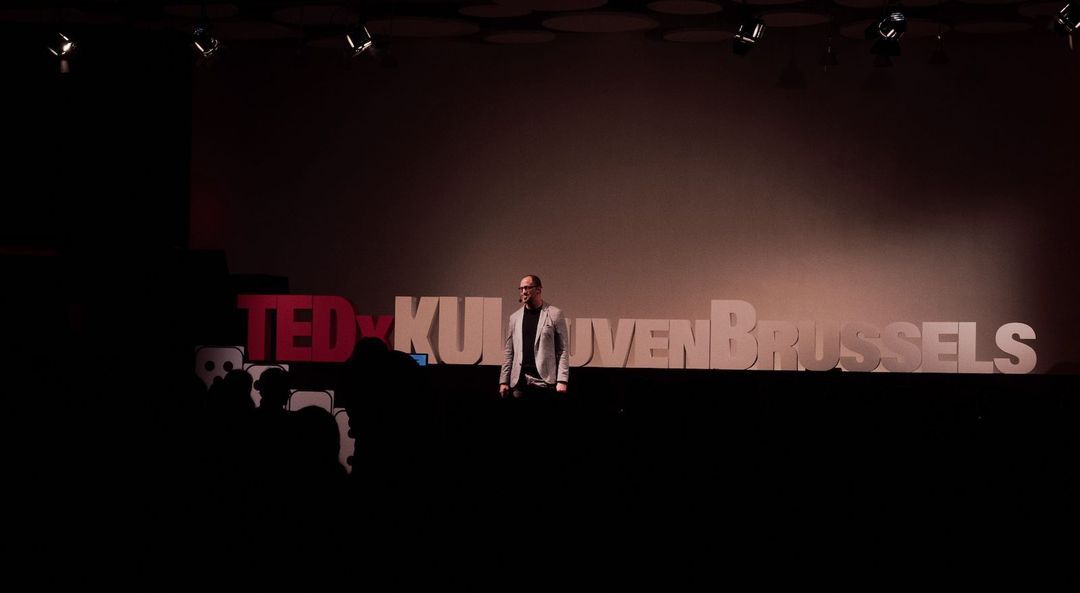
As you may know, I recently gave a 12-minute TEDx talk, and I'm here to share my experience with you. I'm not going to give you the talk itself—that will be available online in a couple of months—but I want to share how such an event comes about, along with some insights and lessons learned.

The Motivation Behind Giving a TEDx Talk

The first question that comes to mind is: Why would anyone want to give a TEDx talk? It's unpaid, and involves a lot of stress, energy, time, and effort. In the end, maybe nobody watches it outside the room where it was given. If you're lucky, it might gain online visibility, but that's far from guaranteed. So why do it?

There are various motivations. Some might do it for vanity, to feel important on stage. Others might hope it helps their personal brand and visibility online. For me, though, the main motivation was to share ideas and a message that I deeply believe in. A good TEDx talk is like a preacher's sermon, a motivational speech, or the address of a rare good politician—it comes from a place of deep commitment to a worldview.

The Commitment of Other Speakers

At the TEDx event, the other speakers were equally committed to their topics. Some even incorporated music into their talks, blending singing with their message. It wasn't a rock concert, but it certainly pushed the boundaries of what a talk can be. TEDx talks give speakers up to 18 minutes to share their ideas, and the variety in presentation styles is quite broad.

The Process of Giving a TEDx Talk

Starting a TEDx talk begins with the application to speak. There are many calls for speakers, but getting selected is another matter. Organizers need a license from the central TED organization, similar to a franchise model, which comes with strict rules. They decide on the speakers and ensure there's a central theme connecting the talks.

These talks cannot be commercial or political in the sense of campaigning. They can address societal trends or political issues broadly but must avoid being partisan. The organizers can invite speakers who fit the theme and have something valuable to share.

My Journey to TEDx

For the TEDx event at KU Leuven in Brussels, the organizers reached out to me to apply (without any promise that I'd be accepted). They found my profile interesting and asked if I wanted to apply. The theme was "chain reaction," interpreted in a social context rather than a scientific one. After considering what I could contribute, I decided to focus on political communication, psychology, linguistics, and personal development which seemed to resonate with them so they accepted my pitch. My talk's title eventually became "Your Words Will Shape Your World."

Preparing the Talk

The preparation process was intense. I had to draft, revise, and receive feedback multiple times. Losing one's ego is crucial here—accepting constructive criticism improves the final product. I rehearsed extensively, not just to memorize but to "internalize" the message so I could deliver it authentically.

The Four Stages of Writing

A journalist once taught me about the four stages of writing, which are highly applicable to preparing a speech:

  1. Madman: Collect all ideas, quotes, and concepts without filtering.
  2. Architect: Organize these ideas into a coherent structure.
  3. Carpenter: Refine and chisel the structure into a polished form.
  4. Judge: Critically review and eliminate anything unnecessary.

Being your own madman, architect, carpenter, and judge is challenging. External feedback from trusted colleagues is invaluable during the ‘judge’ phase.

The Importance of Rehearsal

Rehearsing was essential. I recorded my speech, listened to it repeatedly, and practiced in my car and with others. This helped me refine the flow and ensure I could deliver it smoothly. It's also vital to read the speech out loud, as speaking differs from reading silently.

The Role of Visual Aids

Initially, I thought I wouldn't use slides, but feedback indicated that visuals could enhance comprehension. Martin, a very talented designer friend of mine, created a Prezi presentation that allowed me to zoom in and out on key points, making the talk more dynamic and in sync with the message. Visuals also served as reminders for me and aids for the audience, ensuring the narrative was clear and engaging.

The Day of the Talk

On the day of the talk, I was the first speaker. It's interesting how nervousness works: for me, I was pretty anxious but it immediately disappeared when I stepped on the 'red dot' stage. Stage fright comes from one thing and one thing only: uncertainty. Its source can be multifold, such as 'will I remember my speech?', 'will the audience resonate with my message?', 'will something unexpected happen?' - but to the greater degree I can reduce these uncertainties, the less nervous I will be.

In the end, despite thorough preparation, technical glitches can still happen—my slides didn't initially appear on screen. The organizers quickly fixed this, allowing me to proceed as planned. The live setting always brings its own challenges, but the key is to stay composed and adapt to whatever comes up.

Final Reflections

No plan survives first contact with the audience, much like a boxer’s plan doesn’t survive the first punch. The delivery won't be exactly as rehearsed, but that's okay. The goal is to share something meaningful, and if you can do that, it's a success. I was also told, quite wisely, that there are always 3 speeches we give: the one we plan to give, the one we actually give, and the one we wish we had given. The closer these three are to each other, the better it feels.

My Takeaway

After the talk, the most rewarding part was receiving feedback from the audience. Knowing that my message resonated with them was incredibly fulfilling. Creating and sharing something you believe in is a deeply nourishing experience. I encourage everyone to consider giving a TEDx talk because the journey teaches you many lessons, and giving the talk is just a small part of it.

If you're interested in hearing more, just send me a message.

Projects & Ventures
Yellow stylized tree with broad leaves on a blue background.
EU Training

Our trainings are designed for public affairs, corporate affairs and communication teams who want to work more efficiently with AI and improve the quality of their output.

Visit
White stylized letter i and B forming an arrow pointing right on dark blue background.
Influence Builders

Our trainings are designed for public affairs, corporate affairs and communication teams who want to work more efficiently with AI and improve the quality of their output.

Visit
Abstract blue circular logo with upward curving lines resembling a stylized fan or blades.
Retora

Retora is the strategic persuasion platform for political, PR, and communications teams. Simulate how your audience responds — and get the intelligence to make your message land.

Visit
Glowing blue and purple lightbulb encased in a glass bubble with a dark background.
Beyond the Bubble

Podcast for open conversations in Brussels on global affairs, politics, psychology, AI, communications, history, religion and everything in between, from a European perspective.

Visit
Man in white shirt and gray pants speaking on stage next to large red TEDx letters.
TEDx Talks

Retora is the strategic persuasion platform for political, PR, and communications teams. Simulate how your audience responds — and get the intelligence to make your message land.

Visit
The Ultimate EU Test Book Administrators 2025 by András Boneth with strategies, skills, and advice.
The Ultimate EU Test Book & Handbook

Retora is the strategic persuasion platform for political, PR, and communications teams. Simulate how your ...

Visit
Bright conference room with wooden table, chairs, large window, plants, and decorative fireplace.
Ambiorix Center

Podcast for open conversations in Brussels on global affairs, politics, psychology, AI, communications, history, religion and everything in between, from a European perspective.

Visit
The Right Street logo with stylized red and white icon on black background.
Right Street Digital

Our trainings are designed for public affairs, corporate affairs and communication teams who want to work more efficiently with AI and improve the quality of their output.

Visit
Three young girls lying down reading books against a bright blue background with colorful shapes.
Diákszempont

Learn about the philosophy of Diákszempont Elementary and High School, where the child comes first because we believe that children can only be truly free and happy in a supportive environment.

Visit
Featured

Featured articles
and Insights

EU affairs
AI/ChatGPT
The Evolution of EPSO: A Visual Journey from First Candidates to Future Prospects

This compilation takes us through the history of the first #EPSO candidates, showcasing their journey and achievements from the very beginning to the present day—and even looking ahead.

A compilation of the first #EPSO candidates throughout history, until today and beyond.

(Have you played with ChatGPT-4o's new image capabilities? Pretty impressive.)

*This was originally posted on Andras Baneth's LinkedIn account.

EU affairs
From Unsolicited Pitch to Published Masterpiece: The Journey Behind The Ultimate EU Handbook

Discover the inspiring story behind The Ultimate EU Handbook, a book born from the unexpected connection of a chance pitch and years of creative collaboration.

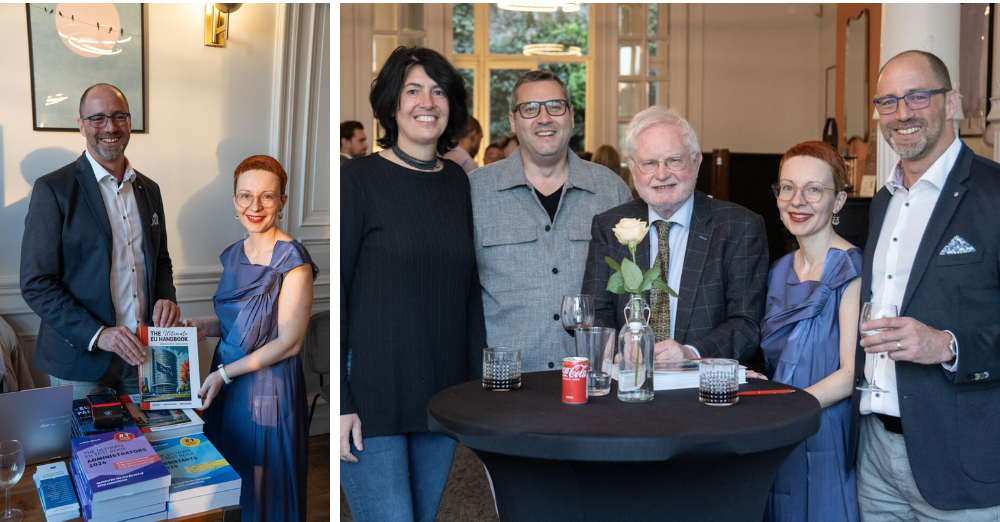
20 years ago, John Harper said 'yes' to an unknown person's unsolicited book pitch, which set of a chain of positive events. Yesterday, another book came to be as a result of two years' intense work and creativity of Sonia Gongu, Martin Tomov, Ljiljana Pavkov... and 'The Ultimate EU Handbook' was born.

Special thanks to Maryana Panyevina, Klym Ahrykov and David Meszaros for your support to make the launch event at Ambiorix Center & Podcast Studio special.

🇪🇺🙏📚

*This was originally posted on Andras Baneth's LinkedIn account.

Other
The Human Condition: Honest Talks About Who We Really Are

What began as a discussion about burnout quickly turned into an exploration of something deeper. In my conversation with Dr. Vasadi Anna, a psychiatrist with decades of experience, it became clear that burnout isn’t just about long hours or stress—it’s rooted in expectations, upbringing, and the invisible pressures we internalize from an early age.

English summary of the latest episode of András' Hungarian podcast, 'Lélek Algoritmus – Ilyen az ember (avagy beszélgetések egy pszichiáterrel)' – 'The Soul’s Algorithm: The Human Condition (Conversations with a Psychiatrist).

What began as a discussion about burnout quickly turned into an exploration of something deeper. In my conversation with Dr. Vasadi Anna, a psychiatrist with decades of experience, it became clear that burnout isn’t just about long hours or stress—it’s rooted in expectations, upbringing, and the invisible pressures we internalize from an early age.

Burnout: More Than Just Exhaustion

Burnout gets thrown around a lot, but what does it actually mean? Many assume it’s just extreme fatigue, but as Anna pointed out, it’s something deeper. Burnout drains you emotionally, mentally, and even physically. It’s not the kind of tiredness that a weekend off can fix.

A key distinction Anna made: while depression can affect every part of life, burnout is usually tied to work. But it doesn’t stay there. It spreads—first to colleagues, then to family, then to an overall sense of disillusionment.

The Perfectionist’s Trap

Burnout isn’t just about overworking—it’s about overworking with the wrong mindset. People who push themselves too hard, who never feel their efforts are enough, who equate self-worth with productivity—these are the most at risk.

A common misconception: If I love my work, I can’t burn out. But passion doesn’t shield you. In fact, it often makes things worse. Overcommitting, ignoring personal limits, and relying on caffeine or alcohol to keep up are all red flags.

The Long Shadow of Childhood Expectations

Why do some people burn out while others keep their balance? Often, it starts in childhood.

Many of us grow up believing that our worth is tied to achievement. If we didn’t excel, love and approval felt conditional. Some parents—often unknowingly—reinforce this by setting impossibly high standards or withholding affection when a child falls short. Over time, this creates a need for external validation, making burnout almost inevitable.

Take elite athletes. Their entire identity is wrapped up in performance. When they lose, it’s not just a setback—it feels like a loss of personal value. The same happens in workplaces. A high achiever who misses a promotion doesn’t just feel professional disappointment—they feel like they have failed as a person.

Midlife Crisis: Burnout of the Soul

This naturally led us to midlife crisis, which, in many ways, is burnout playing out on a larger scale.

Both stem from the same root: spending years chasing external markers of success without stopping to ask, Is this what I actually want?

The midlife crisis tends to hit in the 40s or early 50s, often when several pressures collide:

  • Aging Parents: The growing responsibility of caring for elderly parents forces many to confront their own mortality.
  • Teenage Children: At the same time, kids are becoming more independent, adding another layer of emotional complexity.
  • Career Pressures: By midlife, most people have built careers, but many start questioning if they’re on the right path.

It’s a perfect storm of obligations, internal and external, that makes people reevaluate everything—from their job to their marriage to their purpose.

Finding a Way Forward

So, how do we deal with burnout and midlife crisis without making rash decisions?

  1. Rethink Success – Instead of measuring success by salary, job title, or external validation, define it in terms of fulfillment and balance. If your work is draining you, can it really be called success?
  2. Recognize the Warning Signs – Losing interest in work, feeling detached, and struggling to muster enthusiasm are all early signs of burnout.
  3. Set Boundaries – Work will always demand more. It’s up to you to decide what is enough.
  4. Address Deep-Seated Patterns – If your self-worth depends on achievement, it might be time to rethink where that belief came from. Therapy and self-reflection can help break the cycle.
  5. Embrace Change – A midlife crisis isn’t necessarily a crisis—it can be a wake-up call. Maybe it’s time for a career shift, a realignment of priorities, or simply a different perspective.

Final Thoughts

Burnout and midlife crisis aren’t just work problems or age-related phases. They’re signals—urgent ones—telling us that something needs to change. The real question isn’t How do I push through? but Am I living a life that actually fits me?

If the answer is no, maybe the crisis isn’t a disaster. Maybe it’s an opportunity.