9 AI Prompts for Public Affairs Professionals Who Want Better Thinking, Not Just Faster Drafting
Discover 9 practical AI prompts for public affairs professionals to improve policy messaging, pressure-test arguments, anticipate objections, and communicate more clearly with EU stakeholders.
“What is the single weakest sentence in this briefing, and how would you fix it?”
This is a prompt I would probably never have come up with myself.
And yet, it is exactly the kind of question that makes AI useful for public affairs work.
Not because it writes the briefing for you.
But because it helps you test the thinking behind it.
A lot of AI use in public affairs still focuses on speed: summarise this, draft that, turn this into an email. Useful, yes. But not the whole story.
The real value is when AI helps you pressure-test your message before someone else does.
A policymaker.
A journalist.
A Commission official.
A sceptical attaché.
A client.
A colleague in the meeting who spots the weak point before you do.
So here are 9 AI prompts for public affairs professionals who want better thinking, not just faster drafting:
- Rewrite this message so it would survive a hostile question from an MEP in the relevant EP committee.
- List the 5 strongest objections a Commission desk officer at [DG] would raise to this proposal, then tighten the argument.
- Translate this policy language into something a national journalist would not misinterpret.
- What is the single weakest sentence in this briefing, and how would you fix it?
- Adapt this message for a sceptical Permanent Representation official who is short on time.
- Strip this text of buzzwords and replace them with concrete, defensible claims.
- Assume the audience is politically neutral but institutionally risk-averse, rewrite accordingly.
- What is the hidden assumption in this argument that could be challenged in a meeting?
- Reduce this to a 30-second spoken answer that sounds credible and not rehearsed.
The point is not to let AI do your public affairs work for you.
The point is to use it as a sparring partner.
To make your arguments clearer.
To make your messages harder to misread.
To find the sentence that sounds fine until someone challenges it.
To prepare for the question you hope no one asks.
That is where AI becomes genuinely useful.
Not as a shortcut around expertise.
But as a tool that helps you use your expertise better.
Stop Using AI for Answers. Start Using It for Better Questions
Discover why the real power of AI isn’t in providing answers, but in helping you ask better questions, uncover blind spots, and explore alternative perspectives for smarter decision-making.
Picasso once said: "Computers are useless, they can only give you answers."
That was true in his time, and still true today if you only use AI as a search ("answer") engine.
The real value is in the questions we ask:
- see blind spots in our reasoning ("Identify hidden biases or blind spots in my plan.)
- test assumptions we didn’t know we had ("Highlight my explicit or implicit assumptions.")
- explore alternative framings of the same problem ("How can this problem be viewed from multiple angles? How would a manager, a psychologist, a physicist, and musician look at it?") Or take these for example:
- Instead of asking “What’s the EU’s position on AI regulation?” try “What unintended consequences could the EU AI Act have for small startups?”
- Instead of “Summarize this report,” try “What’s missing from this report that an NGO focusing on circular economy could ask?”
- Instead of “Write a press release,” try “What would make this story credible to a skeptical journalist?”
AI doesn’t (and shouldn't) replace thinking. Just be sure to ask it the right way.
➡️ looking for AI workshops for your team? Influence Builders has trained 1500+ corporate and government affairs teams, and we'll be glad to work with you.
AI on LinkedIn: Hype, Hysteria, or Honest Insight?
A wry look at the LinkedIn AI conversation: from overhyped promises to doomsday takes, existential musings, and magical shortcuts. Where does reality meet rhetoric?
I get the impression that each time someone talks about AI on Linkedin, it's either:
- "oh this is such a hype/BS that only grifters talk about it"
- "you can go sit on a beach, it'll do everything for/instead of you"
- "whatever it churns out, it's a piece of cr*p that should be ridiculed"
- "here is some existential AI philosophy that I just invented"
- "a magic shortcut to hack your way to the top of the newsfeed"
- "it's the end of [name topic] and let's despair OR here is what to do about it"
- "this is revolutionary and the best of all worlds is about to come"
(I am guilty as charged of some of the above, I readily admit.)
Did I miss anything else?
p.s.: and the opportunistic plug, as the plus one: check out Influence Builders

Beyond the Robots
So Musk announces/launches autonomous shuttles and taxis, and a humanoid robot.
So Musk announces/launches autonomous shuttles and taxis, and a humanoid robot. Even if it's just PR for now, it's only a matter of time before they start operating, and will lead, gradually then suddenly, to a collapse of various sectors and the job market (think of handymen, hospitality, drivers etc.). But the biggest impact will be on human relations: with some more advanced versions down the line, robots can replace (though they can never be a substitute for) professional and intimate relationships. I don't think this is doomsdayism, but tell me if I'm overly pessimistic. The global impact all of this will have, along with an ever-more-powerful AI, is not to be underestimated. Feels like we are entering a new era of humankind, and we have no idea yet about its side effects. The changes are going to be so fundamental as the times before and after the industrial revolution. Are regulators, and societies, ready for this...?
(here is a conversation on this turning point from Yuval Noah Harari, author of Sapiens, and Nexus, and Eza Raskin: https://lnkd.in/eJ7waRBy)
**This was originally posted on Andras Baneth's LinkedIn account.
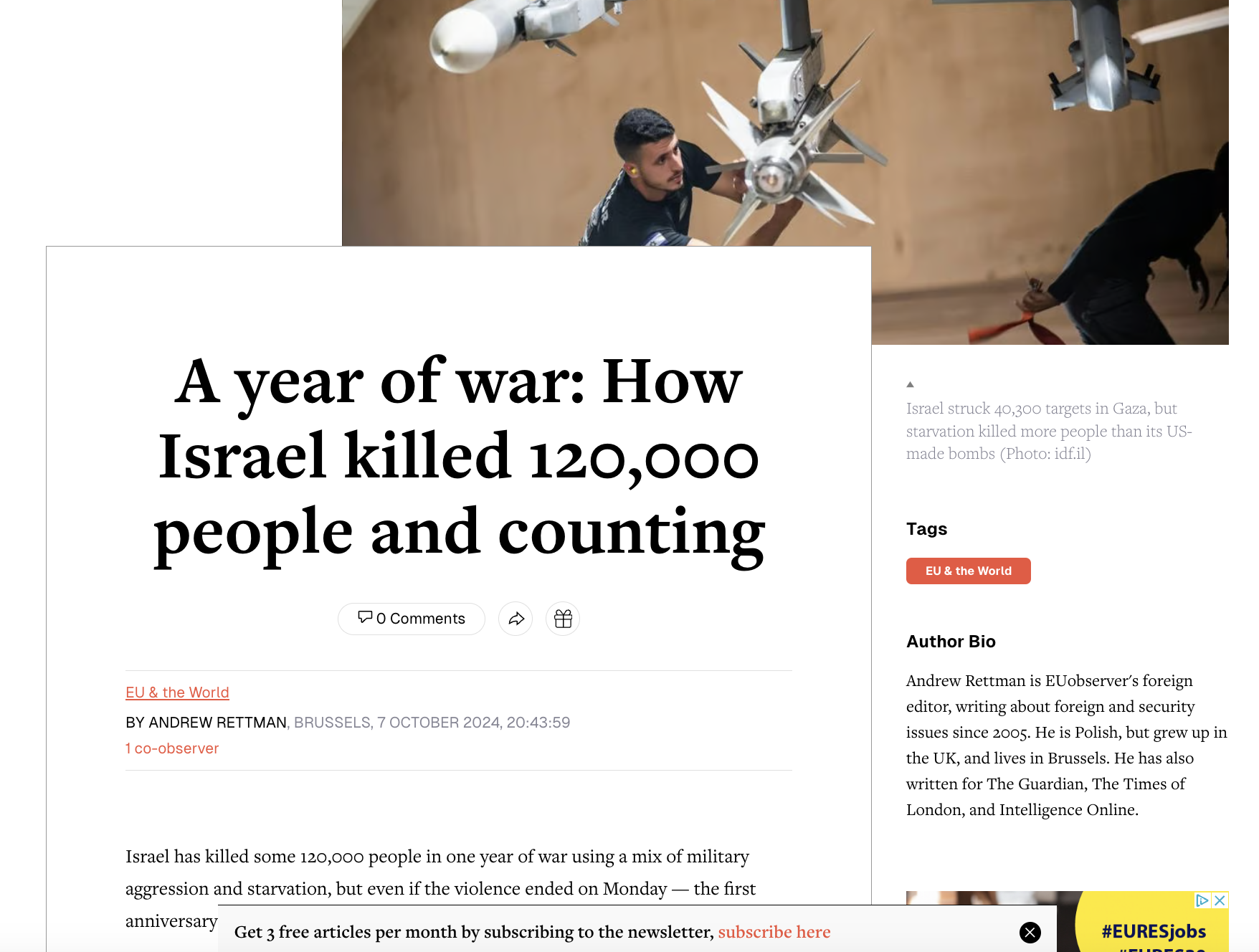
EUobserver's Anti-Israel Blood Libel on 7 Oct 2024 : A Response
“there are none so blind as those who will not see”
"there are none so blind as those who will not see”
For the record, this is a short note to debunk the blood libel published on EUobserver.com on 7 Oct 2024 (on the 1 year anniversary of the worst massacre against Jews since the Holocaust, none the less), claiming that “Israel has killed some 120,000 people in one year of war using a mix of military aggression and starvation, but even if the violence ended on Monday — the first anniversary of 7 October — the final death toll will be vastly higher. “
First, let’s lay the rules of how we argue, down. There is no dismissal of a source by simply labelling it as X or Y. The ‘credibility multiplier’ can be adjusted based on how reliable a source is based on its track record, evidence, and other factors, while the underlying claims must be refuted by actual evidence.
Second, taking and presenting every Hamas/Hezbollah/IRGC etc. claim on face value as a legitimate source of information while dismissing or framing every IDF communication as propaganda may serve your subscribers/funders needs, but it doesn’t help in getting closer to the truth.
Third, I have no hopes of changing your mind. Facts do no such thing, especially when the narrative you claim as your ‘truth’ is part of your identity. I am simply calling on you to respect basic journalistic deontology, and to stop pushing lies and cherry-picked factoids for ideological purposes (unless that is how you aim to “support European democracy”, as per EUobserver’s declaration).
Fourth, once we establish the facts, these are inseparable from the subsequent moral questions linked to them, namely that of intent, and therefore responsibility. Just like in law, there is a fundamental difference in how an action is judged if it was deliberate vs. negligent vs. entirely unintended. These are not questions for the opinion column (there you may publish rants and distortions with an even lower moral bar), these have a major impact on your choice of headlines, words, and presentation of information in your main columns.
1. Death toll
- Even the UN OCHA, which gets its input directly from Hamas (Orewellian name: “Gaza Ministry of Health”), claims 41k (they are even contradicting themselves) 34.344 identified deaths (the rest is ‘assuming’) all the while we know that Hamas has a clear interest in inflating the number to the greatest possible extent.
- Somehow the UN just halved the number of children Hamas/UN claimed to have been killed.
- Even if we take this number at face value, at least 40%, possibly up to 60% of these deaths are that of militants/terrorists (including, tragically, many “children” between 12-18 are in fact part of the militia with Kalashnikovs etc. - see more under point #3 below on the responsibility).
- Here is a well documented (and never refuted) thread on how Hamas reclassifies terrorists' age from 19 or 18 to 17 so they will be considered 'children' in the death count.
- Many identified deaths are not attributable to the IDF or Israel: there are several proven cases of Hamas directly killing Palestinians being included. Natural deaths are included in the UN statistics too. There are also a number of provably false records, so even this number seems to be a high estimate at best.
- The “Lancet lie”: how a “letter to the editor” (not a peer reviewed study) was turned into a propaganda piece.
- The most well documented takedown of the UN/Hamas lies, with detailed calculations, evidence, and arguments.
- Lebanon: so far the toll is around 700 people, not including the IRGC-backed Hezbollah terrorists. I assume you don’t consider them civilians.
- How did EUobserver's Andrew Rettman (and his editor) get to 120k ?! Seriously.
2. Claim of starvation
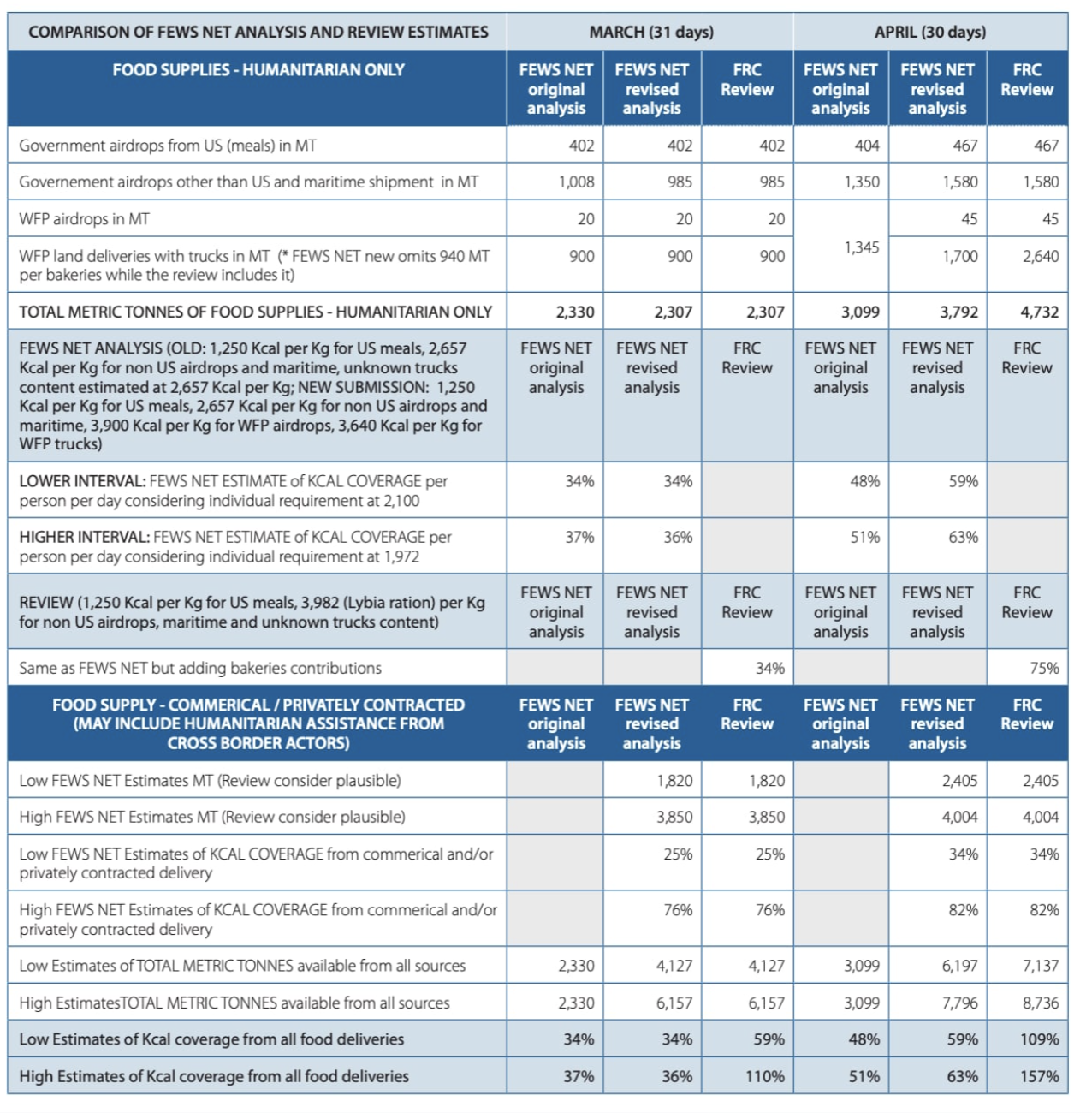
- The UN’s own Integrated Food Security Phase Classification (IPC) first claimed ‘famine is imminent’ then quietly revised itself that there is nothing of the sort (“The FRC does not find the FEWS NET analysis plausible").
- Review of a COGAT analysis, based on peer reviewed study, finds more calories entering Gaza than before the war. (What’s true though is that Hamas terrorists are well documented to steal these supplies to drive up black market prices and to induce shortages.)
- Straight from the sources of COGAT and UN data.
- See chart below, copied from the above sources, if you want to check UN numbers contradicting themselves and the famine libel.
3. Who is responsible
- This is more prone to interpretation though it shouldn’t be.
- Hamas attacked on 7 Oct 2023 and deliberately committed premeditated war crimes against almost exclusively civilians that are beyond description. It holds 101 hostages to this day. Israel’s response is not legally or morally a ‘military aggression’ or ‘genocide’, even according to the ICJ.
- The intent of Sinwar, Nasrallah (peace be upon him), Khameini and all their militants (and 50-70% of Gaza civilians, according to polls and events on 7 Oct 2023) is the declared and de facto annihilation/extermination of their Israeli neighbors (20% of whom are actually non-Jews, mostly Muslims). The IDF’s intent, as proven by facts on the ground, is to minimize civilian casualties (which obviously doesn’t mean that they can avoid these altogether, but when this happens, e.g. WCK and similar tragedies, a military investigation is conducted. Have you ever heard of any similar investigation, or even just declaration, from Hamas?). And don’t come with the hateful fascist rhetoric from Smotrich et al., which is despicable but has no actual impact on how the IDF and the war cabinet conducts its war operations.
- If a terrorist entity like Hamas builds 400+ km of tunnels by stealing (sorry, re-allocating) European and US taxpayers’ money to wage a genocidal war against its neighbor by hiding its militants there while not allowing its civilians in so that they are deliberately exposed to the retaliation after its terrorists carried out a brutal rape, burning, kidnapping of their enemy, deliberately targeting Israeli civilian population, then it’s not difficult to understand who is responsible for the subsequent casualties.
- When Hezbollah, armed/financed by the fundamentalist, genocidal IRGC, starts launching rockets literally the day after 7 Oct 2023 into Israel and sends, since then, 8,000 of them, and Israel decides to take them out a year later in history’s most targeted military attack (pagers, walkie-talkies etc.), it’s not difficult to understand that it is morally and militarily justified.
- Unless, of course, EUobserver wants and desires the Islamist fundamentalists to eliminate Israel. That’s also a position to hold, however despicable, but then it shouldn't consider itelf a journalist but a fundamentalist activist. In which case you they look into the mirror and ask whether, perhaps, EUobserver has “some ingrained loyalties” (as I was told when flagging the lies)…?
Other sources to benefit from:
- Listen to every episode of the Call me back podcast.
- Read urban warfare expert John Spencer’s analysis (videos, podcasts, interviews)
Below: UN chart referenced above.
Known/Unknown Matrix for AI/GPT Use
I don't know what I don't know... but I know that AI/GPT can help ✌️
I don't know what I don't know... but I know that AI/GPT can help ✌️
A few ideas & prompts on how you can use the Johari-window (known/unknown matrix) for your EU advocacy work.
Hope you'll find it practical and useful.
If so, feel free to share it with your team.
**This was originally posted on Andras Baneth's LinkedIn account.
Why Boundaries Matter
Boundaries are what let us define our interactions with others, protecting our mental and emotional health.
"English language summary of the latest episode of Andras' Hungarian podcast 'Ilyen az ember (avagy beszelgetesek egy pszichiaterrel)' - 'The Human Condition (Conversations with a Psychiatrist)'."
Boundaries are what let us define our interactions with others, protecting our mental and emotional health. Without them, we’re at risk of exhaustion, frustration, or even manipulation. Setting boundaries—whether physical, emotional, or social—is crucial for a well-rounded life.
What Exactly Are “Self-Boundaries”?
Self-boundaries outline how we let others interact with us and how we react to different situations. They’re less about pushing people away and more about honoring our own needs and sense of self.
Mastering the Art of Saying “No”
A big part of boundary-setting involves learning to say “no” and doing it without guilt. Many of us find this hard, often because we don’t want to seem rude or selfish. But saying “no” can actually be an act of self-respect. People who truly value us will accept our limits rather than press against them.
How to Say “No” Clearly:
- Be Honest: Say why you’re setting the boundary.
- Use “I” Statements: Focus on how you feel, e.g., “I’m not comfortable with that right now.”
- Don’t Over-Explain: Often, a simple “I’m not available” is sufficient.
Balancing Consistency with Flexibility
Boundaries aren’t immovable walls. They should be flexible, especially in close relationships where mutual respect plays a big role. A consistent approach to boundaries—with a degree of flexibility—is usually best. This consistency makes it easier for others to understand our needs and see that respect goes both ways.
Physical and Emotional Boundaries
Emotional Boundaries
Emotional boundaries help us decide when to support others and when we need to prioritize our own well-being. Setting these limits can prevent burnout and lets us be fully present when it matters.
Physical Boundaries
Physical boundaries determine our comfort with personal space. They vary widely depending on cultural norms, generational differences, and individual preferences. Respecting physical boundaries is a simple yet crucial way to build trust.
Boundaries in Digital Communication
Today’s digital world has blurred the lines around boundaries. With texts, emails, and social media, people can reach us at any time. Knowing when and how to respond—like avoiding late-night messages—can help us maintain a respectful distance.
Boundaries in Parenting and Adolescence
One of the trickiest boundary dynamics is between parents and teenagers. Adolescents naturally test boundaries as they push for independence, which can be hard for parents. This push-pull tension is normal and requires patience and understanding on both sides.
Advice for Parents:
- Encourage Independence: Give teens space to make their own decisions.
- Communicate Honestly: Let them know you’re there to listen.
- Respect Their Privacy: A closed door isn’t a rejection; it’s often just part of growing up.
Boundaries in the Workplace
Boundaries are just as essential in professional settings, where respect and clarity in communication are critical. Leaders should balance authority with respect for their team members’ limits, creating an environment where open, respectful communication thrives.
Self-Respect as a Core of Boundary-Setting
Ultimately, setting boundaries comes down to self-respect. When we honor our own limits, we’re practicing self-care and setting a standard for how we expect others to treat us. People are more likely to respect us if we show that we value our own well-being.
Setting boundaries isn’t about building walls; it’s about defining respectful, healthy frameworks for interaction. By establishing and upholding these limits, we protect ourselves and foster stronger, more respectful relationships. Whether it’s choosing when to say “no” or understanding when to give others space, boundaries are the foundation of authentic connections. When we embrace our boundaries, we allow ourselves to live genuinely, respecting both our needs and those of the people around us.
The Ultimate EU Handbook
Proofreading the manuscript.
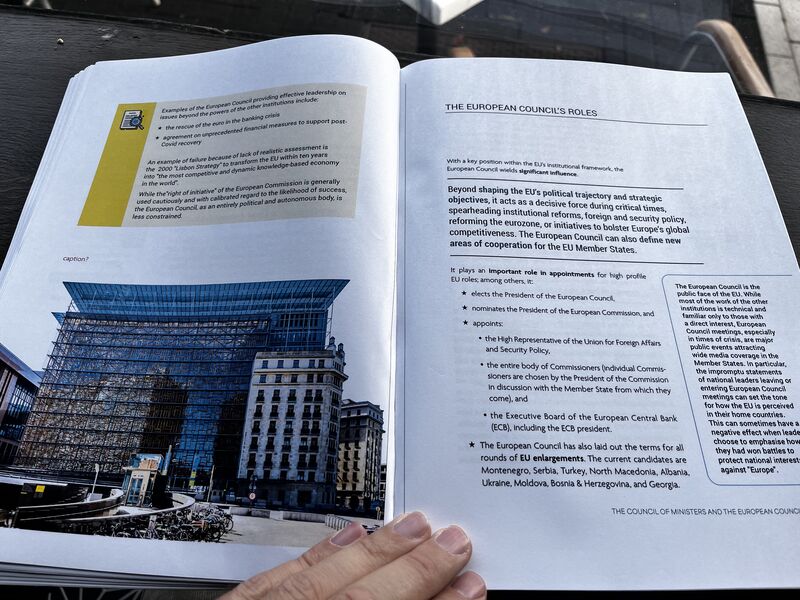
Proofreading the manuscript of the soon-to-be-released “The Ultimate EU Handbook”, co-authored with Sonia Florian. Exciting 📚
**This was originally posted on Andras Baneth's LinkedIn account.
Exploring Ourselves: Thoughts on Resilience and Self-Awareness
In our latest podcast episode, I had the pleasure of sitting down with Anna, a seasoned psychiatrist with years of experience helping people navigate their internal worlds.
"English language summary of the latest episode of Andras' Hungarian podcast 'Ilyen az ember (avagy beszelgetesek egy pszichiaterrel)' - 'The Human Condition (Conversations with a Psychiatrist)'."
In our latest podcast episode, I had the pleasure of sitting down with Anna, a seasoned psychiatrist with years of experience helping people navigate their internal worlds. We touched on some weighty yet relatable topics—like how we perceive our struggles, what resilience really means, and how reframing can open new ways of thinking. Below are some reflections from our conversation, shared in hopes they resonate with you.
Honouring Personal Struggles
A recurring theme was the deeply personal nature of our problems. Patients often downplay their issues, saying things like, “Others have it worse.” Anna challenges this habit, pointing out that comparing pain is fruitless. What matters is how each of us experiences our problems. There’s no universal scale for suffering, and dismissing our emotions only builds walls against self-compassion.
Key takeaway: Acknowledge your struggles without comparing them to others’. Every problem is real because it affects you personally.
Resilience: Bending, Not Breaking
We explored the idea of resilience—not as a kind of toughness, but as flexibility. Anna compared it to a tree that bends in the wind, unlike a rigid wall that might eventually shatter. True resilience isn’t about deflecting hardship but about bending and bouncing back. Often, people think they should “hold it together” no matter what, but real strength lies in our capacity to adapt and recover.
Key takeaway: Resilience doesn’t mean never breaking; it’s about bending with challenges and regaining balance afterward.
Seeing Problems in a New Light
One therapeutic approach Anna shared is reframing. Sometimes, viewing a problem from another angle can lessen its impact. For example, instead of thinking “Why is this happening to me?” one might ask, “What can I learn from this?” This subtle shift doesn’t erase the problem but makes it easier to handle by drawing focus to something productive.
Key takeaway: Reframing lets you look at situations in a new way, sometimes helping you move forward without the emotional weight.
Asking “Why Did This Happen?”
One question we kept circling back to was, “Why did this happen?” Not to assign cosmic meaning to everything but as a tool to understand our own decisions and reactions. Sometimes it’s not about fate or karma, but about the choices we make and the life patterns they create. When approached with honesty, this question can help us take responsibility and see life as a process of learning and growth.
Key takeaway: Use this question to reflect, not as a way of blaming or feeling punished, but as a chance to understand and grow.
The Practice of Self-Forgiveness
Self-forgiveness, as Anna explained, is essential to emotional health. Many people hold onto guilt for minor mistakes, sometimes for years, and this can lead to self-torment. Forgiving ourselves isn’t about denying our mistakes; it’s about acknowledging them, accepting responsibility, and letting go of the guilt. This release is key to moving forward and letting growth replace remorse.
Key takeaway: Practice self-forgiveness not to excuse yourself but to free yourself from guilt’s grip and create space for growth.
The Line Between Forgiving and Exonerating
We touched on the difference between self-forgiveness and self-exoneration. Self-forgiveness involves recognizing wrongdoing but moving past it. Self-exoneration, however, skips the responsibility part. Anna noted that people who habitually exonerate themselves often carry unresolved guilt and self-doubt. True healing requires both accountability and kindness toward ourselves.
Key takeaway: Self-forgiveness works best when paired with accountability. We need to own our actions to truly learn and grow.
Honest Communication for Emotional Release
Anna believes in the power of open communication to resolve inner conflicts and to heal relationships. Avoiding difficult conversations only piles up emotional baggage. There’s relief in expressing yourself honestly, even if it’s hard. The act of speaking up can itself be liberating, regardless of how the other person responds.
Key takeaway: Open communication helps release pent-up feelings and provides clarity, even if it doesn’t resolve everything.
Embracing Complexity in Human Connections
Finally, our talk highlighted the value of embracing complexity in relationships and emotions. Too often, people try to fit their feelings into neat boxes, but human experiences are rarely that simple. Instead of sticking to one theme, we let our conversation flow, touching on everything from resilience to spirituality. This free-flowing approach mirrors the complexity of real life, where ideas and feelings intertwine.
Final takeaway: Accept the complexity of human emotions. Life is a web of intertwined experiences that can’t be reduced to single themes.
Connection and Open Expression: Reflections with Dr. Anna Vasadi
In a recent episode of our podcast, I had a thought-provoking discussion with Dr. Anna Vasadi, a psychiatrist with over 45 years of experience.
"English language summary of the latest episode of Andras' Hungarian podcast 'Ilyen az ember (avagy beszelgetesek egy pszichiaterrel)' - 'The Human Condition (Conversations with a Psychiatrist)'."
In a recent episode of our podcast, I had a thought-provoking discussion with Dr. Anna Vasadi, a psychiatrist with over 45 years of experience. We delved into how human connection, genuine expression, and openness impact mental well-being. Together, we explored these concepts, shared personal experiences, and considered why these elements are vital for living a fulfilling life. Here’s what I took away from our conversation.
Opening Up: The Art of Letting Go
When someone first steps into Anna’s office, they’re often cautious and unsure where to start. Many people worry about what to say, or how to say it. Anna’s approach, however, is refreshingly straightforward: she encourages them to talk freely, without censoring themselves. “Just speak as it comes to you,” she says, offering a space where they can share without self-doubt. This method often helps ease patients into sharing more naturally and honestly.
Insight: Starting a conversation doesn’t require perfectly chosen words. Sometimes, just speaking freely opens the door to authentic expression.
Reassurance Through Shared Experiences
One important point that surfaced in our discussion was how isolated people often feel in their struggles, convinced they’re the only ones going through a particular hardship. This belief can fuel loneliness and hopelessness. Anna often tells her patients, “This is something I see often.” Far from trivializing their feelings, this simple truth provides them with relief. Knowing others have similar challenges helps people see their troubles in a broader context.
Insight: Shared experiences, when acknowledged with understanding, become a source of comfort. Realizing others share your pain brings a sense of solidarity and perspective.
Striking a Balance: Speaking Freely, Yet Meaningfully
People approach conversations in different ways. Some speak endlessly about anything and everything, while others barely say a word. Anna finds ways to navigate both types: she gently redirects those who wander too far from the main issue, while helping quieter patients share what’s really on their minds. She revisits key points to keep the conversation meaningful and ensure the patient feels truly heard.
Insight: People express themselves in varied ways. A supportive listener guides the conversation thoughtfully, without forcing it in any direction.
The Power of Leaving Things Unfinished
Anna mentioned something I hadn’t considered—sometimes, leaving topics unfinished can be beneficial. When a session ends with an unresolved question or thought, it creates what she calls a “therapeutic itch.” This encourages patients to think more about the issue on their own until the next session, helping them to process their feelings independently.
Insight: Unfinished conversations can prompt personal growth. They leave space for people to reflect and work through things on their own time.
The Unique Dynamics of Group Therapy
Another part of our conversation that struck me was Anna’s insight into group therapy. She described it as a space where individuals can share openly, hear others’ experiences, and learn from them. The dynamics of a group setting bring a sense of community and support. For many, this environment fosters not only a sense of relief but also a camaraderie that helps them realize they’re not alone.
Insight: Group settings offer a unique form of healing, where shared experiences and mutual support help individuals open up in new ways.
Connection: A Deep-Seated Need
A recurring theme in our talk was how people naturally crave connection and understanding. Whether in a therapist’s office, among friends, or even with strangers, there’s often an instinct to reach out and share. Anna recounted a story about a cashier who, despite a long line of customers, began sharing her frustrations with her. It was a reminder that people are often looking for someone to listen, even in unexpected settings.
Insight: Connection is essential to our mental well-being. Taking the time to listen can offer someone support, sometimes without them even realizing it.
Building Trust Through Attentive Listening
Creating a safe environment where people feel comfortable sharing is essential. Anna doesn’t take notes or type during sessions, allowing her to give patients her full attention. This builds trust, showing them she values their stories. Her approach creates a space where people feel important, enabling them to open up about more sensitive issues.
Insight: Attentive listening isn’t just about hearing; it’s about being fully present. By listening actively, we help others feel valued and more willing to share.
Seeking Validation and Acceptance
At the heart of it, we all want to be accepted without conditions. Anna finds that people feel “seen” when they’re accepted, flaws and all. In a world that often overlooks true connection, this kind of acceptance is rare and incredibly meaningful. Many of her patients, she observes, feel they’re judged or misunderstood in daily life, so a space where they’re accepted becomes invaluable.
Insight: Acceptance is a basic human need. Providing an environment where people can be themselves without judgment has a profoundly positive impact on their sense of self.
Final Thoughts
My conversation with Dr. Anna Vasadi reminded me of how crucial it is to connect with others on a genuine level. While self-help tips have their place, real human connection—whether with loved ones, colleagues, or even strangers—plays an irreplaceable role in our mental and emotional well-being. It’s a reminder to be more present, to listen more, and to open up to those around us, creating a world where understanding is a given.
Reflection: The next time someone shares their thoughts with you, consider how you can genuinely listen and provide a supportive space. You may offer them more comfort than you realize, simply by being there and being open.
Reflections on Boundaries and the Power of Saying No
In a recent exchange with Dr. Vasadi Anna, a seasoned psychiatrist, we explored the topic of personal boundaries—a concept crucial to self-respect and well-being.
"English language summary of the latest episode of Andras' Hungarian podcast 'Ilyen az ember (avagy beszelgetesek egy pszichiaterrel)' - 'The Human Condition (Conversations with a Psychiatrist)'."
In a recent exchange with Dr. Vasadi Anna, a seasoned psychiatrist, we explored the topic of personal boundaries—a concept crucial to self-respect and well-being. Anna’s extensive experience illuminated how boundaries aren’t merely limits; they define and protect our identities, influencing how we connect with others. This conversation highlighted key insights that I find not only essential but practically helpful.
Defining Boundaries Beyond the Obvious
When we think about boundaries, national borders or physical spaces often come to mind. Yet, as Anna emphasized, “personal boundaries” span much further—into emotional, psychological, and interpersonal realms. These boundaries help clarify where we end, and others begin, marking the line between personal priorities and external demands. This understanding repositions boundaries as acts of self-preservation rather than isolation.
The Power of Saying "No"
A recurring theme in our discussion was the challenge of saying "no." Many of us feel guilty or fear disappointing others, but Anna underscored that saying "no" is an act of self-respect. By asserting our boundaries, we reject the notion that we must always prioritize others’ needs over our own. Learning to say “no” without apology helps fortify boundaries and reminds us that such decisions are not about exclusion but about self-care.
Consistency is Key, Flexibility Adds Strength
A boundary only holds if it’s consistent. Anna likened this to a country’s borders—fixed and clearly understood by all. In personal relationships, consistent boundaries build reliability, reinforcing our intentions. Yet, Anna also spoke to the importance of flexibility. Emotional boundaries, in particular, benefit from a bit of give-and-take, accommodating unique contexts or specific situations. The goal isn’t rigid enforcement but a balanced firmness that respects our needs.
Handling Emotional Boundaries and Overreach
Emotional boundaries are particularly challenging to establish. Anna explained how personal connections, especially those with close friends or family, can often strain these boundaries, sometimes unintentionally. Her advice was to communicate using “I” statements, which focus on our feelings and needs, reducing the risk of blame. This approach helps express our limits in a way that promotes mutual respect rather than defensiveness.
Boundaries in Family and Friendships: A Balancing Act
Family dynamics present a unique layer to boundary-setting. Anna described how, for example, a teenager’s need for independence often clashes with a parent’s desire to remain close. This tension isn’t about rejecting family but rather about establishing identity. Anna stressed that respecting these shifts is vital to healthy relationships. Recognizing these boundaries doesn’t mean accepting disconnection but rather allowing space for each person’s growth.
Facing Resistance: When Boundaries Are Challenged
In situations where our boundaries are questioned or resisted, Anna suggests letting others hold their views while we maintain our ground. Rather than engaging in lengthy explanations, the act of simply holding firm to our boundaries can be enough. It’s a practice of respect—for ourselves and for others’ right to feel as they do, even if it differs from our perspective.
Boundaries as the Core of Self-Care and Burnout Prevention
Another key point was the role of boundaries in protecting our energy. When we consistently give more than we have, burnout becomes inevitable. Whether at work or with friends, setting limits prevents emotional exhaustion. Anna presented boundaries as an essential element of self-care—not as an optional luxury but as a necessity that safeguards our emotional health and capacity to support others effectively.
Embracing the Right to Change
Anna also addressed the fluid nature of boundaries. Boundaries can and should evolve with changing circumstances. We aren’t bound to a single way of setting limits; life’s demands require boundaries that adapt over time. Recognizing this gives us permission to reassess and adjust, ensuring that our boundaries genuinely serve us as we grow and change.
Boundaries in the Workplace: Mutual Respect at All Levels
In professional settings, boundaries are equally critical. They define roles, limit expectations, and foster respect among colleagues. According to Anna, workplace boundaries can feel challenging, especially in hierarchical settings, but they are necessary for healthy, functional relationships. When boundaries are established clearly and adhered to, they create an environment where respect is both given and expected.
Boundaries Across Cultures and Generations
An interesting aspect of our discussion was cultural and generational differences in boundaries. Anna noted that what feels like an acceptable boundary in one culture or generation may not translate in another. Understanding this variance helps us navigate interactions with greater sensitivity, honoring others’ values while respecting our own.
Final Thoughts: Boundaries as Affirmations of Care
A key takeaway from this conversation is that boundaries, when established thoughtfully, don’t divide us—they strengthen us. Setting boundaries affirms our self-worth and respects the relationships we value. Boundaries allow us to participate in our relationships fully, without feeling drained or compromised.
In conclusion, boundaries shape how we engage with the world and with ourselves. When we maintain them, we cultivate healthier, more balanced relationships, fostering environments where mutual respect thrives. Setting boundaries is not merely about self-protection; it’s a practice that enables us to interact with integrity, authenticity, and care.
Gender Gap in AI Adoption
There is a gender gap that's not (yet) talked about: adoption of AI/GPT is much higher among men than women, especially at work.
There is a gender gap that's not (yet) talked about: adoption of AI/GPT is much higher among men than women, especially at work.
When running workshops for EU, advocacy, and communication professionals, I also get the impression that AI is perceived to be a geeky/engineering tool which then tends to draw, at least in the beginning, more men to experiment with it. And yet, at its core, it is "everything but" an IT tool, and it aligns with something that women often excel in: empathy and communication (to the men reading this: no sarcastic comments, please 🙄).
The way to work with AI, especially ChatGPT/Gemini/etc. is by using human-centered language, combined with assertive business communication, and it becomes your most helpful companion.
Do you agree....?
**This was originally posted on Andras Baneth's LinkedIn account.
Featured articles
and Insights
This compilation takes us through the history of the first #EPSO candidates, showcasing their journey and achievements from the very beginning to the present day—and even looking ahead.
A compilation of the first #EPSO candidates throughout history, until today and beyond.
(Have you played with ChatGPT-4o's new image capabilities? Pretty impressive.)
*This was originally posted on Andras Baneth's LinkedIn account.
Discover the inspiring story behind The Ultimate EU Handbook, a book born from the unexpected connection of a chance pitch and years of creative collaboration.
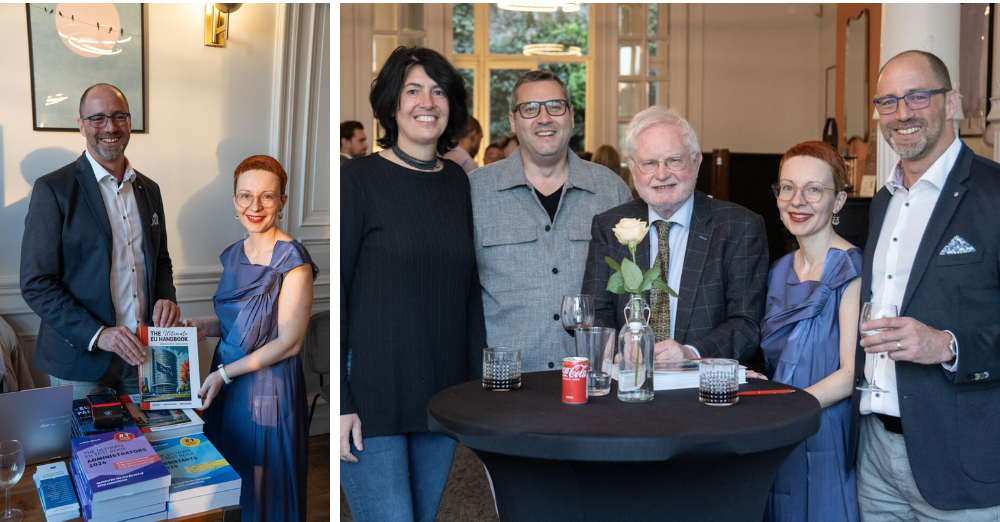
20 years ago, John Harper said 'yes' to an unknown person's unsolicited book pitch, which set of a chain of positive events. Yesterday, another book came to be as a result of two years' intense work and creativity of Sonia Gongu, Martin Tomov, Ljiljana Pavkov... and 'The Ultimate EU Handbook' was born.
Special thanks to Maryana Panyevina, Klym Ahrykov and David Meszaros for your support to make the launch event at Ambiorix Center & Podcast Studio special.
🇪🇺🙏📚
*This was originally posted on Andras Baneth's LinkedIn account.
What began as a discussion about burnout quickly turned into an exploration of something deeper. In my conversation with Dr. Vasadi Anna, a psychiatrist with decades of experience, it became clear that burnout isn’t just about long hours or stress—it’s rooted in expectations, upbringing, and the invisible pressures we internalize from an early age.
English summary of the latest episode of András' Hungarian podcast, 'Lélek Algoritmus – Ilyen az ember (avagy beszélgetések egy pszichiáterrel)' – 'The Soul’s Algorithm: The Human Condition (Conversations with a Psychiatrist).
What began as a discussion about burnout quickly turned into an exploration of something deeper. In my conversation with Dr. Vasadi Anna, a psychiatrist with decades of experience, it became clear that burnout isn’t just about long hours or stress—it’s rooted in expectations, upbringing, and the invisible pressures we internalize from an early age.
Burnout: More Than Just Exhaustion
Burnout gets thrown around a lot, but what does it actually mean? Many assume it’s just extreme fatigue, but as Anna pointed out, it’s something deeper. Burnout drains you emotionally, mentally, and even physically. It’s not the kind of tiredness that a weekend off can fix.
A key distinction Anna made: while depression can affect every part of life, burnout is usually tied to work. But it doesn’t stay there. It spreads—first to colleagues, then to family, then to an overall sense of disillusionment.
The Perfectionist’s Trap
Burnout isn’t just about overworking—it’s about overworking with the wrong mindset. People who push themselves too hard, who never feel their efforts are enough, who equate self-worth with productivity—these are the most at risk.
A common misconception: If I love my work, I can’t burn out. But passion doesn’t shield you. In fact, it often makes things worse. Overcommitting, ignoring personal limits, and relying on caffeine or alcohol to keep up are all red flags.
The Long Shadow of Childhood Expectations
Why do some people burn out while others keep their balance? Often, it starts in childhood.
Many of us grow up believing that our worth is tied to achievement. If we didn’t excel, love and approval felt conditional. Some parents—often unknowingly—reinforce this by setting impossibly high standards or withholding affection when a child falls short. Over time, this creates a need for external validation, making burnout almost inevitable.
Take elite athletes. Their entire identity is wrapped up in performance. When they lose, it’s not just a setback—it feels like a loss of personal value. The same happens in workplaces. A high achiever who misses a promotion doesn’t just feel professional disappointment—they feel like they have failed as a person.
Midlife Crisis: Burnout of the Soul
This naturally led us to midlife crisis, which, in many ways, is burnout playing out on a larger scale.
Both stem from the same root: spending years chasing external markers of success without stopping to ask, Is this what I actually want?
The midlife crisis tends to hit in the 40s or early 50s, often when several pressures collide:
- Aging Parents: The growing responsibility of caring for elderly parents forces many to confront their own mortality.
- Teenage Children: At the same time, kids are becoming more independent, adding another layer of emotional complexity.
- Career Pressures: By midlife, most people have built careers, but many start questioning if they’re on the right path.
It’s a perfect storm of obligations, internal and external, that makes people reevaluate everything—from their job to their marriage to their purpose.
Finding a Way Forward
So, how do we deal with burnout and midlife crisis without making rash decisions?
- Rethink Success – Instead of measuring success by salary, job title, or external validation, define it in terms of fulfillment and balance. If your work is draining you, can it really be called success?
- Recognize the Warning Signs – Losing interest in work, feeling detached, and struggling to muster enthusiasm are all early signs of burnout.
- Set Boundaries – Work will always demand more. It’s up to you to decide what is enough.
- Address Deep-Seated Patterns – If your self-worth depends on achievement, it might be time to rethink where that belief came from. Therapy and self-reflection can help break the cycle.
- Embrace Change – A midlife crisis isn’t necessarily a crisis—it can be a wake-up call. Maybe it’s time for a career shift, a realignment of priorities, or simply a different perspective.
Final Thoughts
Burnout and midlife crisis aren’t just work problems or age-related phases. They’re signals—urgent ones—telling us that something needs to change. The real question isn’t How do I push through? but Am I living a life that actually fits me?
If the answer is no, maybe the crisis isn’t a disaster. Maybe it’s an opportunity.