9 AI Prompts for Public Affairs Professionals Who Want Better Thinking, Not Just Faster Drafting
Discover 9 practical AI prompts for public affairs professionals to improve policy messaging, pressure-test arguments, anticipate objections, and communicate more clearly with EU stakeholders.
“What is the single weakest sentence in this briefing, and how would you fix it?”
This is a prompt I would probably never have come up with myself.
And yet, it is exactly the kind of question that makes AI useful for public affairs work.
Not because it writes the briefing for you.
But because it helps you test the thinking behind it.
A lot of AI use in public affairs still focuses on speed: summarise this, draft that, turn this into an email. Useful, yes. But not the whole story.
The real value is when AI helps you pressure-test your message before someone else does.
A policymaker.
A journalist.
A Commission official.
A sceptical attaché.
A client.
A colleague in the meeting who spots the weak point before you do.
So here are 9 AI prompts for public affairs professionals who want better thinking, not just faster drafting:
- Rewrite this message so it would survive a hostile question from an MEP in the relevant EP committee.
- List the 5 strongest objections a Commission desk officer at [DG] would raise to this proposal, then tighten the argument.
- Translate this policy language into something a national journalist would not misinterpret.
- What is the single weakest sentence in this briefing, and how would you fix it?
- Adapt this message for a sceptical Permanent Representation official who is short on time.
- Strip this text of buzzwords and replace them with concrete, defensible claims.
- Assume the audience is politically neutral but institutionally risk-averse, rewrite accordingly.
- What is the hidden assumption in this argument that could be challenged in a meeting?
- Reduce this to a 30-second spoken answer that sounds credible and not rehearsed.
The point is not to let AI do your public affairs work for you.
The point is to use it as a sparring partner.
To make your arguments clearer.
To make your messages harder to misread.
To find the sentence that sounds fine until someone challenges it.
To prepare for the question you hope no one asks.
That is where AI becomes genuinely useful.
Not as a shortcut around expertise.
But as a tool that helps you use your expertise better.
Stop Using AI for Answers. Start Using It for Better Questions
Discover why the real power of AI isn’t in providing answers, but in helping you ask better questions, uncover blind spots, and explore alternative perspectives for smarter decision-making.
Picasso once said: "Computers are useless, they can only give you answers."
That was true in his time, and still true today if you only use AI as a search ("answer") engine.
The real value is in the questions we ask:
- see blind spots in our reasoning ("Identify hidden biases or blind spots in my plan.)
- test assumptions we didn’t know we had ("Highlight my explicit or implicit assumptions.")
- explore alternative framings of the same problem ("How can this problem be viewed from multiple angles? How would a manager, a psychologist, a physicist, and musician look at it?") Or take these for example:
- Instead of asking “What’s the EU’s position on AI regulation?” try “What unintended consequences could the EU AI Act have for small startups?”
- Instead of “Summarize this report,” try “What’s missing from this report that an NGO focusing on circular economy could ask?”
- Instead of “Write a press release,” try “What would make this story credible to a skeptical journalist?”
AI doesn’t (and shouldn't) replace thinking. Just be sure to ask it the right way.
➡️ looking for AI workshops for your team? Influence Builders has trained 1500+ corporate and government affairs teams, and we'll be glad to work with you.
AI on LinkedIn: Hype, Hysteria, or Honest Insight?
A wry look at the LinkedIn AI conversation: from overhyped promises to doomsday takes, existential musings, and magical shortcuts. Where does reality meet rhetoric?
I get the impression that each time someone talks about AI on Linkedin, it's either:
- "oh this is such a hype/BS that only grifters talk about it"
- "you can go sit on a beach, it'll do everything for/instead of you"
- "whatever it churns out, it's a piece of cr*p that should be ridiculed"
- "here is some existential AI philosophy that I just invented"
- "a magic shortcut to hack your way to the top of the newsfeed"
- "it's the end of [name topic] and let's despair OR here is what to do about it"
- "this is revolutionary and the best of all worlds is about to come"
(I am guilty as charged of some of the above, I readily admit.)
Did I miss anything else?
p.s.: and the opportunistic plug, as the plus one: check out Influence Builders

AI: Artificial Intimacy
A technology-enabled societal change that is unstoppable (and that's not necessarily a good thing).
The world's most famous psychologist and design ethicist walk into a bar... or rather, a podcast studio, and record a fascinating conversation about the 'new' AI: artificial intimacy.
A technology-enabled societal change that is unstoppable (and that's not necessarily a good thing).
Worth 45' of your time.
**This was originally posted on Andras Baneth's LinkedIn account.
Why Do You or Do You Not Use AI Tools?
At a recent AI/GPT workshop, I asked participants why (or why not) they use AI tools.
At a recent AI/GPT workshop, I asked participants why (or why not) they use AI tools. One person said he doesn’t use it because he “doesn’t want to get intellectually lazy” to carry out “thinking” tasks he could do by himself.
I get the sentiment, but…
When cars were invented, one could say: “I want to keep riding horses.”
When the calculator became available: “I want to keep doing algebra with an abacus.”
When computers became widespread: “I want to keep using a typewriter.”
When smartphones came out: “I want to keep using a landline and sending letters.”
When the internet became widely accessible: “I want to keep going to the library to research everything manually.”
When streaming services took off: “I want to keep going to the video rental store for movies.”
The point is, resisting new tools may feel like preserving skills, but these innovations often help us to focus on deeper, more complex challenges by freeing up time or effort.
(And feel free to keep riding horses as a sport, buy paperback books instead of ebooks, do mental calculus while shopping, and write handwritten love letters.)
**This was originally posted on Andras Baneth's LinkedIn account.
AI for EU Affairs
Launching the "AI for EU Affairs" *free* webinar series.
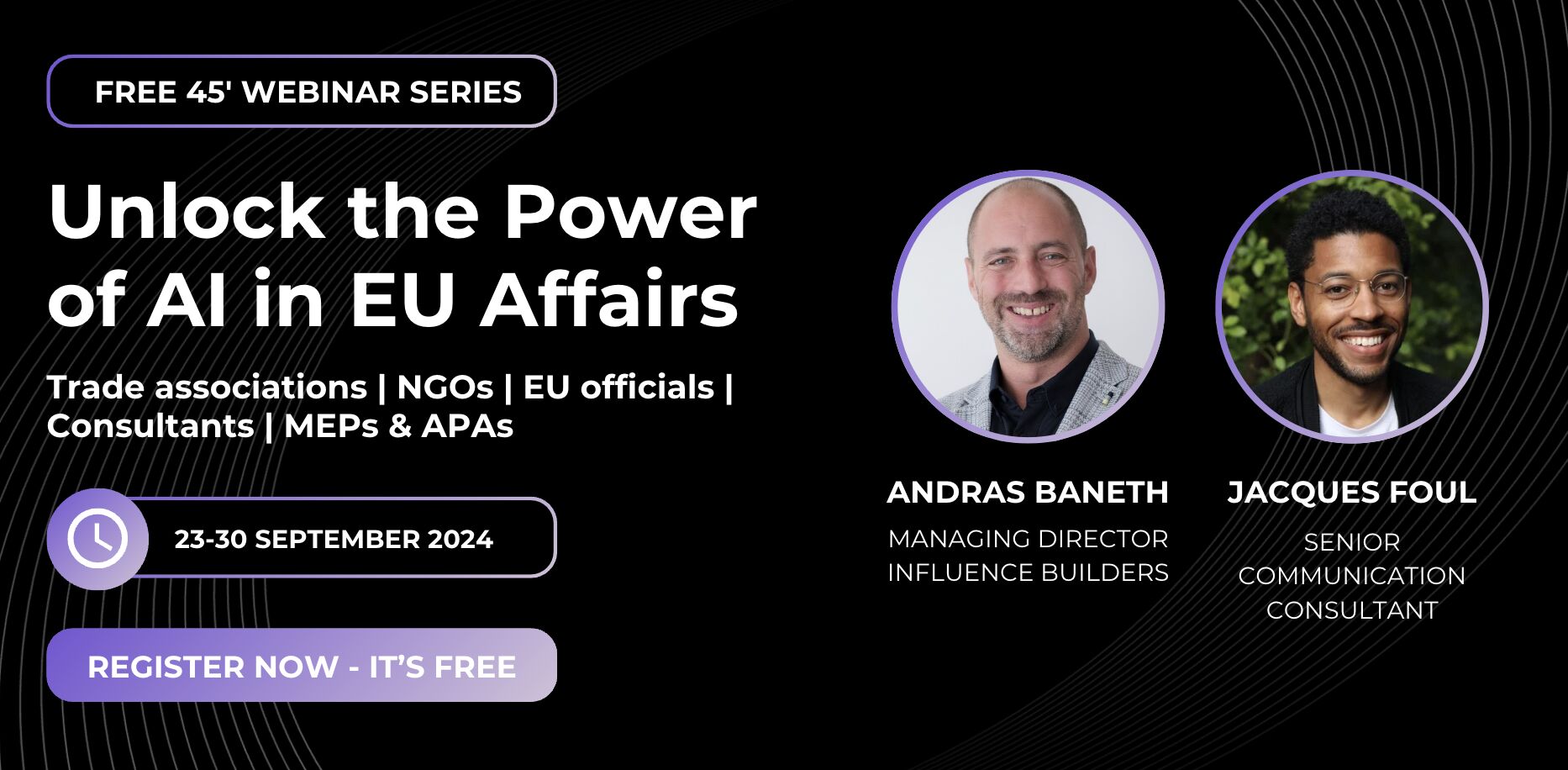
Launching the "AI for EU Affairs" *free* webinar series for:
- Trade associations
- NGOs
- EU officials
- Communication professionals
- Public affairs & advocacy consultants
- MEPs & Assistants (APAs)
Starting on the week of 23 September, with Jacques Foul ✌️
Register today & share with colleagues: https://lnkd.in/e6npR854
See you there!
**This was originally posted on Andras Baneth's LinkedIn account.
European Parliament 2025 Agenda in Google Calendar [unofficial, free]
By popular demand, here it goes again!
By popular demand, here it goes again!
I often got frustrated that I had to download the PDF calendar of the European Parliament’s website to find out when are the Strasbourg plenary sessions, the committee weeks in Brussels and other details.
As a result, I’ve created a free, public [unofficial] Google Calendar for 2025 that you can easily pull into your Android, iPhone, Outlook, or Google Calendar to see each week’s designation.
It’s the 9th year I’m offering it, so if you find any mistakes or have comments, please let me know!
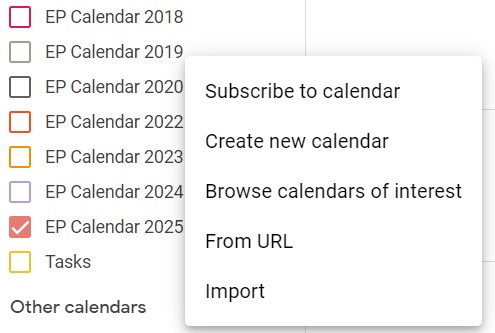
Copy this iCAL link to add the EP 2025 calendar into your Google calendar or other app.
- Go to Other calendars
- Click the “+” sign.
- Choose “From URL” and insert the following link:
https://calendar.google.com/calendar/embed?src=9dbc8e11d8272cf8c6505e31a5344c7166e08424af507a2a45ef434aa4eebcd6%40group.calendar.google.com&ctz=Europe%2FBrussels
Link to the online version of this EP 2025 calendar
Don’t know how to integrate it? Just Google “how to subscribe to iCal for [your device]”
Wish to embed the calendar on your site? Here is the iFrame code:
<iframe src="https://calendar.google.com/calendar/embed?src=9dbc8e11d8272cf8c6505e31a5344c7166e08424af507a2a45ef434aa4eebcd6%40group.calendar.google.com&ctz=Europe%2FBrussels" style="border: 0" width="800" height="600" frameborder="0" scrolling="no"></iframe>
Enjoy and share!
Disclaimer: I take no responsibility for any errors or changes, it’s purely for information purposes.
5 Reasons to Use AI in Public Affairs
Not using AI for your public affairs work yet?
Not using AI for your public affairs work yet?
5 reasons why Jacques Foul and I think you should give it a try.
p.s.: ...and if you're intrigued, sign up for our upcoming FREE webinars in September (for trade associations, NGOs, consultants, EU officials, and comms professionals) : https://lnkd.in/e6npR854
**This was originally posted on Andras Baneth's LinkedIn account.
How Our Words Shape Our World | Andras Baneth | TEDxKULeuvenBrussels
How your words shape your world": truth, interpretation, manipulation, honesty, and political language... in my TEDx talk.
Let me get started and share with you those famous insights.
John the Evangelist said that before God created the world, in the beginning was the word. What he's saying is that it was the inherent power of words through which the world was created. This reminded me of an anecdote involving linguist and dictionary maker Noah Webster. When his wife came home to find him kissing the maid, she cried out loud, "Noah, I'm surprised!" To which he, as a good linguist would, replied, "No, my dear, it is I who is surprised. You are astonished!"
I've always been fascinated by linguistics, political communication, and psychology, so I tried to explore this area a little deeper. In the 21st century, something interesting happened. Words and language have become so accessible and useful that ChatGPT was born, while our own words and the meaning we attach to them have become cheap and devalued. Word distortion, obfuscation, deception, spin, and gaslighting are everyday realities.
George Orwell, in his book "1984" and his pamphlet "Politics and the English Language," describes how societies and public discourse are moulded by words. But I've also understood and learned that it is not just the outside world that words shape. The words that we use effectively create our own inner reality. Words are magical tools through which we interpret and filter the outside world. But words are often misused, distorted, spun, and abused.
In "1984," the "Ministry of Peace" was effectively the "Ministry for War," while today, a "special military operation" is *not* a war. Lies can just be "alternative facts," and since torture is banned, "enhanced interrogation techniques" are OK. Through words, we tap into our own personal and collective history, our biases, and our emotions. Words also create feelings and shape our own inner dialogue.
You might be wondering: What is the ultimate purpose of words? Every word that a person speaks and utters, consciously or unconsciously, reveals the speaker's true intentions. What do I mean by that? Words can sustain power. Manipulators, who have *their* own best interest at heart, will degrade, dismiss, and praise us so they can control others and benefit themselves. When a politician says, "Vote for me if you're a patriot," that is not persuasion but well-disguised manipulation.
Words are used to "minimize." When my pain is strong, when I'm intensely embarrassed, or when I'm extremely at unease, I'm going to use my linguistic toolkit to *shrink* it so I can cope. "Dying" becomes "departing." I'm not "in debt"; I just have "negative cash flow." And that breakup wasn't a big deal because, anyway, we were "just friends." Words are used to bend the truth. I'm not depressed, just "under the weather." I wasn't fired, just "downsized." Reality hurts, reality is painful, so I just want reality to go away so I can temporarily ease my pain. But reality always makes its timely return.
So let's see what is actually the goal with our words. Well, the goal is to *accurately* and *honestly* speak the *truth* and be *real*. When I aim to speak the truth and be real, I wonder: Do I want to describe *what there is* or imagine *what there should be*? Or, as Aristotle said, the actuality or the "potentiality." Is it a block of stone that I'm seeing, or the potential of a beautiful sculpture? The actuality or potentiality?
Also, when I see, describe, and understand the world, I want to peel off the layers that distort and blur my vision. A "friend" used to mean someone who would remember your birthday even when you forgot hers. But today, a friend is someone who shares a new conspiracy theory every day on her TikTok. The sudden death of a loved one is an emotional shock with long-lasting effects—a *trauma*. Failing your Accounting 101 exam, though unpleasant, is *not* a trauma. I understand the desire to stretch a word, to redefine its meaning. But stretching it so far and so much that it snaps is going to do a disservice to the original word, betraying it and devaluing it.
What word can I use then for an actual trauma if I need to? So you might be wondering, what is actually the *right* word? Well, the right word is definitely *not* one that describes the impossible, or the inflated, or the illusory, but a word that is real, accurate, and truthful.
Picture a scene: A man is talking to a woman in a room. It could be a podcast interview, a hostage situation, an escape room game, or the start of a romantic encounter. Whatever way I choose to interpret and imagine that largely depends on my *filters*—my perspective, my fears, my biases, conscious or unconscious prejudice, or my hopes. So, in short, my intentions.
Intentions are often very hard to find. They may not be obvious or right in front of us, and in political language, it's even more difficult. When a dictator says that he wants to "liberate" a country, what are his true intentions? For political language, we often need the lawyer's hat, meaning that we need to rely on "circumstantial evidence" or reasonable assumptions so we can peel back and try to find the true meaning behind those words.
When we manage to do that, something wonderful happens. Because we refuse to accept what we are being told at face value, we stop letting others mislead us. Now, doing that to *ourselves* is even more challenging. When I want to discover my own intentions behind my own words, which might be informed by fear because I'm deeply afraid of something, or informed by some unpleasant event that I want to explain away, and I try to look behind and see and decode the filters that I have applied, something magical happens. I no longer allow myself to be misled by those hidden agendas—agendas hidden in plain sight, even from myself, through distortion or self-deception—so I can ultimately get to the core, harsh, and *actual* truth.
A magic trick, once you know how it's done, will lose its power. In this case, it's a wonderful thing. Ultimately, where I hope to get, the place where I want to arrive, is to find a word without distortion, without obfuscation, without deception, without spin, and without gaslighting. Finding this is a sort of defence, a sort of immunity, which is not induced by a vaccine, but by something that you have discovered in yourself—a power that you may have never realised existed. It's an amazing thing. But unfortunately, it's not enough.
Because if you're aiming to create a better *outer* and *inner* world, you would like to find your true potential, and you would like to create the *potentiality* of change. That is not without dangers, because it has a lot of ethical and moral considerations. Ultimately, it comes down to the values—the values that you hold and the values that others hold. Values are somewhat hidden forces that inform our intentions, influence our message, shape our techniques, and guide our words.
Once all of this lines up, you have the potentiality to imagine and find a word for a more *honest* world. Now, values are so important that when you realise what *yours* are, and then you find a gap between yours and the speaker's behind their words, a *red alert* should go up. That's not right, that the person is so far away from where you would like them to be. But when you realise that you yourself may be misnarrating reality in a way that your words and your own values are in a mismatch, in my case, I get very frustrated that I've fallen short again with my big, lofty ideals.
But when I manage to reach that kind of integrity where my values, my intentions, my message, my techniques, and my words align, then I'm really proud to have presented that to you in a TEDx talk called "Your Words Will Shape Your World."
Thank you.
Can You?
Can you convert 'parts per billion' into a common sense unit?
Can you convert 'parts per billion' into a common sense unit? Can you debunk unscientific BS? Can you persuade skeptical audiences?
Yes.
And since ChatGPT/AI/Gemini/... are around, it's far easier than ever before.
Scientists are subject matter experts; they are not expected to be Hollywood storytellers. Finally, there is a tool that can help them be just that.
A couple ideas above ☝️
p.s.: interested in #scicomm workshops for #scientists? Get in touch: Influence Builders
**This was originally posted on Andras Baneth's LinkedIn account.
Humor and Jokes
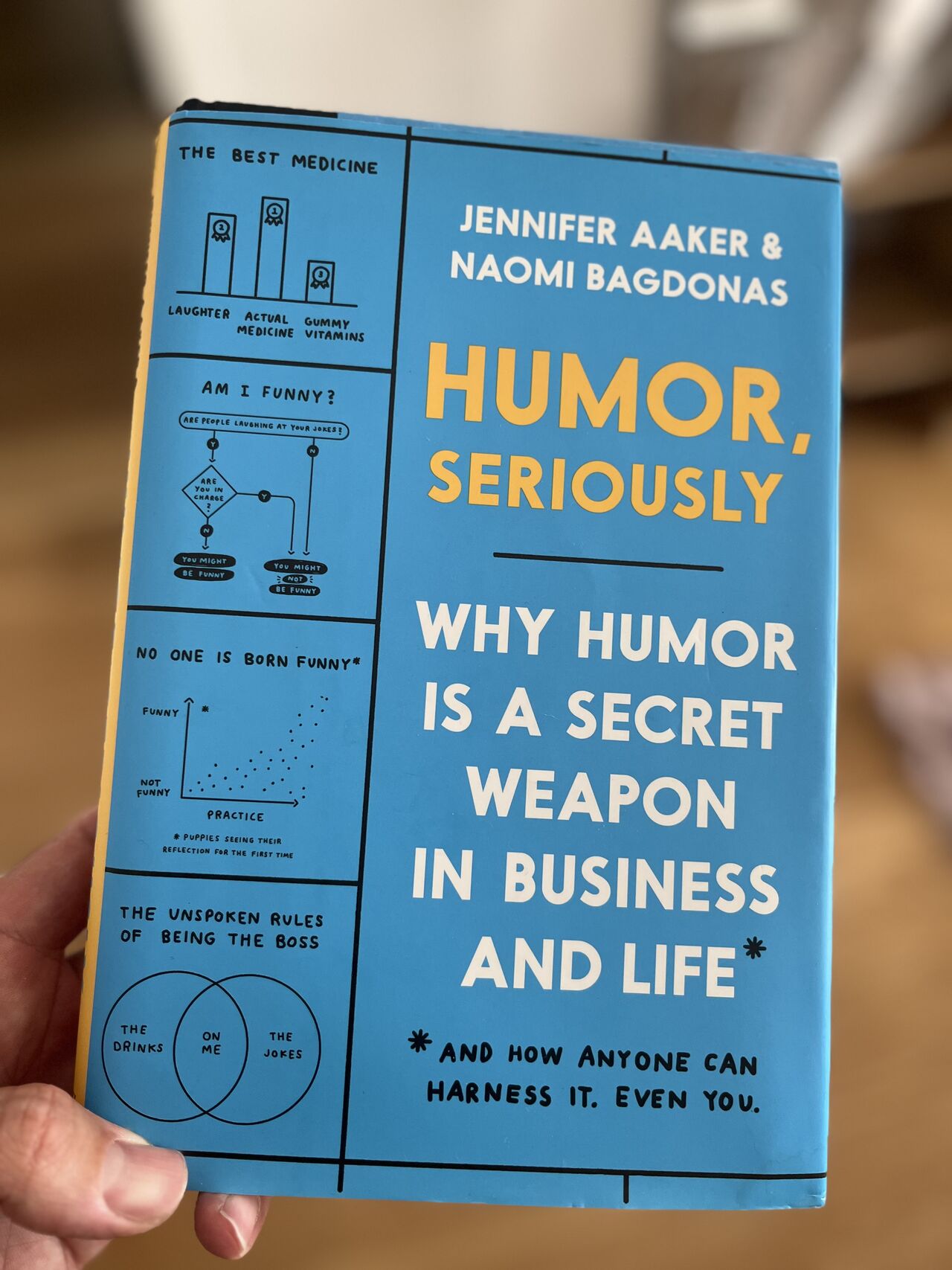
Humor ≠ jokes (they could be part of it).
Humor ≠ jokes (they could be part of it)
Humor = levity (love that word!), confidence, subtlety, elegance, wit, and connectionUsing it in business (and government, and science communication, and… everywhere) is powerful, if done right.
Great insights here 👇🏻
*This was originally posted on Andras Baneth's LinkedIn account.
Neotoddlerism
Many activists on both the Left and Right now hope to bring about their ideal world.
"Many activists on both the Left and Right now hope to bring about their ideal world the same way a spoiled brat acquires a toy they’ve been denied: by being as loud and hysterical as possible. This is neotoddlerism: the view that utopia can be achieved by acting like a three-year old."
The Rise of Neotoddlerism
*This was originally posted on Andras Baneth's LinkedIn account.
Featured articles
and Insights
This compilation takes us through the history of the first #EPSO candidates, showcasing their journey and achievements from the very beginning to the present day—and even looking ahead.
A compilation of the first #EPSO candidates throughout history, until today and beyond.
(Have you played with ChatGPT-4o's new image capabilities? Pretty impressive.)
*This was originally posted on Andras Baneth's LinkedIn account.
Discover the inspiring story behind The Ultimate EU Handbook, a book born from the unexpected connection of a chance pitch and years of creative collaboration.
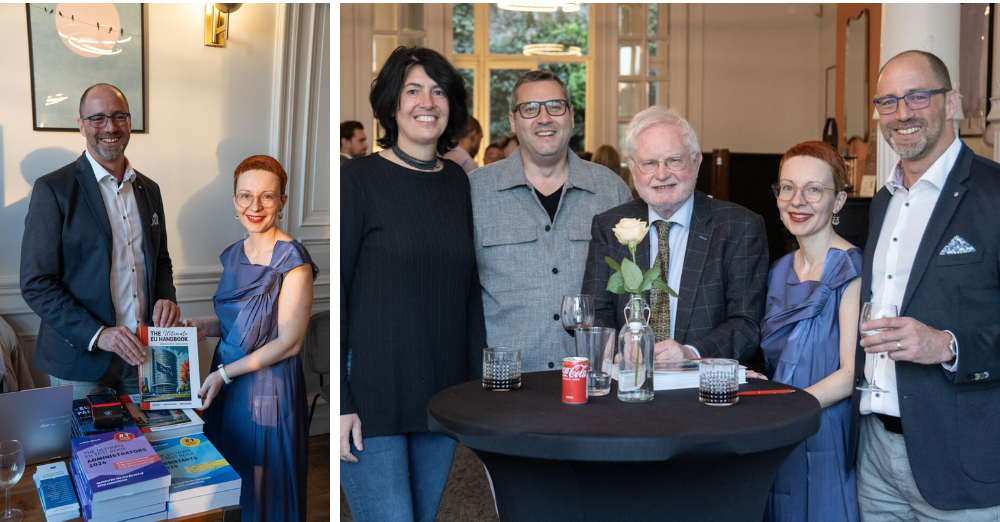
20 years ago, John Harper said 'yes' to an unknown person's unsolicited book pitch, which set of a chain of positive events. Yesterday, another book came to be as a result of two years' intense work and creativity of Sonia Gongu, Martin Tomov, Ljiljana Pavkov... and 'The Ultimate EU Handbook' was born.
Special thanks to Maryana Panyevina, Klym Ahrykov and David Meszaros for your support to make the launch event at Ambiorix Center & Podcast Studio special.
🇪🇺🙏📚
*This was originally posted on Andras Baneth's LinkedIn account.
What began as a discussion about burnout quickly turned into an exploration of something deeper. In my conversation with Dr. Vasadi Anna, a psychiatrist with decades of experience, it became clear that burnout isn’t just about long hours or stress—it’s rooted in expectations, upbringing, and the invisible pressures we internalize from an early age.
English summary of the latest episode of András' Hungarian podcast, 'Lélek Algoritmus – Ilyen az ember (avagy beszélgetések egy pszichiáterrel)' – 'The Soul’s Algorithm: The Human Condition (Conversations with a Psychiatrist).
What began as a discussion about burnout quickly turned into an exploration of something deeper. In my conversation with Dr. Vasadi Anna, a psychiatrist with decades of experience, it became clear that burnout isn’t just about long hours or stress—it’s rooted in expectations, upbringing, and the invisible pressures we internalize from an early age.
Burnout: More Than Just Exhaustion
Burnout gets thrown around a lot, but what does it actually mean? Many assume it’s just extreme fatigue, but as Anna pointed out, it’s something deeper. Burnout drains you emotionally, mentally, and even physically. It’s not the kind of tiredness that a weekend off can fix.
A key distinction Anna made: while depression can affect every part of life, burnout is usually tied to work. But it doesn’t stay there. It spreads—first to colleagues, then to family, then to an overall sense of disillusionment.
The Perfectionist’s Trap
Burnout isn’t just about overworking—it’s about overworking with the wrong mindset. People who push themselves too hard, who never feel their efforts are enough, who equate self-worth with productivity—these are the most at risk.
A common misconception: If I love my work, I can’t burn out. But passion doesn’t shield you. In fact, it often makes things worse. Overcommitting, ignoring personal limits, and relying on caffeine or alcohol to keep up are all red flags.
The Long Shadow of Childhood Expectations
Why do some people burn out while others keep their balance? Often, it starts in childhood.
Many of us grow up believing that our worth is tied to achievement. If we didn’t excel, love and approval felt conditional. Some parents—often unknowingly—reinforce this by setting impossibly high standards or withholding affection when a child falls short. Over time, this creates a need for external validation, making burnout almost inevitable.
Take elite athletes. Their entire identity is wrapped up in performance. When they lose, it’s not just a setback—it feels like a loss of personal value. The same happens in workplaces. A high achiever who misses a promotion doesn’t just feel professional disappointment—they feel like they have failed as a person.
Midlife Crisis: Burnout of the Soul
This naturally led us to midlife crisis, which, in many ways, is burnout playing out on a larger scale.
Both stem from the same root: spending years chasing external markers of success without stopping to ask, Is this what I actually want?
The midlife crisis tends to hit in the 40s or early 50s, often when several pressures collide:
- Aging Parents: The growing responsibility of caring for elderly parents forces many to confront their own mortality.
- Teenage Children: At the same time, kids are becoming more independent, adding another layer of emotional complexity.
- Career Pressures: By midlife, most people have built careers, but many start questioning if they’re on the right path.
It’s a perfect storm of obligations, internal and external, that makes people reevaluate everything—from their job to their marriage to their purpose.
Finding a Way Forward
So, how do we deal with burnout and midlife crisis without making rash decisions?
- Rethink Success – Instead of measuring success by salary, job title, or external validation, define it in terms of fulfillment and balance. If your work is draining you, can it really be called success?
- Recognize the Warning Signs – Losing interest in work, feeling detached, and struggling to muster enthusiasm are all early signs of burnout.
- Set Boundaries – Work will always demand more. It’s up to you to decide what is enough.
- Address Deep-Seated Patterns – If your self-worth depends on achievement, it might be time to rethink where that belief came from. Therapy and self-reflection can help break the cycle.
- Embrace Change – A midlife crisis isn’t necessarily a crisis—it can be a wake-up call. Maybe it’s time for a career shift, a realignment of priorities, or simply a different perspective.
Final Thoughts
Burnout and midlife crisis aren’t just work problems or age-related phases. They’re signals—urgent ones—telling us that something needs to change. The real question isn’t How do I push through? but Am I living a life that actually fits me?
If the answer is no, maybe the crisis isn’t a disaster. Maybe it’s an opportunity.