9 AI Prompts for Public Affairs Professionals Who Want Better Thinking, Not Just Faster Drafting
Discover 9 practical AI prompts for public affairs professionals to improve policy messaging, pressure-test arguments, anticipate objections, and communicate more clearly with EU stakeholders.
“What is the single weakest sentence in this briefing, and how would you fix it?”
This is a prompt I would probably never have come up with myself.
And yet, it is exactly the kind of question that makes AI useful for public affairs work.
Not because it writes the briefing for you.
But because it helps you test the thinking behind it.
A lot of AI use in public affairs still focuses on speed: summarise this, draft that, turn this into an email. Useful, yes. But not the whole story.
The real value is when AI helps you pressure-test your message before someone else does.
A policymaker.
A journalist.
A Commission official.
A sceptical attaché.
A client.
A colleague in the meeting who spots the weak point before you do.
So here are 9 AI prompts for public affairs professionals who want better thinking, not just faster drafting:
- Rewrite this message so it would survive a hostile question from an MEP in the relevant EP committee.
- List the 5 strongest objections a Commission desk officer at [DG] would raise to this proposal, then tighten the argument.
- Translate this policy language into something a national journalist would not misinterpret.
- What is the single weakest sentence in this briefing, and how would you fix it?
- Adapt this message for a sceptical Permanent Representation official who is short on time.
- Strip this text of buzzwords and replace them with concrete, defensible claims.
- Assume the audience is politically neutral but institutionally risk-averse, rewrite accordingly.
- What is the hidden assumption in this argument that could be challenged in a meeting?
- Reduce this to a 30-second spoken answer that sounds credible and not rehearsed.
The point is not to let AI do your public affairs work for you.
The point is to use it as a sparring partner.
To make your arguments clearer.
To make your messages harder to misread.
To find the sentence that sounds fine until someone challenges it.
To prepare for the question you hope no one asks.
That is where AI becomes genuinely useful.
Not as a shortcut around expertise.
But as a tool that helps you use your expertise better.
Stop Using AI for Answers. Start Using It for Better Questions
Discover why the real power of AI isn’t in providing answers, but in helping you ask better questions, uncover blind spots, and explore alternative perspectives for smarter decision-making.
Picasso once said: "Computers are useless, they can only give you answers."
That was true in his time, and still true today if you only use AI as a search ("answer") engine.
The real value is in the questions we ask:
- see blind spots in our reasoning ("Identify hidden biases or blind spots in my plan.)
- test assumptions we didn’t know we had ("Highlight my explicit or implicit assumptions.")
- explore alternative framings of the same problem ("How can this problem be viewed from multiple angles? How would a manager, a psychologist, a physicist, and musician look at it?") Or take these for example:
- Instead of asking “What’s the EU’s position on AI regulation?” try “What unintended consequences could the EU AI Act have for small startups?”
- Instead of “Summarize this report,” try “What’s missing from this report that an NGO focusing on circular economy could ask?”
- Instead of “Write a press release,” try “What would make this story credible to a skeptical journalist?”
AI doesn’t (and shouldn't) replace thinking. Just be sure to ask it the right way.
➡️ looking for AI workshops for your team? Influence Builders has trained 1500+ corporate and government affairs teams, and we'll be glad to work with you.
AI on LinkedIn: Hype, Hysteria, or Honest Insight?
A wry look at the LinkedIn AI conversation: from overhyped promises to doomsday takes, existential musings, and magical shortcuts. Where does reality meet rhetoric?
I get the impression that each time someone talks about AI on Linkedin, it's either:
- "oh this is such a hype/BS that only grifters talk about it"
- "you can go sit on a beach, it'll do everything for/instead of you"
- "whatever it churns out, it's a piece of cr*p that should be ridiculed"
- "here is some existential AI philosophy that I just invented"
- "a magic shortcut to hack your way to the top of the newsfeed"
- "it's the end of [name topic] and let's despair OR here is what to do about it"
- "this is revolutionary and the best of all worlds is about to come"
(I am guilty as charged of some of the above, I readily admit.)
Did I miss anything else?
p.s.: and the opportunistic plug, as the plus one: check out Influence Builders

AI Isn't Just a Tech Skill—It's About Thinking Better
Mastering AI tools like Copilot, ChatGPT, or Gemini isn’t about software expertise—it’s about linguistic precision and self-awareness.
A fundamental misconception about AI is that it's an IT or software or digital skill.
Making the most of Copilot/ChatGPT/Gemini etc. is a linguistic skill, but at its core it is about self-knowledge:
- do I know what is that I don't know?
- am I ready to be challenged?
- am I open to new ideas?
- where do I draw the line between cognitive outsourcing and self-confidence?
Effective use of AI tools largely depends on improving on these.
*This was originally posted on Andras Baneth's LinkedIn account.
Unlock Free Strategic Consulting: How AI + '6 Thinking Hats' Can Sharpen Your Problem-Solving
Discover how AI, combined with Edward de Bono’s '6 Thinking Hats' approach, can serve as your free strategic consultant.
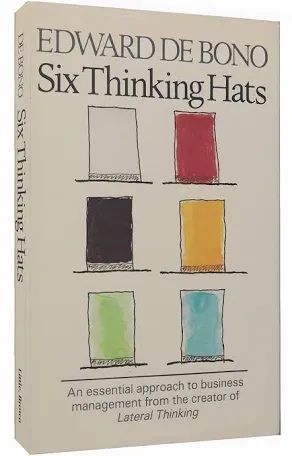
Do you know you have a strategic consultant at your fingertips, for free?
Suppose you are a public health or pharma vaccine expert, tasked with addressing preventable diseases in low-income countries.
You can also apply Edward de Bono’s '6 thinking hats' approach to analyze this challenge from multiple angles, and then dig deeper.
The hats are:
1. White Hat: Focuses on objective thinking, facts, and feasibility.
2. Red Hat: Focuses on emotional thinking, subjective feelings, and intuition.
3. Black Hat: Focuses on critical thinking, skepticism, risks, and potential problems.
4. Yellow Hat: Focuses on optimistic thinking and best-case scenarios.
5. Green Hat: Focuses on creative and associative thinking, brainstorming, and new ideas.
6. Blue Hat: Focuses on structured thinking, management, and the big picture
Here is how:
1. Give your AI tool (ChatGPT, Co-pilot, ...) a role:
"You are a senior health advocacy expert."
2. Instruct it about your project:
"You are tasked with creating a strategy to tackle vaccine hesitancy in Bangladesh."
3. Apply the methodological framework:
"Use the 'thinking hats' approach to analyse the problem from multiple angles"
4. Focus on the outcome/results:
"Analyze these in conjunction with each other and choose the best solutions"
5. Request your preferred format:
"Use bullet points and put this all in a table."
The results are a good starting point so you can dig deeper on each.
As always, the more context you give in the form of background documents or instructions, the better (and more relevant) the results will be.
(I got an excellent result using o1 in ChatGPT.)
If you found this helpful, let me know. If not, add a comment below why.
...and if you'd like to train your team on how to do it professionally, just get in touch.
*This was originally posted on Andras Baneth's LinkedIn account.
Targeting EU Pharma Policy-Makers: How AI Can Refine Your Advocacy Strategy
Who exactly are the EU policy-makers shaping pharma regulations, and how do you craft messages that resonate with them?
"I want to run an advocacy campaign targeted at EU policy-makers dealing with pharma issues." - but who are they? What describes them as a group? How do I come up with relevant messages?
AI can be very helpful for basic audience research for communication campaigns, if prompted well.
Below is a short demonstration of the use case, and a couple of additional demographic and sociological pointers to guide the search that I prompted Perplexity to conduct.
It shows 'Pro' but I haven't paid a single cent for it (if I used it more, I would need to, but at this level it's free). And it's doing a pretty impressive job.
A good question (query/prompt) is worth a thousand answers.
*This was originally posted on Andras Baneth's LinkedIn account.
Do AI Tools Have Political Bias? A New Study Sheds Light
AI models may not have personal opinions, but their responses are shaped by built-in or inferred values—meaning the way you phrase a question can influence the answer.
Do AI tools have 'opinions' and 'political preferences'?
Well, kind of, because they are all based on pre-configured or inferred 'values' which impact their responses, especially when your question is formulated in a specific way.
An insightful study just came out to analyze this topic - here is a brief summary of its main points.
Hope you'll find it helpful.
(More such summaries are coming, so make sure to follow/subscribe.)
*This was originally posted on Andras Baneth's LinkedIn account.
From Words to War: Orbán’s Dangerous Dehumanization Tactics
Hungarian PM Viktor Orbán’s choice of words—calling his opponents “stink bugs”—isn’t just rhetoric.
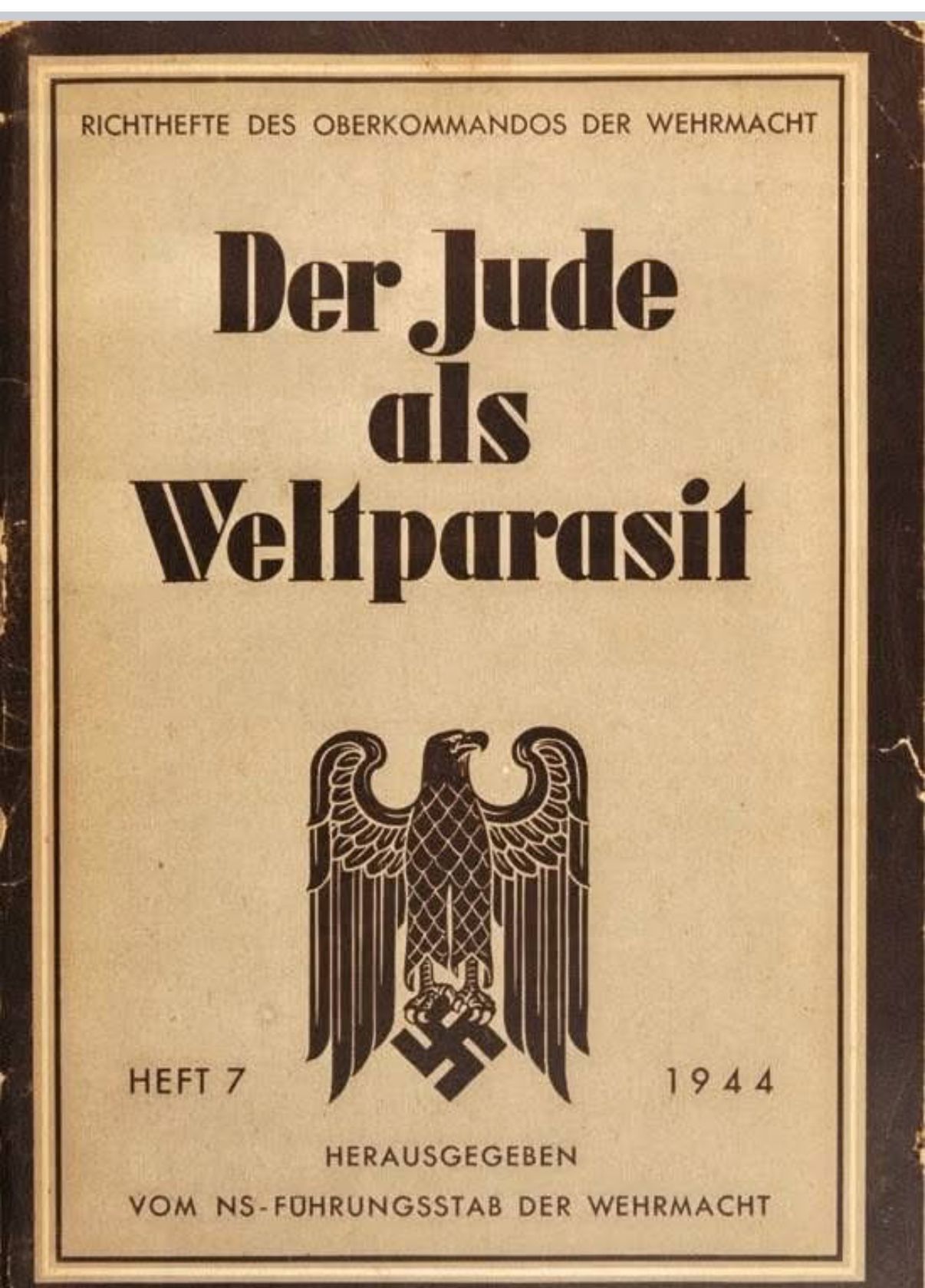
“After today’s festive assembly, we’ll have the Easter spring cleaning - the stink bugs [parasites] weathered the winter”, said Hungarian PM Viktor Orbán in his 15 March national commemoration speech, referring to his opponents, judges, civil society.
Stink bugs.
(“Poloskák” in Hungarian. No linguistic connection to Poland.)
First, it starts with dehumanization.
Then comes the propaganda war.
When the cult brainwashing reaches the required level, action can begin.
Law is no longer a backstop because the opponents, who are not limited to the political opposition, are “enemies of the people”.
And with such enemies, anything is permissible since they don’t deserve any rights.
This is fascism/nazism/totalitarianism, North Korean, Belorussian etc. style.
p.s.: and don’t kid yourself, Hungary is not about to exit the EU. It’s aiming to blow the entire edifice up.
p.s2: the image is a historic poster from Nazi Germany using the same metaphor
*This was originally posted on Andras Baneth's LinkedIn account.
AI Policy vs. AI Skills: UK Minister’s ChatGPT Blunder Sparks Debate
UK Cabinet Minister for AI, Peter Kyle, made a classic mistake—treating ChatGPT like a search engine.
Peter Kyle, UK Cabinet Minister for AI, does a rookie mistake when using ChatGPT: thinking it’s a good search engine (definitely not… yet).
News coverage reveals that “Kyle also used the chatbot to canvas ideas for media appearances, asking: “I’m Secretary of State for science, innovation and technology in the United Kingdom. What would be the best podcasts for me to appear on to reach a wide audience that’s appropriate for my ministerial responsibilities?” ChatGPT suggested The Infinite Monkey Cage and The Naked Scientists, based on their number of listeners.
There are much better ways to prompt (e.g. describe your goal instead of your role; give more details about your ideal target audience; or perhaps take a step back and ask “I want to give more visibility to policy XY, what are the best ways to go about it?”) and there are far better tools (even Bing is improving but Perplexity is already excellent).
The moral of the story: making AI policy is very different from AI skills.
*This was originally posted on Andras Baneth's LinkedIn account.
The Next Frontier: AI Dataset Manipulation and the Battle for Truth
SEO was the last battleground—now, AI dataset manipulation is the real threat. As language models shape how we understand social issues, subtle biases and unseen influences could redefine public perception without anyone realizing it.
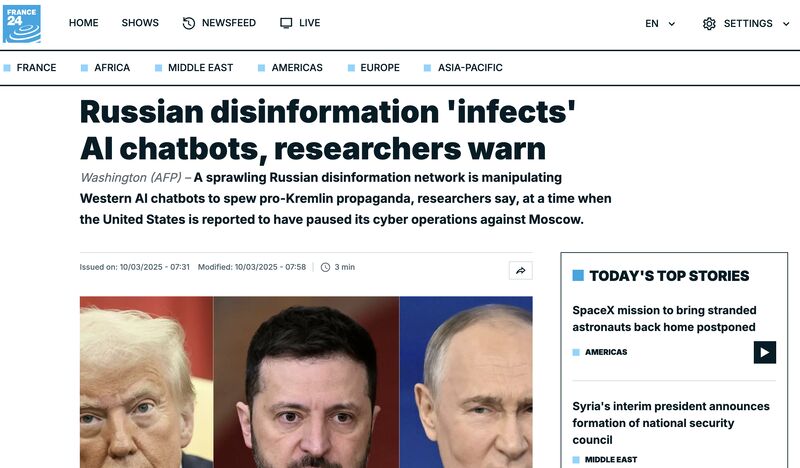
The next frontier is not search engine optimization but AI dataset manipulation.
This seems far more dangerous because it's even less transparent (or possible) to spot, even for those who run these large language models, let alone the users who broadly trust the output.
Especially when the queries are not about facts/figures but broad social issues (e.g. "Why are human rights important?"), polluted/manipulated systems can very subtly influence the reader through their words.
**This was originally posted on Andras Baneth's LinkedIn account.
The Ultimate Persuasion Formula: Science Meets Influence
Persuasion isn't just an art—it’s a science. While many rely on intuition, others seek a data-driven approach. For my fellow geeks, here’s the ultimate formula to master influence.
All communicators are interested in persuasion.
Most do it intuitively. Others prefer a scientific method.
For my fellow geeks, here is the ultimate formula:
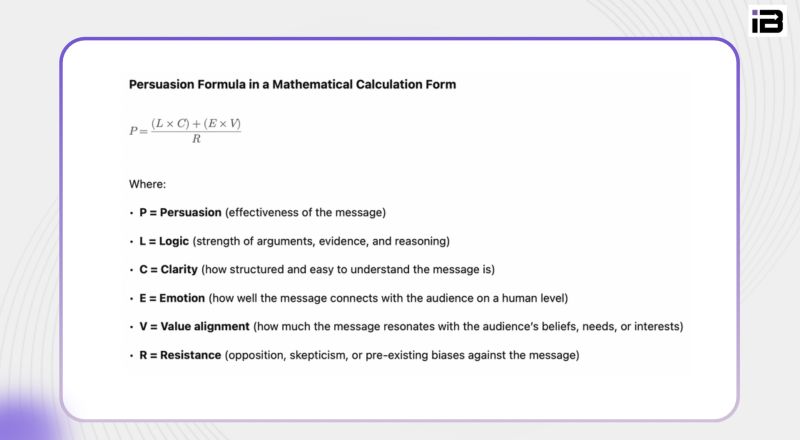
**This was originally posted on Andras Baneth's LinkedIn account.
Europe at a Crossroads: Will Leaders Wake Up Before It’s Too Late?
Europe faces an existential crisis. With rising geopolitical threats, internal fragmentation, and a lack of strategic vision, the EU risks collapse or radical transformation. Can European leaders recognize the urgency before it's too late?
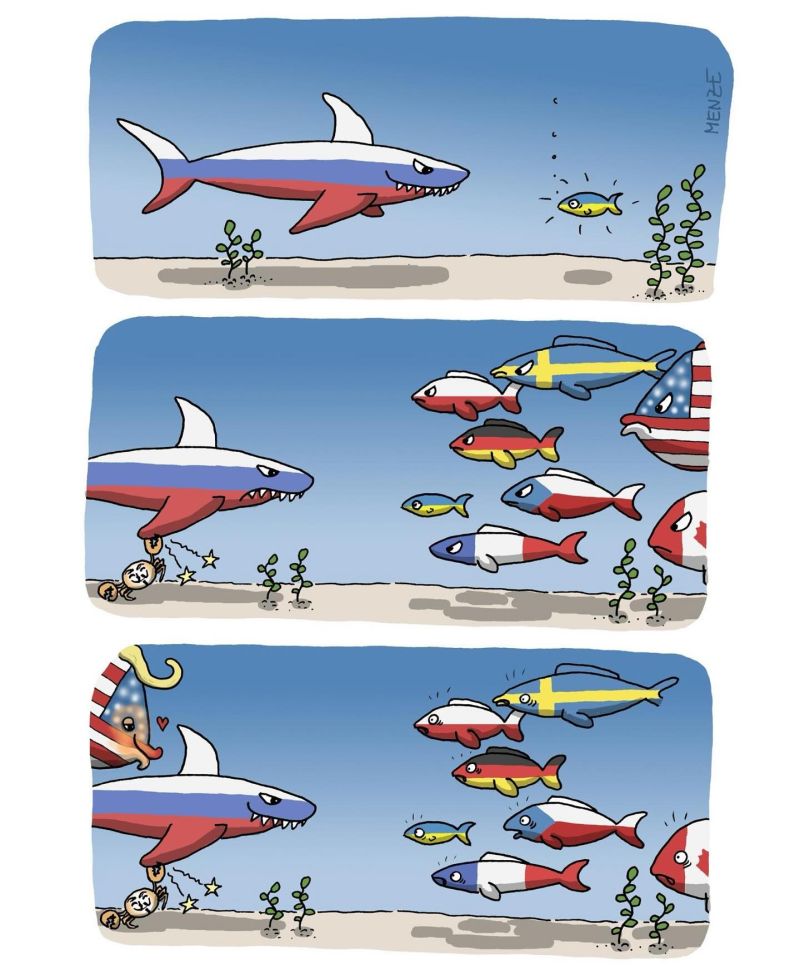
Europe’s tragedy of the 21st century: its lack of imagination and short memory on how easily peace can collapse.
Are EU and national leaders aware how serious the situation is?
There is a real 30-40% chance that the European Union breaks up or ceases to exist in its current form. This could be full fragmentation or a partial one where "core" countries, committed to deep integration (internal market, Schengen, Eurozone, defense union, etc.), form a new alliance or remake the rules, excluding members that actively sabotage Europe’s future.
Why?
In November 2024, the US Director of National Intelligence warned that Russia is using its intelligence services to sabotage Europe’s defense industrial base, recruiting criminals and proxies to attack military installations, defense firms, logistics, and utilities.
This is part of a global battle of grand strategies where Russia, and shockingly, the "new right" of the US administration, are winning.
It is not difficult because the EU barely has a strategy or narrative to counter it. Nationalism is appealing, tapping into powerful emotions with effective manipulation that would make George Orwell turn in his grave (capitulation = "peace," democratically elected leader = "dictator," refusing to obey a bully = "disrespectful," etc.).
Meanwhile, Europe struggles to find its own voice, having lost the muscles it wasn’t supposed to use again. It naively trusted its Transatlantic partner that the post-WW2 Bretton Woods system of economic stability and security guarantees would last forever—until recently, when it was hijacked and turned against it.
Terror attacks on European soil are becoming normalized. Terror-supporters march weekly with growing audacity, and foreign interference in elections is increasingly aggressive, pulling European societies apart by eroding the center.
Europe’s social spending and market economy have created prosperity, but the honeymoon from history is over. The awakening may be harder than expected. We can’t afford minimal growth, declining competitiveness, and the fantasy that wars and self-defence are relics of the past.
Technologically, we risk becoming a backwater. While there are local champions, global players increasingly ignore Europe rather than follow its regulations. AI will disrupt labor markets and pose geostrategic risks regarding services, data, and governance. Add humanoid robots and automation, and the outlook darkens further.
The house is on fire, and we complain about stale popcorn while watching TV.
This is an emergency, and the costs of fixing it are rising exponentially.
We need focus.
We need crisis management.
We need new legal and governance frameworks.
We need to let go of non-priority policies.
We need agile and effective leadership.
Most importantly, we need an ambitious new story to rally behind.
Major disruptions, possibly more war, are coming.
Do Europeans understand the paradigm shift?
Leaders: please save the EU while you still can.
Featured articles
and Insights
This compilation takes us through the history of the first #EPSO candidates, showcasing their journey and achievements from the very beginning to the present day—and even looking ahead.
A compilation of the first #EPSO candidates throughout history, until today and beyond.
(Have you played with ChatGPT-4o's new image capabilities? Pretty impressive.)
*This was originally posted on Andras Baneth's LinkedIn account.
Discover the inspiring story behind The Ultimate EU Handbook, a book born from the unexpected connection of a chance pitch and years of creative collaboration.
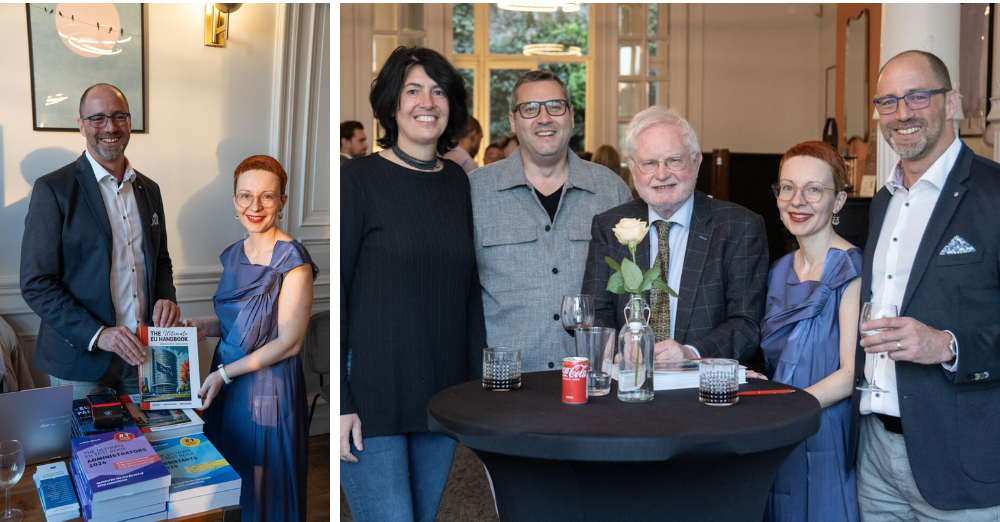
20 years ago, John Harper said 'yes' to an unknown person's unsolicited book pitch, which set of a chain of positive events. Yesterday, another book came to be as a result of two years' intense work and creativity of Sonia Gongu, Martin Tomov, Ljiljana Pavkov... and 'The Ultimate EU Handbook' was born.
Special thanks to Maryana Panyevina, Klym Ahrykov and David Meszaros for your support to make the launch event at Ambiorix Center & Podcast Studio special.
🇪🇺🙏📚
*This was originally posted on Andras Baneth's LinkedIn account.
What began as a discussion about burnout quickly turned into an exploration of something deeper. In my conversation with Dr. Vasadi Anna, a psychiatrist with decades of experience, it became clear that burnout isn’t just about long hours or stress—it’s rooted in expectations, upbringing, and the invisible pressures we internalize from an early age.
English summary of the latest episode of András' Hungarian podcast, 'Lélek Algoritmus – Ilyen az ember (avagy beszélgetések egy pszichiáterrel)' – 'The Soul’s Algorithm: The Human Condition (Conversations with a Psychiatrist).
What began as a discussion about burnout quickly turned into an exploration of something deeper. In my conversation with Dr. Vasadi Anna, a psychiatrist with decades of experience, it became clear that burnout isn’t just about long hours or stress—it’s rooted in expectations, upbringing, and the invisible pressures we internalize from an early age.
Burnout: More Than Just Exhaustion
Burnout gets thrown around a lot, but what does it actually mean? Many assume it’s just extreme fatigue, but as Anna pointed out, it’s something deeper. Burnout drains you emotionally, mentally, and even physically. It’s not the kind of tiredness that a weekend off can fix.
A key distinction Anna made: while depression can affect every part of life, burnout is usually tied to work. But it doesn’t stay there. It spreads—first to colleagues, then to family, then to an overall sense of disillusionment.
The Perfectionist’s Trap
Burnout isn’t just about overworking—it’s about overworking with the wrong mindset. People who push themselves too hard, who never feel their efforts are enough, who equate self-worth with productivity—these are the most at risk.
A common misconception: If I love my work, I can’t burn out. But passion doesn’t shield you. In fact, it often makes things worse. Overcommitting, ignoring personal limits, and relying on caffeine or alcohol to keep up are all red flags.
The Long Shadow of Childhood Expectations
Why do some people burn out while others keep their balance? Often, it starts in childhood.
Many of us grow up believing that our worth is tied to achievement. If we didn’t excel, love and approval felt conditional. Some parents—often unknowingly—reinforce this by setting impossibly high standards or withholding affection when a child falls short. Over time, this creates a need for external validation, making burnout almost inevitable.
Take elite athletes. Their entire identity is wrapped up in performance. When they lose, it’s not just a setback—it feels like a loss of personal value. The same happens in workplaces. A high achiever who misses a promotion doesn’t just feel professional disappointment—they feel like they have failed as a person.
Midlife Crisis: Burnout of the Soul
This naturally led us to midlife crisis, which, in many ways, is burnout playing out on a larger scale.
Both stem from the same root: spending years chasing external markers of success without stopping to ask, Is this what I actually want?
The midlife crisis tends to hit in the 40s or early 50s, often when several pressures collide:
- Aging Parents: The growing responsibility of caring for elderly parents forces many to confront their own mortality.
- Teenage Children: At the same time, kids are becoming more independent, adding another layer of emotional complexity.
- Career Pressures: By midlife, most people have built careers, but many start questioning if they’re on the right path.
It’s a perfect storm of obligations, internal and external, that makes people reevaluate everything—from their job to their marriage to their purpose.
Finding a Way Forward
So, how do we deal with burnout and midlife crisis without making rash decisions?
- Rethink Success – Instead of measuring success by salary, job title, or external validation, define it in terms of fulfillment and balance. If your work is draining you, can it really be called success?
- Recognize the Warning Signs – Losing interest in work, feeling detached, and struggling to muster enthusiasm are all early signs of burnout.
- Set Boundaries – Work will always demand more. It’s up to you to decide what is enough.
- Address Deep-Seated Patterns – If your self-worth depends on achievement, it might be time to rethink where that belief came from. Therapy and self-reflection can help break the cycle.
- Embrace Change – A midlife crisis isn’t necessarily a crisis—it can be a wake-up call. Maybe it’s time for a career shift, a realignment of priorities, or simply a different perspective.
Final Thoughts
Burnout and midlife crisis aren’t just work problems or age-related phases. They’re signals—urgent ones—telling us that something needs to change. The real question isn’t How do I push through? but Am I living a life that actually fits me?
If the answer is no, maybe the crisis isn’t a disaster. Maybe it’s an opportunity.