9 AI Prompts for Public Affairs Professionals Who Want Better Thinking, Not Just Faster Drafting
Discover 9 practical AI prompts for public affairs professionals to improve policy messaging, pressure-test arguments, anticipate objections, and communicate more clearly with EU stakeholders.
“What is the single weakest sentence in this briefing, and how would you fix it?”
This is a prompt I would probably never have come up with myself.
And yet, it is exactly the kind of question that makes AI useful for public affairs work.
Not because it writes the briefing for you.
But because it helps you test the thinking behind it.
A lot of AI use in public affairs still focuses on speed: summarise this, draft that, turn this into an email. Useful, yes. But not the whole story.
The real value is when AI helps you pressure-test your message before someone else does.
A policymaker.
A journalist.
A Commission official.
A sceptical attaché.
A client.
A colleague in the meeting who spots the weak point before you do.
So here are 9 AI prompts for public affairs professionals who want better thinking, not just faster drafting:
- Rewrite this message so it would survive a hostile question from an MEP in the relevant EP committee.
- List the 5 strongest objections a Commission desk officer at [DG] would raise to this proposal, then tighten the argument.
- Translate this policy language into something a national journalist would not misinterpret.
- What is the single weakest sentence in this briefing, and how would you fix it?
- Adapt this message for a sceptical Permanent Representation official who is short on time.
- Strip this text of buzzwords and replace them with concrete, defensible claims.
- Assume the audience is politically neutral but institutionally risk-averse, rewrite accordingly.
- What is the hidden assumption in this argument that could be challenged in a meeting?
- Reduce this to a 30-second spoken answer that sounds credible and not rehearsed.
The point is not to let AI do your public affairs work for you.
The point is to use it as a sparring partner.
To make your arguments clearer.
To make your messages harder to misread.
To find the sentence that sounds fine until someone challenges it.
To prepare for the question you hope no one asks.
That is where AI becomes genuinely useful.
Not as a shortcut around expertise.
But as a tool that helps you use your expertise better.
Stop Using AI for Answers. Start Using It for Better Questions
Discover why the real power of AI isn’t in providing answers, but in helping you ask better questions, uncover blind spots, and explore alternative perspectives for smarter decision-making.
Picasso once said: "Computers are useless, they can only give you answers."
That was true in his time, and still true today if you only use AI as a search ("answer") engine.
The real value is in the questions we ask:
- see blind spots in our reasoning ("Identify hidden biases or blind spots in my plan.)
- test assumptions we didn’t know we had ("Highlight my explicit or implicit assumptions.")
- explore alternative framings of the same problem ("How can this problem be viewed from multiple angles? How would a manager, a psychologist, a physicist, and musician look at it?") Or take these for example:
- Instead of asking “What’s the EU’s position on AI regulation?” try “What unintended consequences could the EU AI Act have for small startups?”
- Instead of “Summarize this report,” try “What’s missing from this report that an NGO focusing on circular economy could ask?”
- Instead of “Write a press release,” try “What would make this story credible to a skeptical journalist?”
AI doesn’t (and shouldn't) replace thinking. Just be sure to ask it the right way.
➡️ looking for AI workshops for your team? Influence Builders has trained 1500+ corporate and government affairs teams, and we'll be glad to work with you.
AI on LinkedIn: Hype, Hysteria, or Honest Insight?
A wry look at the LinkedIn AI conversation: from overhyped promises to doomsday takes, existential musings, and magical shortcuts. Where does reality meet rhetoric?
I get the impression that each time someone talks about AI on Linkedin, it's either:
- "oh this is such a hype/BS that only grifters talk about it"
- "you can go sit on a beach, it'll do everything for/instead of you"
- "whatever it churns out, it's a piece of cr*p that should be ridiculed"
- "here is some existential AI philosophy that I just invented"
- "a magic shortcut to hack your way to the top of the newsfeed"
- "it's the end of [name topic] and let's despair OR here is what to do about it"
- "this is revolutionary and the best of all worlds is about to come"
(I am guilty as charged of some of the above, I readily admit.)
Did I miss anything else?
p.s.: and the opportunistic plug, as the plus one: check out Influence Builders

INFORM EU
Honoured to be the keynote speaker at the European Commission's Inform EU event in Sevilla in 10 days.
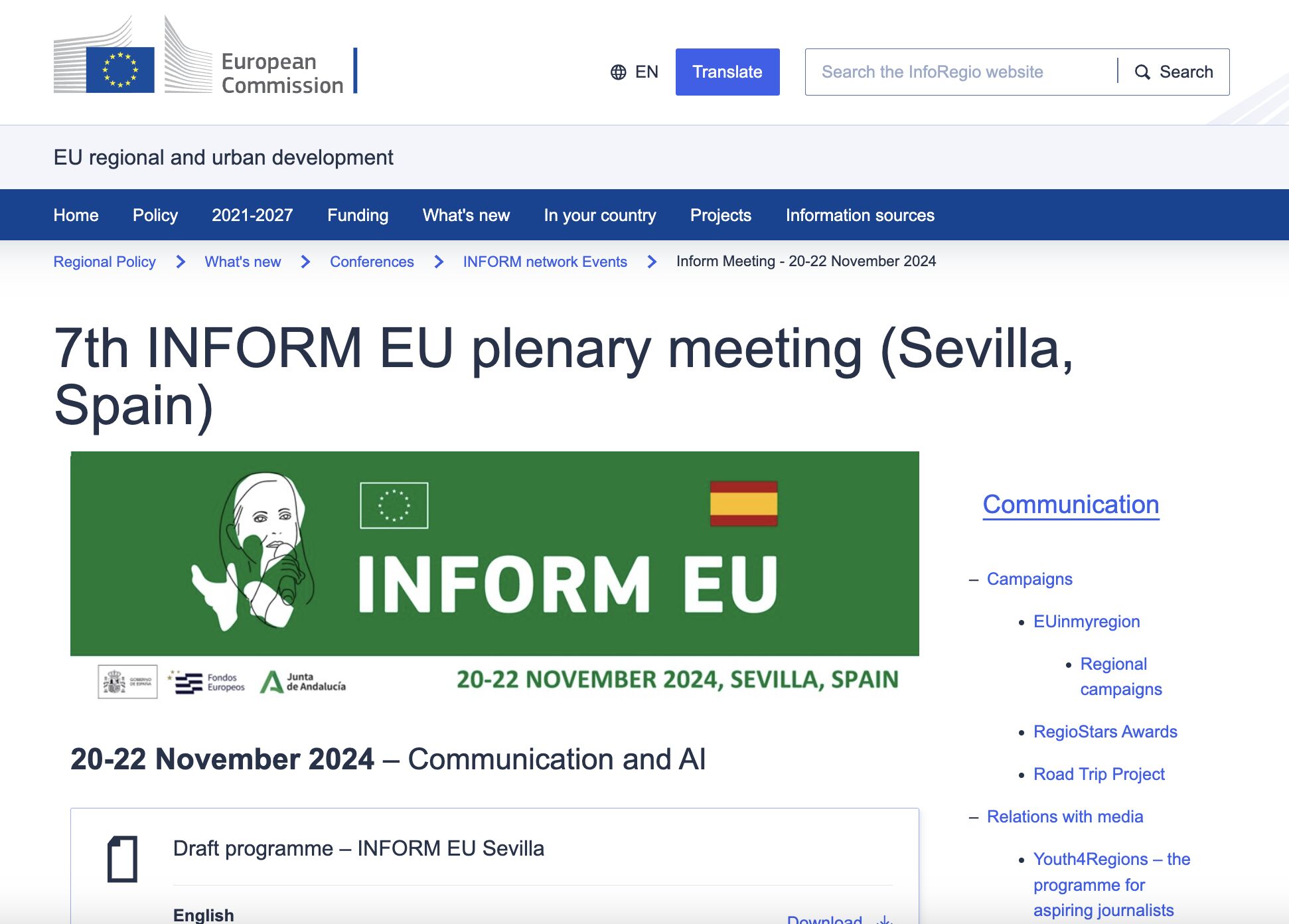
Honoured to be the keynote speaker at the European Commission's Inform EU event in Sevilla in 10 days. We'll also run two workshops with Jacques Foul on "Using AI for Persuasion" to communicate better about EU funds and their positive impact across the 27 Member States.
If you are coming to the event, come say hi!
*This was originally posted on Andras Baneth's LinkedIn account.
Virtual EU Focus Groups & Message Testing Tool
Will our campaign message or policy paper resonate with our audience?
Will our campaign message or policy paper resonate with our audience?
An eternal question for public affairs professionals, NGOs, and lobbyists.
Here is the prototype of a virtual focus group & message testing tool, and I'm looking for feedback.
Are you interested in trying it out?
If so, please comment in this post and I'll send you the details.
(I hope to launch the public beta in a few months.)
*This was originally posted on Andras Baneth's LinkedIn account.
AI in Healthcare and Pharma
AI in healthcare and pharma is fascinating, with so much promise from new compound discoveries to research.
AI in healthcare and pharma is fascinating, with so much promise from new compound discoveries to research.
Was glad to take part in “Science for health: Biology meets technology - AI, Data, and Digitalization” yesterday.
*This was originally posted on Andras Baneth's LinkedIn account.
Dangerous Desires
I recently had a profound conversation with Anna about the quirks, strengths, and challenges that come with being human.
"English language summary of the latest episode of Andras' Hungarian podcast 'Ilyen az ember (avagy beszelgetesek egy pszichiaterrel)' - 'The Human Condition (Conversations with a Psychiatrist)'."
I recently had a profound conversation with Anna about the quirks, strengths, and challenges that come with being human. Our talk ranged from the boundaries in therapeutic relationships to the emotional threads that shape our lives. Here are some of the most resonant ideas we touched upon.
The Therapist’s Balancing Act: Connection and Boundaries
One central theme was the delicate line therapists walk between empathy and professionalism. Therapists are human too, and despite their training, they sometimes feel a natural pull towards their patients. But as Anna noted, such a connection can cut both ways. Therapists must remain steadfastly objective; blurring personal and professional lines can muddy the therapeutic process. The commitment to maintaining that distance can be tough but is crucial. Anna and I agreed that any strong emotional tie must end if it threatens to affect the work. Keeping boundaries intact is essential, even though it can feel counterintuitive.
Embracing Human Reactions: The Range of Emotions
Human emotions—ranging from small irritations to deep-seated attachments—shape much of our behavior. Anna reminded me how varied these reactions can be; what seems trivial to one might be deeply unsettling to another. Something as small as a misplaced pen, for instance, can stir frustration, revealing perhaps more about the person’s internal state than the incident itself. These moments, though seemingly insignificant, highlight the incredible diversity in how we experience and process the world around us.
The Power of Empathy: Connecting on a Deeper Level
Empathy was a significant focus in our conversation. It’s the capacity to step into another’s world, to genuinely feel their highs and lows. Yet, empathy has its own pitfalls, especially for those in caring professions. Unchecked empathy can easily turn into burnout. We discussed how empathy, while powerful, needs to be tempered with self-care. Without boundaries, deep compassion can drain us. It’s about finding a balance between being present for others and maintaining enough space to care for ourselves too.
Vulnerability: The Path to Genuine Connection
To be vulnerable is to open up, allowing others to see our authentic selves. It’s what enables us to connect deeply, yet it brings its own risks. By revealing our true thoughts and feelings, we also expose ourselves to potential misunderstandings. Anna pointed out that vulnerability often forms the basis of trust in relationships, but the fear of being let down can make this openness hard. Even though we might hesitate, it’s through vulnerability that real bonds form.
Self-Awareness: A Lifelong Journey
Anna and I also explored the role of self-awareness in our interactions with others. Being self-aware means recognizing our own triggers, understanding our boundaries, and approaching relationships thoughtfully. Anna emphasized that understanding ourselves is a continual journey, one that allows us to see others more clearly. As we grow, so does our perspective on the people around us.
Love and Attachment: Bonds That Define Us
Love, whether for friends, family, or partners, is one of life’s most transformative forces. With love comes attachment, and with attachment, the fear of loss. This bond can be a beautiful foundation, but it can also pose challenges. We talked about the courage it takes to embrace love, knowing it brings vulnerability. Despite the risks, these connections are essential to our experience. Love, even with all its demands, gives life depth and meaning.
Wrapping Up: Embracing the Journey of Being Human
As our conversation came to a close, I was struck by how complex and fulfilling it is to navigate life as a human. We are beings of habit, emotion, and connection, each of us on a path to understand both ourselves and others. The themes we discussed—empathy, love, boundaries, and self-awareness—aren’t just theoretical ideas; they touch every relationship and interaction in our lives.
This conversation with Anna reminded me that embracing humanity, flaws and all, is what brings richness to life. To be human is to continually grow, learn, and connect. This journey may be challenging, but it’s a path well worth taking.N
Ambiorix Studio
Proud & excited to announce the launch of Ambiorix Studio.

Proud & excited to announce the launch of Ambiorix Studio, a state-of-the-art #podcast and video studio at Ambiorix Center in the heart of the EU district 5 minutes from the European Commission's HQ, the Berlaymont.
Welcoming all public affairs and communications professionals, MEPs, diplomats, think tanks, and anyone with a desire to share their voice (and/or image), it is available to rent in 2-hour slots, 24/7, with or without technical assistance.
With soundproof walls/ceiling, top quality RØDE microphones & gear, acoustic panels and designer furniture, you cannot help but be inspired.
Whatever your ambition or budget, you can have it as self-service, or have our team assist with professional live streaming, add post-production, audio/video editing, and anything in between.
In cooperation with The Right Street, you can even take your content to new heights by adding social media promotion, branding, and much more.
As a promotion, you can visit any time, or have a FREE 1h slot booked before 30 November. Just comment on this post and we'll get in touch to arrange the logistics.
Come and make your voice heard ✌️
*This was originally posted on Andras Baneth's LinkedIn account.
The Final 20%
Don't expect ChatGPT or AI to do 100% of the required task for you.
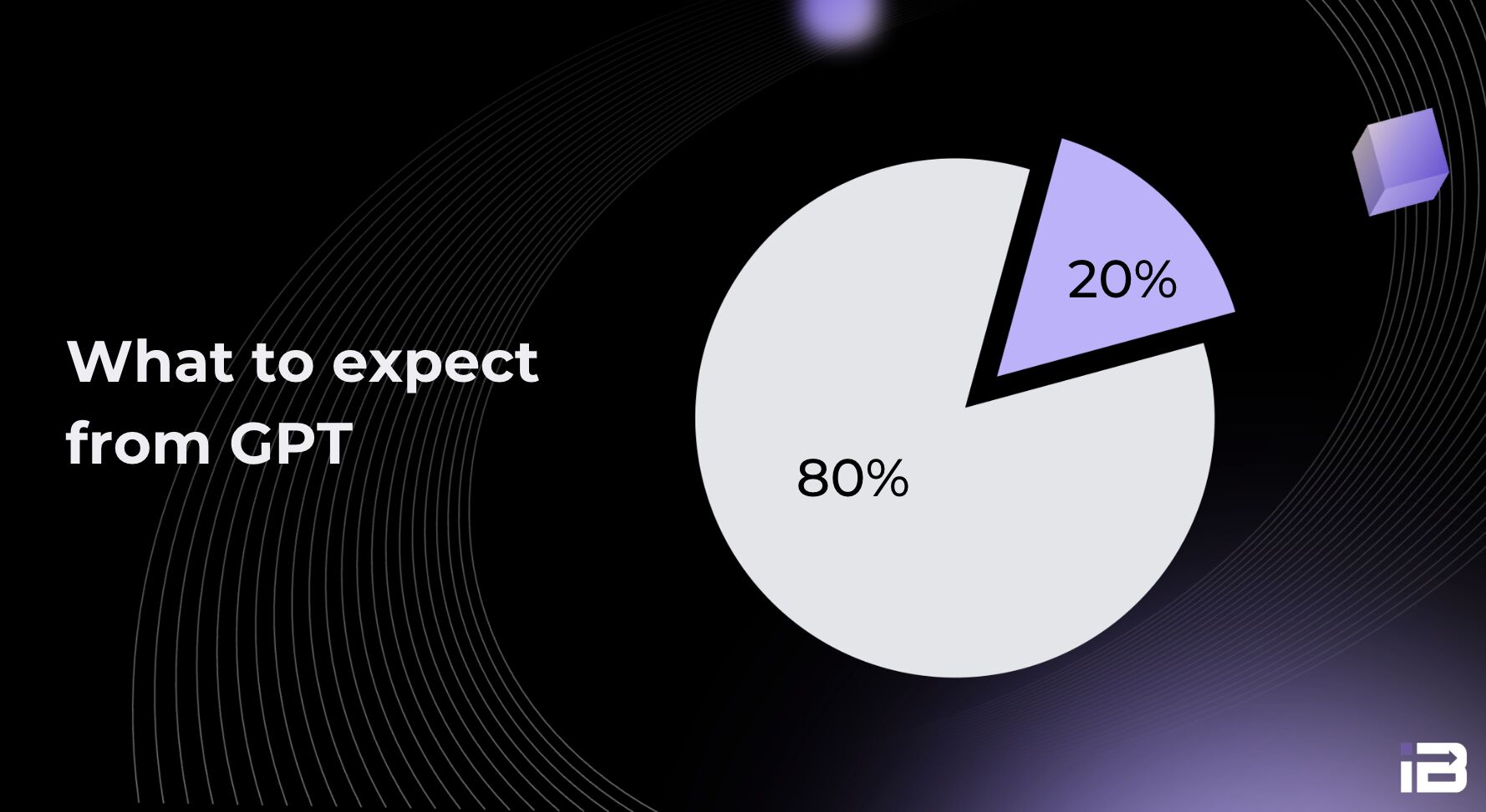
Don't expect ChatGPT or AI to do 100% of the required task for you. But 80% is good enough, so you can do the remaining 20% "last mile" fine-tuning.
*This was originally posted on Andras Baneth's LinkedIn account.
Engage with European Commissioner Designates: Your Chance to Shape the Next 5 Years
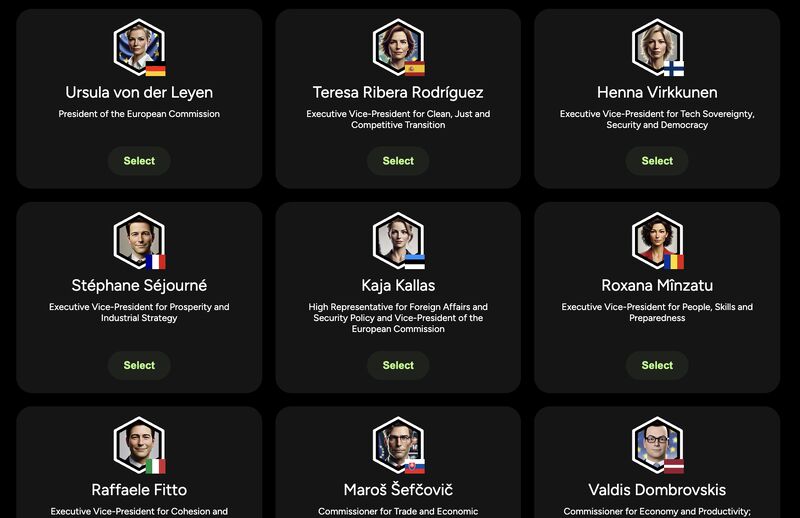
Have you spoken with the European Commissioner designates already?
Have you spoken with the European Commissioner designates already?
It's not just MEPs who can ask them about their plans for the next 5 years.
Policy clichés are just a click away: https://hearings.therightstreet.digital/
*This was originally posted on Andras Baneth's LinkedIn account.
True Potential
Those who harness GPT/Gemini/Co-pilot's true potential are often freelancers and middle managers.
Those who harness GPT/Gemini/Co-pilot's true potential are often the freelancers and middle managers who, regardless of AI, know how to 1) delegate well 2) communicate clearly about the required task 3) can properly describe the expected outcome 4) are open to experimenting with new ideas and 5) don't mind if the output is subpar at first but iterate multiple times to get what they need. No matter what hat you're wearing or where you sit in your organization, adopting/practising the above will help your career (with or without AI).
*This was originally posted on Andras Baneth's LinkedIn account.
Exploring Addiction with Dr. Anna Vasadi: A Deeper Dive
Addiction is often oversimplified in public discourse, mostly confined to the context of substance use, while stigmas and misconceptions cloud its complexities.
"English language summary of the latest episode of Andras' Hungarian podcast 'Ilyen az ember (avagy beszelgetesek egy pszichiaterrel)' - 'The Human Condition (Conversations with a Psychiatrist)'."
Addiction is often oversimplified in public discourse, mostly confined to the context of substance use, while stigmas and misconceptions cloud its complexities. But in a recent discussion, Dr. Anna Vasadi, a psychiatrist with over 45 years of expertise, expanded on addiction’s intricate nature, describing it as a spectrum that reaches far beyond the usual definitions. In our talk, we explored how addiction extends into emotional dependencies and relationship-based attachments and discussed the demanding road to recovery.
Addiction: More Than Just Physical Dependence
For many, addiction suggests an attachment to drugs or alcohol. Dr. Vasadi’s view broadens this definition, framing addiction as a state where someone’s life feels incomplete or unstable without a particular substance, behavior, or person. This dependency goes beyond the physical. It can be psychological, manifesting as an emotional reliance that affects one’s overall well-being. She describes how physical addiction might trigger noticeable symptoms like tremors, but an emotional dependency can also cause unease or even despair when the attachment is missing.
Healthy vs. Unhealthy Attachments: Where to Draw the Line?
It can be hard to distinguish a healthy attachment from a harmful dependency. Dr. Vasadi describes a continuum where dependency only becomes “addiction” when it begins to disrupt normal functioning or cause harm. Enjoying a daily coffee, for instance, doesn’t equate to addiction unless being deprived of it leads to significant distress or a sense of disorientation.
Dr. Vasadi also uses the phrase “heightened attachment” to talk about activities or preferences that are strong but generally not harmful. For example, a love of books or a hobby may be deeply fulfilling without veering into addiction. However, once the activity becomes crucial to one’s stability, it may have crossed the line.
Emotional Dependencies and the Nature of Relationship-Based Addictions
A fascinating area we explored was relationship dependency—when a person relies heavily on another for emotional stability. Dr. Vasadi explains that this often originates in a low sense of self-worth, making it hard for the person to function independently. A compelling example she gave was of someone who experiences deep anxiety whenever their partner is away. Such dependency can strain relationships, often creating an unhealthy dynamic and frustration for both people involved.
The Urge for Control: Coping Mechanism or Dependence?
An underlying aspect of many addictions is the need for control. For some, predictable sources of comfort or distraction become essential tools for managing anxiety or fear. This might mean substance use for some, while others lean on social media, gaming, or other behaviors that offer temporary escape. Dr. Vasadi points out that this need for control often brings short-term relief but can feed deeper insecurities and fears.
Roots of Dependency: Early Experiences and Self-Esteem
A significant insight Dr. Vasadi shared is that childhood trauma or unmet needs often play a role in fostering addiction. Many people form dependencies as a way to cope with lingering insecurities or feelings of inadequacy. For those who didn’t experience stable support in childhood, there’s often an unconscious search for relationships or behaviors that can fill these early voids.
Denial and Self-Recognition: The Hardest First Step
Dr. Vasadi emphasizes that recognizing addiction is crucial but often difficult. People frequently go to great lengths to deny their dependencies, justifying their actions as “normal” by comparing themselves to others. Physical symptoms or ultimatums from loved ones sometimes serve as the needed wake-up call. This is where family, friends, and healthcare professionals play a vital role, helping the person see their situation clearly and openly.
Support and Environment: Key Elements in Recovery
Recovering from addiction is rarely a solo effort. Having supportive loved ones can make the journey more bearable and help reduce the chances of relapse. Therapy also plays a crucial role, not just by reducing dependency but by fostering the individual’s confidence, self-esteem, and resilience. Therapy, especially when combined with self-reflection, enables a person to rebuild their life on a more solid foundation.
Why Environment Matters: Reducing the Risk of Relapse
Dr. Vasadi shared an example from studies on Vietnam War veterans that showed how environment impacts recovery. Soldiers who returned home were more likely to overcome addiction than those who stayed in high-stress settings. This insight highlights how surroundings can either support or hinder recovery, underscoring the benefit of a fresh setting—especially one that feels safe and stable.
Confronting the “Inner Child”
A unique point was the connection between addiction and what Dr. Vasadi refers to as a kind of “inner child” state. Addictive behaviors often mimic the child’s dependence on a caregiver for safety and comfort. For adults, this dependency shifts to people or substances that provide similar temporary relief. Therapy aims to build the capacity for self-reliance, guiding individuals to take on the independence needed to let go of these dependencies.
Beyond Willpower: Practical Recovery Techniques
Overcoming addiction goes beyond sheer willpower. We explored specific tools that help people achieve lasting change. Instead of just avoiding a substance or behavior, it’s important to address the root of the dependency. This process often involves reflection, developing new coping methods, and, in some cases, avoiding certain places or people. True healing requires finding new ways to cope, without relying on old habits, often with the help of skilled professionals and supportive connections.
Courage and Vulnerability: Essential for Recovery
One of the most powerful takeaways from this conversation was that courage is at the heart of recovery. Facing one’s fears, acknowledging dependencies, and asking for help are not easy steps. It requires a type of courage that can feel raw and uncomfortable, but ultimately, it’s also transformative. For those struggling with addiction, this courage is not just about willpower but about staying with the discomfort and uncertainty, accepting support, and being willing to grow.
In reflecting on Dr. Vasadi’s words, it’s clear that addiction, in all its forms, is complex but can be overcome with support, strategies, and—most importantly—the courage to take the first steps. For anyone facing addiction or supporting someone through it, it’s essential to understand that recovery is a layered, ongoing process, and with patience and resilience, real change is possible.
Featured articles
and Insights
This compilation takes us through the history of the first #EPSO candidates, showcasing their journey and achievements from the very beginning to the present day—and even looking ahead.
A compilation of the first #EPSO candidates throughout history, until today and beyond.
(Have you played with ChatGPT-4o's new image capabilities? Pretty impressive.)
*This was originally posted on Andras Baneth's LinkedIn account.
Discover the inspiring story behind The Ultimate EU Handbook, a book born from the unexpected connection of a chance pitch and years of creative collaboration.
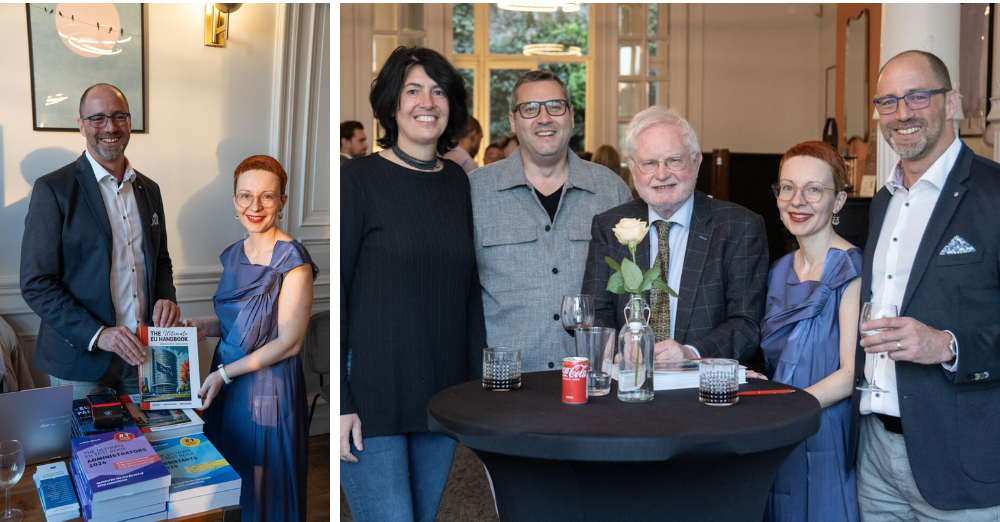
20 years ago, John Harper said 'yes' to an unknown person's unsolicited book pitch, which set of a chain of positive events. Yesterday, another book came to be as a result of two years' intense work and creativity of Sonia Gongu, Martin Tomov, Ljiljana Pavkov... and 'The Ultimate EU Handbook' was born.
Special thanks to Maryana Panyevina, Klym Ahrykov and David Meszaros for your support to make the launch event at Ambiorix Center & Podcast Studio special.
🇪🇺🙏📚
*This was originally posted on Andras Baneth's LinkedIn account.
What began as a discussion about burnout quickly turned into an exploration of something deeper. In my conversation with Dr. Vasadi Anna, a psychiatrist with decades of experience, it became clear that burnout isn’t just about long hours or stress—it’s rooted in expectations, upbringing, and the invisible pressures we internalize from an early age.
English summary of the latest episode of András' Hungarian podcast, 'Lélek Algoritmus – Ilyen az ember (avagy beszélgetések egy pszichiáterrel)' – 'The Soul’s Algorithm: The Human Condition (Conversations with a Psychiatrist).
What began as a discussion about burnout quickly turned into an exploration of something deeper. In my conversation with Dr. Vasadi Anna, a psychiatrist with decades of experience, it became clear that burnout isn’t just about long hours or stress—it’s rooted in expectations, upbringing, and the invisible pressures we internalize from an early age.
Burnout: More Than Just Exhaustion
Burnout gets thrown around a lot, but what does it actually mean? Many assume it’s just extreme fatigue, but as Anna pointed out, it’s something deeper. Burnout drains you emotionally, mentally, and even physically. It’s not the kind of tiredness that a weekend off can fix.
A key distinction Anna made: while depression can affect every part of life, burnout is usually tied to work. But it doesn’t stay there. It spreads—first to colleagues, then to family, then to an overall sense of disillusionment.
The Perfectionist’s Trap
Burnout isn’t just about overworking—it’s about overworking with the wrong mindset. People who push themselves too hard, who never feel their efforts are enough, who equate self-worth with productivity—these are the most at risk.
A common misconception: If I love my work, I can’t burn out. But passion doesn’t shield you. In fact, it often makes things worse. Overcommitting, ignoring personal limits, and relying on caffeine or alcohol to keep up are all red flags.
The Long Shadow of Childhood Expectations
Why do some people burn out while others keep their balance? Often, it starts in childhood.
Many of us grow up believing that our worth is tied to achievement. If we didn’t excel, love and approval felt conditional. Some parents—often unknowingly—reinforce this by setting impossibly high standards or withholding affection when a child falls short. Over time, this creates a need for external validation, making burnout almost inevitable.
Take elite athletes. Their entire identity is wrapped up in performance. When they lose, it’s not just a setback—it feels like a loss of personal value. The same happens in workplaces. A high achiever who misses a promotion doesn’t just feel professional disappointment—they feel like they have failed as a person.
Midlife Crisis: Burnout of the Soul
This naturally led us to midlife crisis, which, in many ways, is burnout playing out on a larger scale.
Both stem from the same root: spending years chasing external markers of success without stopping to ask, Is this what I actually want?
The midlife crisis tends to hit in the 40s or early 50s, often when several pressures collide:
- Aging Parents: The growing responsibility of caring for elderly parents forces many to confront their own mortality.
- Teenage Children: At the same time, kids are becoming more independent, adding another layer of emotional complexity.
- Career Pressures: By midlife, most people have built careers, but many start questioning if they’re on the right path.
It’s a perfect storm of obligations, internal and external, that makes people reevaluate everything—from their job to their marriage to their purpose.
Finding a Way Forward
So, how do we deal with burnout and midlife crisis without making rash decisions?
- Rethink Success – Instead of measuring success by salary, job title, or external validation, define it in terms of fulfillment and balance. If your work is draining you, can it really be called success?
- Recognize the Warning Signs – Losing interest in work, feeling detached, and struggling to muster enthusiasm are all early signs of burnout.
- Set Boundaries – Work will always demand more. It’s up to you to decide what is enough.
- Address Deep-Seated Patterns – If your self-worth depends on achievement, it might be time to rethink where that belief came from. Therapy and self-reflection can help break the cycle.
- Embrace Change – A midlife crisis isn’t necessarily a crisis—it can be a wake-up call. Maybe it’s time for a career shift, a realignment of priorities, or simply a different perspective.
Final Thoughts
Burnout and midlife crisis aren’t just work problems or age-related phases. They’re signals—urgent ones—telling us that something needs to change. The real question isn’t How do I push through? but Am I living a life that actually fits me?
If the answer is no, maybe the crisis isn’t a disaster. Maybe it’s an opportunity.