9 AI Prompts for Public Affairs Professionals Who Want Better Thinking, Not Just Faster Drafting
Discover 9 practical AI prompts for public affairs professionals to improve policy messaging, pressure-test arguments, anticipate objections, and communicate more clearly with EU stakeholders.
“What is the single weakest sentence in this briefing, and how would you fix it?”
This is a prompt I would probably never have come up with myself.
And yet, it is exactly the kind of question that makes AI useful for public affairs work.
Not because it writes the briefing for you.
But because it helps you test the thinking behind it.
A lot of AI use in public affairs still focuses on speed: summarise this, draft that, turn this into an email. Useful, yes. But not the whole story.
The real value is when AI helps you pressure-test your message before someone else does.
A policymaker.
A journalist.
A Commission official.
A sceptical attaché.
A client.
A colleague in the meeting who spots the weak point before you do.
So here are 9 AI prompts for public affairs professionals who want better thinking, not just faster drafting:
- Rewrite this message so it would survive a hostile question from an MEP in the relevant EP committee.
- List the 5 strongest objections a Commission desk officer at [DG] would raise to this proposal, then tighten the argument.
- Translate this policy language into something a national journalist would not misinterpret.
- What is the single weakest sentence in this briefing, and how would you fix it?
- Adapt this message for a sceptical Permanent Representation official who is short on time.
- Strip this text of buzzwords and replace them with concrete, defensible claims.
- Assume the audience is politically neutral but institutionally risk-averse, rewrite accordingly.
- What is the hidden assumption in this argument that could be challenged in a meeting?
- Reduce this to a 30-second spoken answer that sounds credible and not rehearsed.
The point is not to let AI do your public affairs work for you.
The point is to use it as a sparring partner.
To make your arguments clearer.
To make your messages harder to misread.
To find the sentence that sounds fine until someone challenges it.
To prepare for the question you hope no one asks.
That is where AI becomes genuinely useful.
Not as a shortcut around expertise.
But as a tool that helps you use your expertise better.
Stop Using AI for Answers. Start Using It for Better Questions
Discover why the real power of AI isn’t in providing answers, but in helping you ask better questions, uncover blind spots, and explore alternative perspectives for smarter decision-making.
Picasso once said: "Computers are useless, they can only give you answers."
That was true in his time, and still true today if you only use AI as a search ("answer") engine.
The real value is in the questions we ask:
- see blind spots in our reasoning ("Identify hidden biases or blind spots in my plan.)
- test assumptions we didn’t know we had ("Highlight my explicit or implicit assumptions.")
- explore alternative framings of the same problem ("How can this problem be viewed from multiple angles? How would a manager, a psychologist, a physicist, and musician look at it?") Or take these for example:
- Instead of asking “What’s the EU’s position on AI regulation?” try “What unintended consequences could the EU AI Act have for small startups?”
- Instead of “Summarize this report,” try “What’s missing from this report that an NGO focusing on circular economy could ask?”
- Instead of “Write a press release,” try “What would make this story credible to a skeptical journalist?”
AI doesn’t (and shouldn't) replace thinking. Just be sure to ask it the right way.
➡️ looking for AI workshops for your team? Influence Builders has trained 1500+ corporate and government affairs teams, and we'll be glad to work with you.
AI on LinkedIn: Hype, Hysteria, or Honest Insight?
A wry look at the LinkedIn AI conversation: from overhyped promises to doomsday takes, existential musings, and magical shortcuts. Where does reality meet rhetoric?
I get the impression that each time someone talks about AI on Linkedin, it's either:
- "oh this is such a hype/BS that only grifters talk about it"
- "you can go sit on a beach, it'll do everything for/instead of you"
- "whatever it churns out, it's a piece of cr*p that should be ridiculed"
- "here is some existential AI philosophy that I just invented"
- "a magic shortcut to hack your way to the top of the newsfeed"
- "it's the end of [name topic] and let's despair OR here is what to do about it"
- "this is revolutionary and the best of all worlds is about to come"
(I am guilty as charged of some of the above, I readily admit.)
Did I miss anything else?
p.s.: and the opportunistic plug, as the plus one: check out Influence Builders

How Giving a TEDx Talk Actually Works
As you may know, I recently gave a 12-minute TEDx talk, and I'm here to share my experience with you.
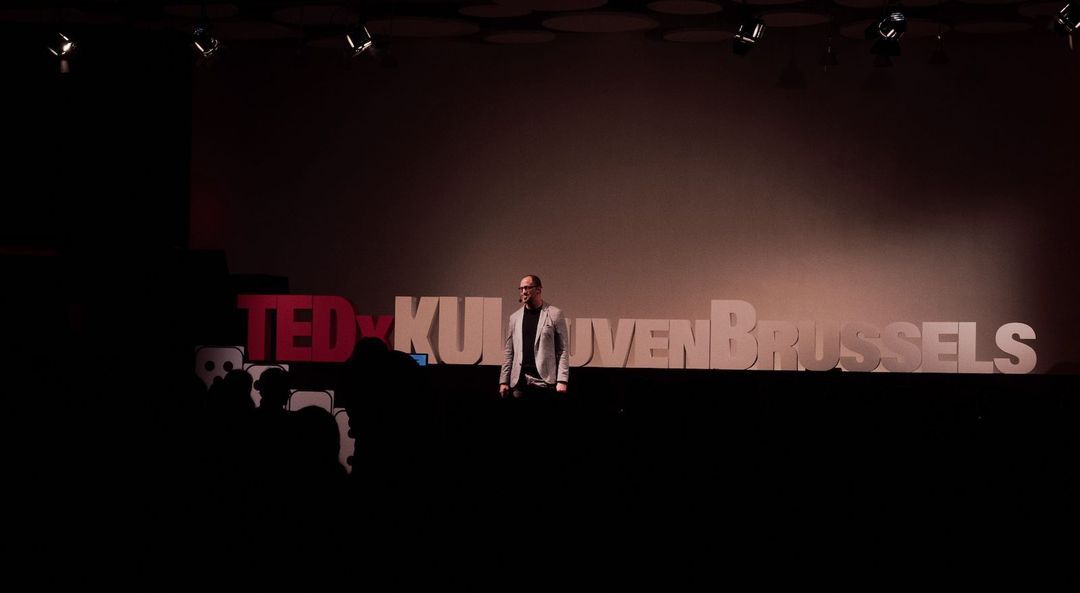
As you may know, I recently gave a 12-minute TEDx talk, and I'm here to share my experience with you. I'm not going to give you the talk itself—that will be available online in a couple of months—but I want to share how such an event comes about, along with some insights and lessons learned.
The Motivation Behind Giving a TEDx Talk
The first question that comes to mind is: Why would anyone want to give a TEDx talk? It's unpaid, and involves a lot of stress, energy, time, and effort. In the end, maybe nobody watches it outside the room where it was given. If you're lucky, it might gain online visibility, but that's far from guaranteed. So why do it?
There are various motivations. Some might do it for vanity, to feel important on stage. Others might hope it helps their personal brand and visibility online. For me, though, the main motivation was to share ideas and a message that I deeply believe in. A good TEDx talk is like a preacher's sermon, a motivational speech, or the address of a rare good politician—it comes from a place of deep commitment to a worldview.
The Commitment of Other Speakers
At the TEDx event, the other speakers were equally committed to their topics. Some even incorporated music into their talks, blending singing with their message. It wasn't a rock concert, but it certainly pushed the boundaries of what a talk can be. TEDx talks give speakers up to 18 minutes to share their ideas, and the variety in presentation styles is quite broad.
The Process of Giving a TEDx Talk
Starting a TEDx talk begins with the application to speak. There are many calls for speakers, but getting selected is another matter. Organizers need a license from the central TED organization, similar to a franchise model, which comes with strict rules. They decide on the speakers and ensure there's a central theme connecting the talks.
These talks cannot be commercial or political in the sense of campaigning. They can address societal trends or political issues broadly but must avoid being partisan. The organizers can invite speakers who fit the theme and have something valuable to share.
My Journey to TEDx
For the TEDx event at KU Leuven in Brussels, the organizers reached out to me to apply (without any promise that I'd be accepted). They found my profile interesting and asked if I wanted to apply. The theme was "chain reaction," interpreted in a social context rather than a scientific one. After considering what I could contribute, I decided to focus on political communication, psychology, linguistics, and personal development which seemed to resonate with them so they accepted my pitch. My talk's title eventually became "Your Words Will Shape Your World."
Preparing the Talk
The preparation process was intense. I had to draft, revise, and receive feedback multiple times. Losing one's ego is crucial here—accepting constructive criticism improves the final product. I rehearsed extensively, not just to memorize but to "internalize" the message so I could deliver it authentically.
The Four Stages of Writing
A journalist once taught me about the four stages of writing, which are highly applicable to preparing a speech:
- Madman: Collect all ideas, quotes, and concepts without filtering.
- Architect: Organize these ideas into a coherent structure.
- Carpenter: Refine and chisel the structure into a polished form.
- Judge: Critically review and eliminate anything unnecessary.
Being your own madman, architect, carpenter, and judge is challenging. External feedback from trusted colleagues is invaluable during the ‘judge’ phase.
The Importance of Rehearsal
Rehearsing was essential. I recorded my speech, listened to it repeatedly, and practiced in my car and with others. This helped me refine the flow and ensure I could deliver it smoothly. It's also vital to read the speech out loud, as speaking differs from reading silently.
The Role of Visual Aids
Initially, I thought I wouldn't use slides, but feedback indicated that visuals could enhance comprehension. Martin, a very talented designer friend of mine, created a Prezi presentation that allowed me to zoom in and out on key points, making the talk more dynamic and in sync with the message. Visuals also served as reminders for me and aids for the audience, ensuring the narrative was clear and engaging.
The Day of the Talk
On the day of the talk, I was the first speaker. It's interesting how nervousness works: for me, I was pretty anxious but it immediately disappeared when I stepped on the 'red dot' stage. Stage fright comes from one thing and one thing only: uncertainty. Its source can be multifold, such as 'will I remember my speech?', 'will the audience resonate with my message?', 'will something unexpected happen?' - but to the greater degree I can reduce these uncertainties, the less nervous I will be.
In the end, despite thorough preparation, technical glitches can still happen—my slides didn't initially appear on screen. The organizers quickly fixed this, allowing me to proceed as planned. The live setting always brings its own challenges, but the key is to stay composed and adapt to whatever comes up.
Final Reflections
No plan survives first contact with the audience, much like a boxer’s plan doesn’t survive the first punch. The delivery won't be exactly as rehearsed, but that's okay. The goal is to share something meaningful, and if you can do that, it's a success. I was also told, quite wisely, that there are always 3 speeches we give: the one we plan to give, the one we actually give, and the one we wish we had given. The closer these three are to each other, the better it feels.
My Takeaway
After the talk, the most rewarding part was receiving feedback from the audience. Knowing that my message resonated with them was incredibly fulfilling. Creating and sharing something you believe in is a deeply nourishing experience. I encourage everyone to consider giving a TEDx talk because the journey teaches you many lessons, and giving the talk is just a small part of it.
If you're interested in hearing more, just send me a message.
9 Easy Steps to Summarise and Analyse Any Committee Meeting
The new EP is about to take office in a month, and EU public affairs professionals will have a LOT of meetings to follow. Any shortcuts?
The new EP is about to take office in a month, and EU public affairs professionals will have a LOT of meetings to follow. Any shortcuts?
Yes, there are a few, thanks to AI & ChatGPT.
As the European Parliament does not (yet) publish verbatim meeting transcripts, since all committee and public meetings are recorded, the videos are available for anyone to watch.
But who has time for that?
The good news is that you don't need to hire five interns to follow these policy discussions - all you need is to leverage ChatGPT for your public affairs and communications work.
Below are 9 easy steps to summarise and analyse any committee meeting in 5 minutes, without needing to watch and take notes of what was said.
There are lots of other use cases for #EUGPT - join our webinar with Jacques Foul on Wednesday (19 June) to learn these and impress your clients or your boss ✌️
cc Influence Builders | Details: https://lnkd.in/ewct4pkY
**This was originally posted on Andras Baneth's LinkedIn account.
How to Write a Report or Briefing on European Parliament Election Results in 5 Minutes
Do you need to write a report or briefing about the European Parliament election results?
Do you need to write a report or briefing about the European Parliament election results? You can do it in 5 minutes, with more insights than you thought was possible.
1. Find a few recent public briefings/analysis on reputable research institutes' and media websites about the EP elections. Look for ECFR (European Council on Foreign Relations), EUI (European University Institute), Politico's rundown, EPC (European Policy Center), Bruegel economic think tank or any other.
2. Download their reports or 'print' the long-form analysis as PDF. Make sure to have at least 3 of these reports for diverse background.
3. Upload all the PDFs into ChatGPT or Perplexity.ai
4. Prompt as follows: "I need to write a detailed report about the outcome of the 2024 EP elections. Carefully analyze the documents I have uploaded, and cross-check their findings. Provide a detailed analysis with headings and bullet points, in the format of a briefing, that covers all key findings and then highlight the elections' impact on [MY SECTOR]. Make sure to stay factual, balanced, and avoid being sensational. Include 10 or more key data points and practical takeaways. Add a paragraph on 'what does this mean in practice' in the end."
5. Copy the results into a document, fine tune the wording if needed, and you're done.
+1 Impress your boss or association members ✌️
ChatGPT: Practical Ways To Get Started
I tried ChatGPT but wasn't even sure *what* I should use it for (other than for proofreading).
"I tried ChatGPT but wasn't even sure *what* I should use it for (other than for proofreading)."
I often hear such comments when discussing AI for public affairs and communications. For those still on the fence, see 3 practical and easy ways to get started.
If you nevertheless want to be a more proficient, join our in-person workshop tomorrow (Thursday, only 1 place left!) or our webinar on 19 June (Wednesday).
Details: influence-builders.com
cc Jacques Foul , Influence Builders
**This was originally posted on Andras Baneth's LinkedIn account.
Why #AI and #GPT are Radically Different from Traditional Software
Excellent summary on why hashtag#AI and hashtag#GPT are radically different from “traditional” software.
Excellent summary on why #AI and #GPT are radically different from “traditional” software:
“Because software is REALLY good at doing things fast. But it's deterministic. It cannot make smart decisions for you. If you click on a button the same thing will happen every time. If that thing doesn't happen, it's a problem, a bug that needs to be fixed.
Humans on the other hand are non-deterministic. If Dave comes into the room and I ask him "Do you want a coffee?" he may say yes, no, start talking about the F1 race last weekend (which I always try to listen enthusiastically but I think I always fail) or do any other things. Because Dave's brain is not a Boolean search, but most software is.
However, when you ask something from ChatGPT it'll react with the same unpredictability. I tell GPT-4o to write a poem and it might give me a sonnet, a haiku or explain that as an AI large language model developed by OpenAI...
You get it.
So in that regard, ChatGPT and any other LLM is the first non-deterministic software.”
h/t Promptmaster
Post-European Parliament Elections Media/Political Context Predictions
With the European Parliament elections happening already and culminating in most countries voting on 9 June (Sunday), a few ideas/predictions - not about the results but rather the media/political context right after and in the next 5 years.
With the European Parliament elections happening already and culminating in most countries voting on 9 June (Sunday), a few ideas/predictions - not about the results but rather the media/political context right after and in the next 5 years:
- narrative pushing: every pundit and media outlet will be pushing their core messages using the election data to 'prove' their claims instead of taking a dispassionate view (it sells more clicks and subscriptions to scare readers about the rise of the 'far right' or to tell hero stories about how this has been fended off)
- no serious reflection about the political mistakes: I've not seen any in-depth or honest hindsight about EU policies that proved to be rolled out too quickly or in an overly ambitious manner in the past 5 years, which have (likely) led to conservative parties getting stronger (assuming that's actually going to be the case)
- undefined terms like 'progressives', 'liberals', 'hard-right': their meaning and definition have changed a lot since 2019 and have become rather subjective depending on the speaker's vantage point... so it can and will be thrown around quite liberally (excuse the pun) instead of analytically
- misunderstanding how the European Parliament works: there are no fixed coalitions, only ad hoc, case-by-case alliances and deals, depending on the issue. Any and every combination under the sun is possible as a result of horse-trading as long as it can secure a 361 MEP majority for a vote as no single party (or, to be accurate, political group) will remotely have a majority by itself
- ideology trumps science/evidence: Europe can't escape global trends due to technology, media, political changes and while it has remarkably competent and knowledgable institutions, politics and ideology increasingly overwrite facts, evidence, 'science' and common sense due to identitarianism, opportunistic calculations (these always backfire, btw), and/or just sheer prejudice against people, nations, or ideas
- federation vs. confederation: the defining question in the EU will be a fundamental difference/disagreement between those favoring a 'federal Europe' where vetoes are minimized or phased out and more power is given to the 'EU institutions' vs. a 'confederal Europe' where Member States, currently 27 but possibly a few more in the next 5 years, only work together on core issues like the single market and its offshoots but are reluctant to cede more of their sovereign powers to 'Brussels'
Vive l'Europe 🍿
New Video Release: How to Use AI for Public Affairs
In this presentation, Jacques Foul and I delve into a topic of growing importance: how to effectively use AI in public affairs.
In this presentation, Jacques Foul and I delve into a topic of growing importance: how to effectively use AI in public affairs. We believe this is a game-changing development for our field, and we are eager to share our insights with you.
Jacques and I have put together a concise and informative session to help you understand the transformative potential of AI in public affairs. Here are some highlights:
- Enhanced Communication Strategies: Learn how AI can help create high-quality drafts, personalize your messages, and generate creative ideas.
- Increased Efficiency: Discover ways to automate repetitive tasks and extract valuable insights from large datasets.
- Responsible AI Use: Explore how to ensure transparency, minimize bias, and protect sensitive data when using AI tools.
If you are involved in public affairs, consulting, or are simply interested in AI’s potential, this video is a must-watch. We provide practical advice and innovative techniques to help you leverage AI effectively in your work.
I hope you find this video both informative and inspiring. Together, Jacques and I aim to open a conversation about the future of AI in public affairs and how we can all benefit from these powerful tools.
Panel Insights on the Upcoming European Parliament Elections
Two weeks ago European Policy Centre's Corina Stratulat, together with Attila Kovacs, were kind enough to have me on a panel about the upcoming European Parliament elections.
Two weeks ago European Policy Centre's Corina Stratulat, together with Attila Kovacs, were kind enough to have me on a panel about the upcoming European Parliament elections. Below is the recording and 7 ideas I shared:
1. "European politics is increasingly resembling Eurovision, with alliances and performances that play into identity politics [rather than content]."
2. "The European Parliament, to its credit, is far better at communicating the get-out-the-vote campaign and engaging in global issues."
3. "We see an increasing distinction between those who question the system and those who are unhappy with the *decisions* of the system."
4. "We should not be stuck in our Brussels bubble but listen to the diverse trends, priorities, and voices of Europeans."
5. "Foreign policy, like Ukraine, shows a clear divide between some components of ID and ECR, e.g. the Polish Law and Justice party, which is relatively pro-Atlantic and pro-Ukraine [compared to some of its regional peers]."
6. "The severity of the problem with Russian [and other] interference is not properly understood or taken seriously enough even though it has massive implications for the EU's very existence."
7. "EU institutional reform is essential, especially decision-making reform, to make the EU more effective with [the possibility of an] expanding membership to 30+ countries."
Featured articles
and Insights
This compilation takes us through the history of the first #EPSO candidates, showcasing their journey and achievements from the very beginning to the present day—and even looking ahead.
A compilation of the first #EPSO candidates throughout history, until today and beyond.
(Have you played with ChatGPT-4o's new image capabilities? Pretty impressive.)
*This was originally posted on Andras Baneth's LinkedIn account.
Discover the inspiring story behind The Ultimate EU Handbook, a book born from the unexpected connection of a chance pitch and years of creative collaboration.
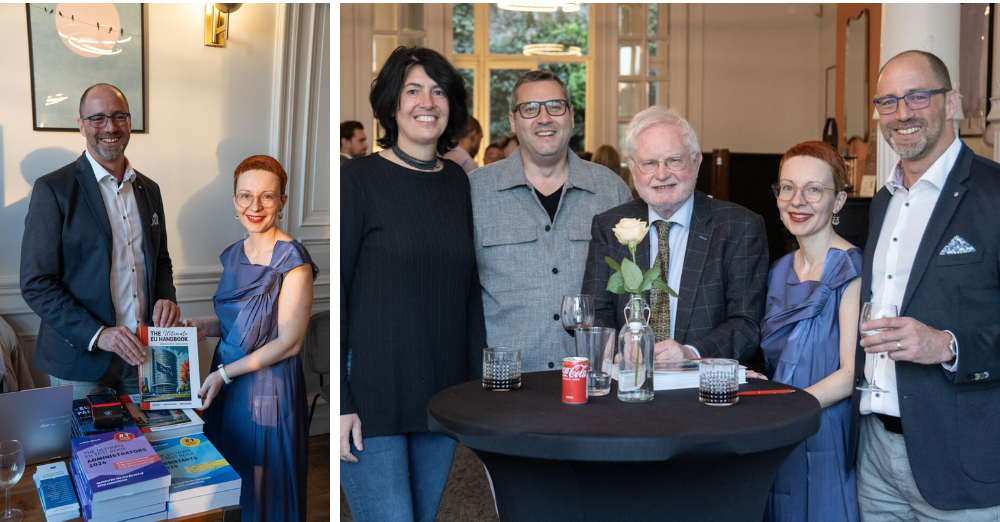
20 years ago, John Harper said 'yes' to an unknown person's unsolicited book pitch, which set of a chain of positive events. Yesterday, another book came to be as a result of two years' intense work and creativity of Sonia Gongu, Martin Tomov, Ljiljana Pavkov... and 'The Ultimate EU Handbook' was born.
Special thanks to Maryana Panyevina, Klym Ahrykov and David Meszaros for your support to make the launch event at Ambiorix Center & Podcast Studio special.
🇪🇺🙏📚
*This was originally posted on Andras Baneth's LinkedIn account.
What began as a discussion about burnout quickly turned into an exploration of something deeper. In my conversation with Dr. Vasadi Anna, a psychiatrist with decades of experience, it became clear that burnout isn’t just about long hours or stress—it’s rooted in expectations, upbringing, and the invisible pressures we internalize from an early age.
English summary of the latest episode of András' Hungarian podcast, 'Lélek Algoritmus – Ilyen az ember (avagy beszélgetések egy pszichiáterrel)' – 'The Soul’s Algorithm: The Human Condition (Conversations with a Psychiatrist).
What began as a discussion about burnout quickly turned into an exploration of something deeper. In my conversation with Dr. Vasadi Anna, a psychiatrist with decades of experience, it became clear that burnout isn’t just about long hours or stress—it’s rooted in expectations, upbringing, and the invisible pressures we internalize from an early age.
Burnout: More Than Just Exhaustion
Burnout gets thrown around a lot, but what does it actually mean? Many assume it’s just extreme fatigue, but as Anna pointed out, it’s something deeper. Burnout drains you emotionally, mentally, and even physically. It’s not the kind of tiredness that a weekend off can fix.
A key distinction Anna made: while depression can affect every part of life, burnout is usually tied to work. But it doesn’t stay there. It spreads—first to colleagues, then to family, then to an overall sense of disillusionment.
The Perfectionist’s Trap
Burnout isn’t just about overworking—it’s about overworking with the wrong mindset. People who push themselves too hard, who never feel their efforts are enough, who equate self-worth with productivity—these are the most at risk.
A common misconception: If I love my work, I can’t burn out. But passion doesn’t shield you. In fact, it often makes things worse. Overcommitting, ignoring personal limits, and relying on caffeine or alcohol to keep up are all red flags.
The Long Shadow of Childhood Expectations
Why do some people burn out while others keep their balance? Often, it starts in childhood.
Many of us grow up believing that our worth is tied to achievement. If we didn’t excel, love and approval felt conditional. Some parents—often unknowingly—reinforce this by setting impossibly high standards or withholding affection when a child falls short. Over time, this creates a need for external validation, making burnout almost inevitable.
Take elite athletes. Their entire identity is wrapped up in performance. When they lose, it’s not just a setback—it feels like a loss of personal value. The same happens in workplaces. A high achiever who misses a promotion doesn’t just feel professional disappointment—they feel like they have failed as a person.
Midlife Crisis: Burnout of the Soul
This naturally led us to midlife crisis, which, in many ways, is burnout playing out on a larger scale.
Both stem from the same root: spending years chasing external markers of success without stopping to ask, Is this what I actually want?
The midlife crisis tends to hit in the 40s or early 50s, often when several pressures collide:
- Aging Parents: The growing responsibility of caring for elderly parents forces many to confront their own mortality.
- Teenage Children: At the same time, kids are becoming more independent, adding another layer of emotional complexity.
- Career Pressures: By midlife, most people have built careers, but many start questioning if they’re on the right path.
It’s a perfect storm of obligations, internal and external, that makes people reevaluate everything—from their job to their marriage to their purpose.
Finding a Way Forward
So, how do we deal with burnout and midlife crisis without making rash decisions?
- Rethink Success – Instead of measuring success by salary, job title, or external validation, define it in terms of fulfillment and balance. If your work is draining you, can it really be called success?
- Recognize the Warning Signs – Losing interest in work, feeling detached, and struggling to muster enthusiasm are all early signs of burnout.
- Set Boundaries – Work will always demand more. It’s up to you to decide what is enough.
- Address Deep-Seated Patterns – If your self-worth depends on achievement, it might be time to rethink where that belief came from. Therapy and self-reflection can help break the cycle.
- Embrace Change – A midlife crisis isn’t necessarily a crisis—it can be a wake-up call. Maybe it’s time for a career shift, a realignment of priorities, or simply a different perspective.
Final Thoughts
Burnout and midlife crisis aren’t just work problems or age-related phases. They’re signals—urgent ones—telling us that something needs to change. The real question isn’t How do I push through? but Am I living a life that actually fits me?
If the answer is no, maybe the crisis isn’t a disaster. Maybe it’s an opportunity.