9 AI Prompts for Public Affairs Professionals Who Want Better Thinking, Not Just Faster Drafting
Discover 9 practical AI prompts for public affairs professionals to improve policy messaging, pressure-test arguments, anticipate objections, and communicate more clearly with EU stakeholders.
“What is the single weakest sentence in this briefing, and how would you fix it?”
This is a prompt I would probably never have come up with myself.
And yet, it is exactly the kind of question that makes AI useful for public affairs work.
Not because it writes the briefing for you.
But because it helps you test the thinking behind it.
A lot of AI use in public affairs still focuses on speed: summarise this, draft that, turn this into an email. Useful, yes. But not the whole story.
The real value is when AI helps you pressure-test your message before someone else does.
A policymaker.
A journalist.
A Commission official.
A sceptical attaché.
A client.
A colleague in the meeting who spots the weak point before you do.
So here are 9 AI prompts for public affairs professionals who want better thinking, not just faster drafting:
- Rewrite this message so it would survive a hostile question from an MEP in the relevant EP committee.
- List the 5 strongest objections a Commission desk officer at [DG] would raise to this proposal, then tighten the argument.
- Translate this policy language into something a national journalist would not misinterpret.
- What is the single weakest sentence in this briefing, and how would you fix it?
- Adapt this message for a sceptical Permanent Representation official who is short on time.
- Strip this text of buzzwords and replace them with concrete, defensible claims.
- Assume the audience is politically neutral but institutionally risk-averse, rewrite accordingly.
- What is the hidden assumption in this argument that could be challenged in a meeting?
- Reduce this to a 30-second spoken answer that sounds credible and not rehearsed.
The point is not to let AI do your public affairs work for you.
The point is to use it as a sparring partner.
To make your arguments clearer.
To make your messages harder to misread.
To find the sentence that sounds fine until someone challenges it.
To prepare for the question you hope no one asks.
That is where AI becomes genuinely useful.
Not as a shortcut around expertise.
But as a tool that helps you use your expertise better.
Stop Using AI for Answers. Start Using It for Better Questions
Discover why the real power of AI isn’t in providing answers, but in helping you ask better questions, uncover blind spots, and explore alternative perspectives for smarter decision-making.
Picasso once said: "Computers are useless, they can only give you answers."
That was true in his time, and still true today if you only use AI as a search ("answer") engine.
The real value is in the questions we ask:
- see blind spots in our reasoning ("Identify hidden biases or blind spots in my plan.)
- test assumptions we didn’t know we had ("Highlight my explicit or implicit assumptions.")
- explore alternative framings of the same problem ("How can this problem be viewed from multiple angles? How would a manager, a psychologist, a physicist, and musician look at it?") Or take these for example:
- Instead of asking “What’s the EU’s position on AI regulation?” try “What unintended consequences could the EU AI Act have for small startups?”
- Instead of “Summarize this report,” try “What’s missing from this report that an NGO focusing on circular economy could ask?”
- Instead of “Write a press release,” try “What would make this story credible to a skeptical journalist?”
AI doesn’t (and shouldn't) replace thinking. Just be sure to ask it the right way.
➡️ looking for AI workshops for your team? Influence Builders has trained 1500+ corporate and government affairs teams, and we'll be glad to work with you.
AI on LinkedIn: Hype, Hysteria, or Honest Insight?
A wry look at the LinkedIn AI conversation: from overhyped promises to doomsday takes, existential musings, and magical shortcuts. Where does reality meet rhetoric?
I get the impression that each time someone talks about AI on Linkedin, it's either:
- "oh this is such a hype/BS that only grifters talk about it"
- "you can go sit on a beach, it'll do everything for/instead of you"
- "whatever it churns out, it's a piece of cr*p that should be ridiculed"
- "here is some existential AI philosophy that I just invented"
- "a magic shortcut to hack your way to the top of the newsfeed"
- "it's the end of [name topic] and let's despair OR here is what to do about it"
- "this is revolutionary and the best of all worlds is about to come"
(I am guilty as charged of some of the above, I readily admit.)
Did I miss anything else?
p.s.: and the opportunistic plug, as the plus one: check out Influence Builders

What Questions Do You Have?
Genius tip for moderators & trainers.
Genius tip for moderators & trainers: “Instead of asking 'Do you have any questions?' I ask, 'What questions do you have?' The first almost always results in silence, while the second helps people feel comfortable asking questions.” - you’re welcome to steal it 🙌
Recommended Podcasts for Public Affairs Professionals
I recently invited my fellow public affairs professionals on LinkedIn to share their favourite podcasts. Here are the results:
I recently invited my fellow public affairs professionals on LinkedIn to share their favourite podcasts. Here are the results:
Life's Flight Plan
On airplanes, there is a so-called 'inertial guidance system'.
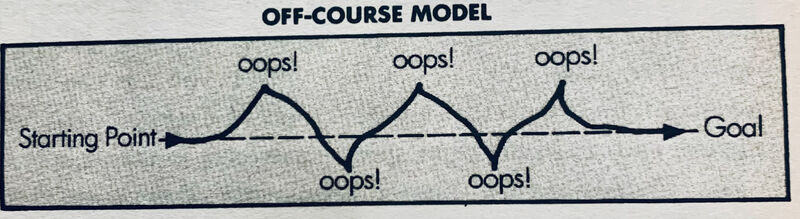
On airplanes, there is a so-called 'inertial guidance system', the purpose of which is to get the plane within a thousand yards of the runway right before the estimated arrival time.
Each time the plane strays off course, the system corrects it.
Planes would therefore arrive on time and on course despite 'having been in error 90% of the time'.
So the path from here to where we want to be starts with an error, which we correct, which becomes the next error, which we correct and that becomes the next error, which we correct.
So the only time we're truly 'on course' is that moment in the zigzag when we actually cross the true path.
The trick in life is not to worry about making a wrong decision; it's learning when to correct it.
(from Susan Jeffers: Feel the fear and do it anyway)
Cracking the EPSO code, one exam at a time
Lucia Kleštincová probably wouldn’t work for the European Commission if it wasn’t for the training received from András Baneth – a household name for everyone who ever tried passing very competitive selection process for the European institutions. Listen to their conversation about the Brussels job market, how to build successful careers in the area of EU public affairs and what are the skills to develop if you wish to remain competitive in the future.
Lucia Kleštincová probably wouldn’t work for the European Commission if it wasn’t for the training received from András Baneth – a household name for everyone who ever tried passing very competitive selection process for the European institutions. Listen to their conversation about the Brussels job market, how to build successful careers in the area of EU public affairs and what are the skills to develop if you wish to remain competitive in the future. Speaking of public affairs, we also look into the myths surrounding this industry and how it differs from questionable lobbying practices. You may also learn about the differences in lobbying the Hill in Washington DC.
European Union lobbying trends for 2019-2024
What trends will shape the European political arena & lobbying in the next 5 years? 5 take-aways, discussed today at the HOTREC – Hotels, Restaurants, Bars & Cafés in Europe general assembly in Dubrovnik (with quotes from James Stevens, VoteWatch Europe, European Parliament, Pew Research Center). Enjoy!
What trends will shape the European political arena & lobbying in the next 5 years? 5 take-aways, discussed today at the HOTREC – Hotels, Restaurants, Bars & Cafés in Europe general assembly in Dubrovnik (with quotes from James Stevens, VoteWatch Europe, European Parliament, Pew Research Center). Enjoy!

Why You Should Get Smarter About Science
An interview with me in the Public Affairs Council’s December 2017 Impact newsletter on science, policy and communication. The decision by Sam Clovis to withdraw his name from nomination as Under Secretary of Agriculture for Research, Education, and Economics wasn’t just because of his relationship to a President Trump campaign adviser who lied to the FBI about his Russian connections.
An interview with me in the Public Affairs Council’s December 2017 Impact newsletter on science, policy and communication.
The decision by Sam Clovis to withdraw his name from nomination as Under Secretary of Agriculture for Research, Education, and Economics wasn’t just because of his relationship to a President Trump campaign adviser who lied to the FBI about his Russian connections.
And it wasn’t just because of controversial remarks the former radio talk show host had made about, among other subjects, former President Obama’s birthplace.
Clovis was forced to withdraw because he had no background in science. By law, the post for which he was nominated requires that the undersecretary be “among distinguished scientists with specialized training or significant experience in agricultural research, education, and economics.”
A degree of sophistication about science is now necessary not just for those nominated for high government positions, but for more and more professionals who deal in public policy — or even communicate about it.
And that’s certainly the case with the Department of Agriculture, which as Michael Lewis writes in Vanity Fair, “runs 193 million acres of national forest and grasslands” and “is charged with inspecting almost all the animals people eat, including nine billion birds a year.” Buried inside USDA “is a massive science program, studying, among other arcane subjects, catfish breeding and bee-colony collapse.”
A similar story could be told about the Environmental Protection Agency as well as any number of other departments — and of the increasing level of knowledge required of elected officials who oversee them. The same is true, needless to say, of government relations professionals on whom they rely on for expertise.
Congress Can’t Know Everything
“Even most members of Congress that are on committees that deal in food and agriculture, for example, lack a technical or deeper understanding on policies they shape,” says András Baneth, managing director of the Council’s European Office. “They have some in-house experts, of course, but they are not themselves agronomists or environmental scientists. They are not formally trained in these areas, and it would be too much to expect such preparation from them. So there is a need for lobbyists with genuine expertise to help policymakers, especially on Capitol Hill, understand the issues.”
There’s a need as well, Baneth says, for government affairs professionals to communicate effectively about science with the general public. “Knowing how to talk about science in a credible and persuasive manner has never been more important,” he says, ‘and it will become increasingly important in the future.”
How the Public Learns ‘Science’
Not only are the issues facing policymakers becoming more technical in nature than in the past, but the way the public learns about complex scientific issues is changing.
Brian Koberlein, an astrophysicist who writes the science blog One Universe at a Time, puts it this way: “We’ve been communicating about these complicated matters at least since Carl Sagan in the 1970s. But back then, there were mainstream newspapers, TV and radio, with stories reported by professional journalists.”
“But with the rise of social media, professional journalists are competing against personal blogs that often have a vastly greater following — and can say anything. There are social media platforms that tell you the earth is flat, that evolution is ‘just a theory,’ and that global warming is a lie. These bloggers speak with great authority and gain adherents,” said Koberlein.
Despite this widespread challenge to the reliability of science, the public confidence in scientists “has remained stable for decades,” the Pew Research Center reports, citing data collected by the University of Chicago’s NORC Center for Public Affairs Research.
According to Pew, while only eight percent of Americans have a “great deal” of confidence in the media and six percent express a “great deal” of confidence in Congress, 40 percent have a great deal of confidence in the scientific community and half have some confidence in it. Only six percent put very little trust in scientists.
Only the military enjoys higher confidence than the scientific community. More than eight in 10 Americans are confident that scientists will act in the public interest, while 76 percent say they have a “fair amount” of confidence in scientists to act in the public interest.
How Scientists Speak
Part of the problem, Koberlein says, rests with the nature of science and the discipline that scientists exercise. Unlike bloggers, scientists tend not to speak with great certitude. “Scientists will say, for example, that ‘the evidence tends to suggest’ something. They are trained not to express themselves with emotion,” he says. “This puts them at a disadvantage when challenging, say, a global warming denier. In this environment, we not only have to inform the public. Often we have to re-educate the public. And when I am speaking not as a scientist but as a communicator about science, I have to call on a different skill set.”
Heather Buschman, who has a Ph.D. in molecular pathology and teaches a course in science writing at the University of California-San Diego, finds a problem in the health sciences comparable to what Koberlein sees in his field.
“Part of the challenge for communicating about science is in what I think of as the democratization of journalism,” Buschman says. “I read the other day, from a blogger, that cancer sufferers don’t need chemotherapy with all its side-effects. All you need to do is to ingest a lot of cannabis oil. The blogger also claims that ‘Big Pharma’ doesn’t want you to know that you don’t need chemo.
“The idea that people might believe this stuff and make life-and-death decisions about it frightens me. This also underscores the challenge facing all of us in the business of communicating about science.”
Even Scholarly Journals Can Err
Unfortunately, there’s no easy way to meet this challenge, even for people with a sincere desire to get the facts right. Simply citing articles published in scholarly journals to support a position or to show the weaknesses in another isn’t good enough. Suzanne Scarlata, a professor of biochemistry at Worcester Polytechnic Institute in Worcester, Mass., teaches classes in discerning scientific fact from fakery to graduate students.
“Some scholarly journals really are not peer-reviewed or properly vetted,” Scarlata says. “That’s why a recentreport purporting to link vaccination to autism caused a lot of problems, especially after some Hollywood stars who are anti-vax activists started quoting it.” (The report in question was published in The Lancet, a respected British medical journal, was later discredited and retracted by the journal “due to serious procedural errors, undisclosed financial conflicts of interest, and ethical violations.”)
Scarlata’s students are in graduate programs in chemistry and biochemistry and even they can be misled. “They are sophisticated in their own fields but not in others,” she says. “I urge them to check out the sources on their own.”
Appealing to Emotions
Apparently, just citing facts — even when well established — is no longer sufficient. “We know now that when you present information that challenges another person’s bias, they just dig in their heels,” Koberlein says. “This is all of us, not just global warming deniers. Facts themselves don’t persuade people. To speak persuasively about science, you have to tell stories that appeal to people’s emotions. This is hard for scientists.”
Baneth sees more than one challenge in communicating about scientifically complex matters. “First, we have to help scientists themselves communicate better about what they do and what it means,” he says. “Second, as public affairs professionals, we have to learn to communicate better about scientific matters ourselves. We have to know how to craft messages based on the findings of our organization’s engineers, for example. We have to learn to write responsible white papers that are both scientifically accurate and easily understood by the general public.”
Use ‘Vivid Metaphors’
It’s especially important to anchor arguments that involve technical concepts in vivid metaphors. “Even lobbyists who understand the complexities of a given issue often speak in language that is too abstract,” Baneth says. “When you do that, you leave it up to the listener to figure out what you mean, and that’s rarely helpful.”
He offers as an example the acronym PPB, which has a specific meaning to scientists and is a useful term. “It means parts per billion, and even if you say 50 PPB to the general public, 50 probably sounds like a big number. To explain what it really means, though, you might say that one PPB is equivalent to one drop of water in an Olympic size swimming pool — or in the large conference room where you might be speaking. Sometimes you have to be almost theatrical in concocting these images, which scientists are trained not to do.”
Room to Grow
Jim Fabisiak, a professor of environmental and occupational health at the University of PittsburghGraduate School of Public Health, provides another example. “To show what the release of one ton of VOCs — volatile organic compounds — really means, I calculated that it would mean putting 40,000 more vehicles on the roads around our country, each driving 12,000 miles per year. These kinds of calculations help the public visualize what you are trying to tell them. I think there is a growing awareness on the part of scientists about the importance of talking terms like these, but it is not a large movement yet. We still have room to grow.”
Baneth has been helping scientists improve how they communicate for about five years. “I’m a lawyer, not a scientist, but I have always had an interest in science and how scientists think,” he says. “They are incredibly intelligent people, but their training teaches them to eliminate flowery or descriptive language.”
That means others will sometimes have to learn to speak for them. “That’s unfortunate, considering how trustworthy Americans consider scientists,” Baneth says. “In fact, they are more credible than CEOs, which means it would be better, in many cases, to have a company’s scientists speak for the company. But until that can happen, public affairs professionals will have to get up to speed in a hurry, helping make highly technical scientific findings relevant to political leaders and the general public alike.”
The Best Government Relations Tracking & Analytics Tools for EU Public Affairs
As the public and government affairs function is becoming more professional and data-driven, a number of companies/tools have appeared on the European scene. Their mission: help lobbyists, regulatory managers and corporate affairs professionals track, monitor, analyse, log events and trends, and/or connect and engage with policymakers at EU institutions, government officials at local or national level, and stakeholders at large.
As the public and government affairs function is becoming more professional and data-driven, a number of companies/tools have appeared on the European scene.
Their mission: help lobbyists, regulatory managers and corporate affairs professionals track, monitor, analyse, log events and trends, and/or connect and engage with policymakers at EU institutions, government officials at local or national level, and stakeholders at large.

Below is a non-comprehensive list of all the tools/companies offering digital public affairs tools of some kind. If you run a service that should be on this list, let me know and I’ll update it.
Important: the numbers below are not meant to be a ranking of any kind. The blurbs were taken from the respective companies’ website, without any comment or evaluation from me. I didn’t include any social media tracking tools that have no links to government or corporate affairs, or Europe.
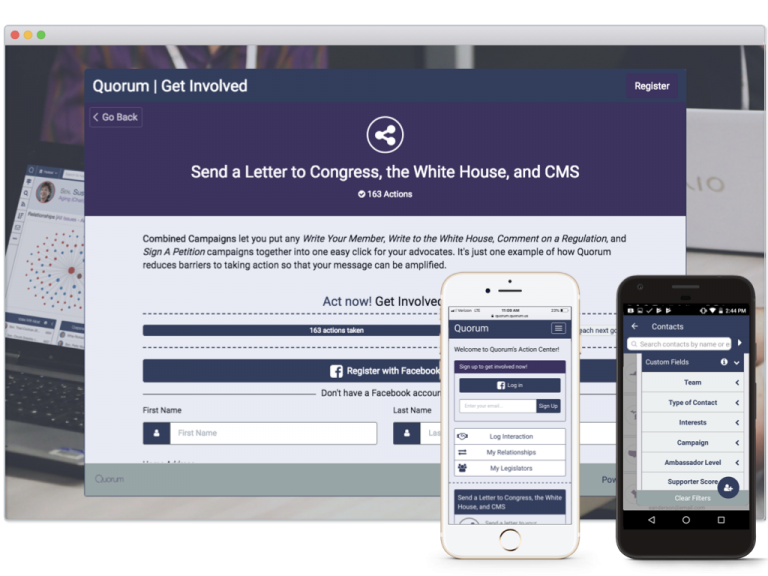
1. Quorum.us
Quorum is a public affairs software platform that enables organizations to launch grassroots advocacy campaigns, manage stakeholder engagement, and monitor Washington, Brussels, all 50 states, and thousands of cities around the country.

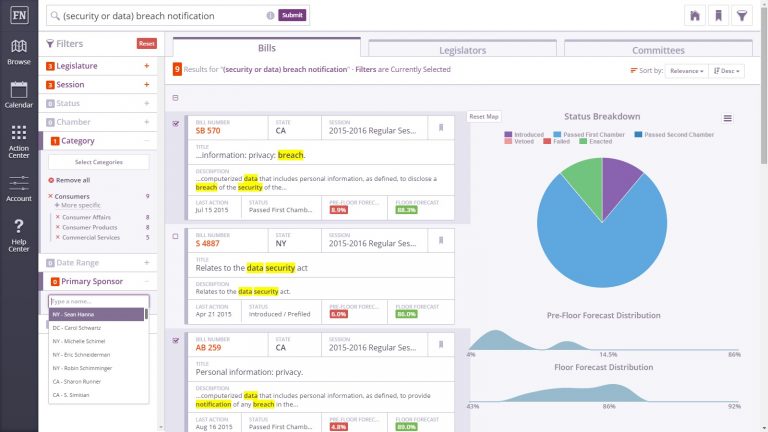
The FiscalNote GRM is a data, workflow, and analytics platform designed to help organizations of all shapes and sizes effectively manage the impact of the outside world.
Positively responding to the EU priorities on eradicating terrorist radicalisation and recruitment, the project aims to facilitate the prevention of terrorism through the identification of radicalisation.
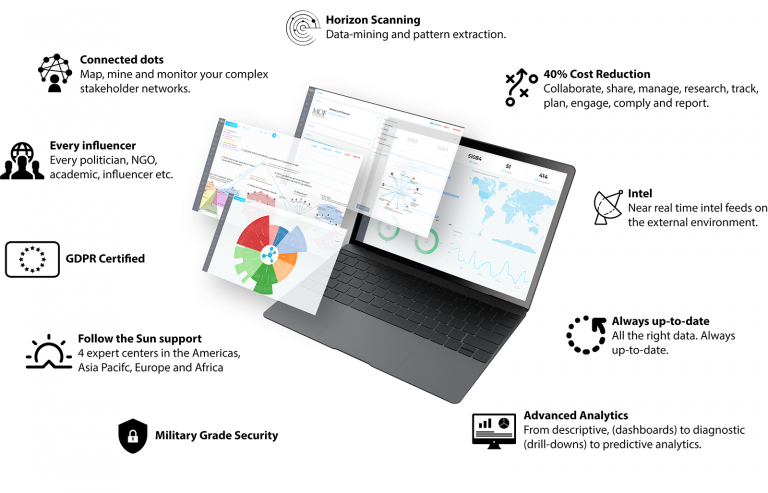
Integrated, organized and mined data on stakeholders, organizations, trends and issues combined with smart software and advanced algorithms to de-risk your issues and grow your business.
A systematic, structured, obsessively complete approach to regulatory intelligence.
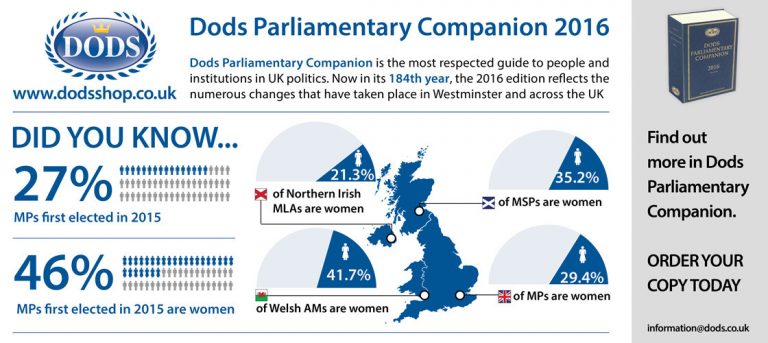
Leading UK and EU parliamentary and political intelligence service. Also providing the German and French monitoring.
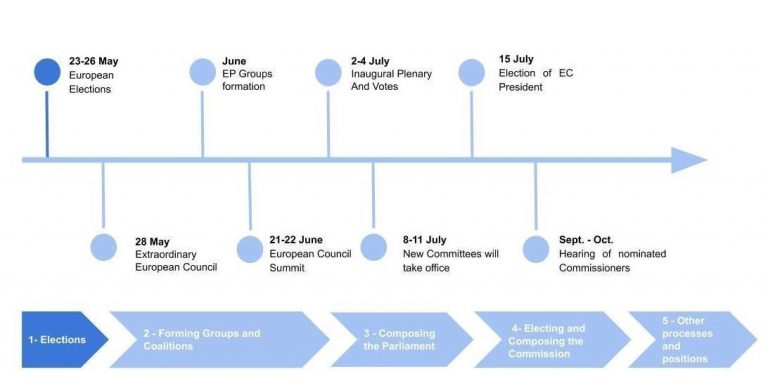
All your EU information in One Place, instantly accessible and adaptable, wherever you go.
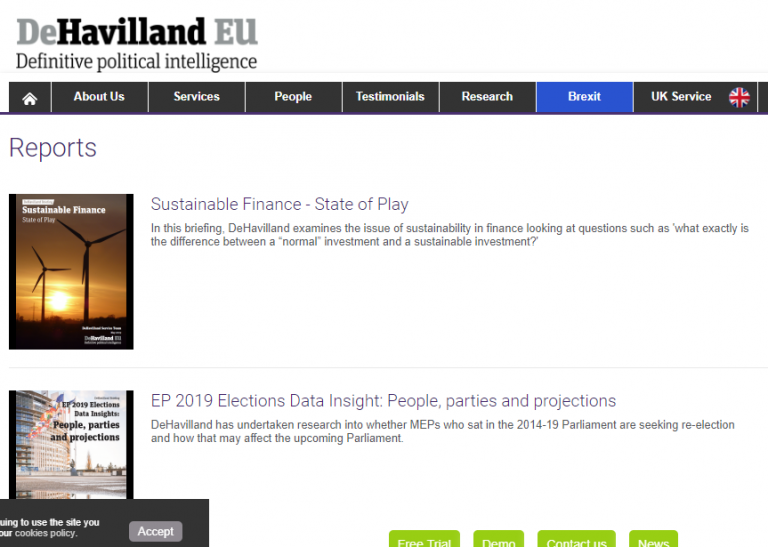
DeHavilland EU provides EU political intelligence, EU monitoring, bespoke research and consulting services that are specifically tailored to your interests and needs.
9. EUinsight.eu
#EUinsight enables European Affairs professionals to handle large amounts of different digital sources easily to know more, faster.
10. thewonk.eu
The go-to platform to discover, evaluate and share reports and insights from political analysts and policy wonks, both in Brussels and across the EU.
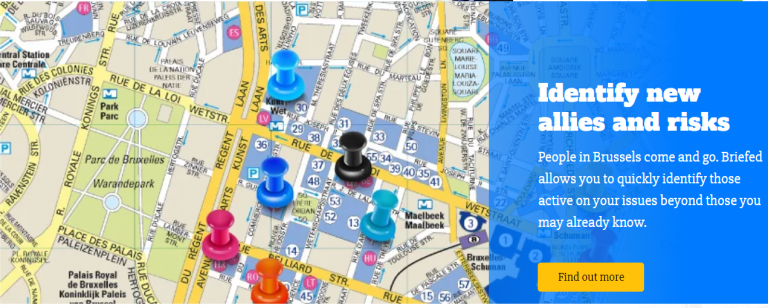
11. briefed.eu
Save time gathering relevant information from dozens of websites. It’s already here; filterable, searchable, and growing every day!
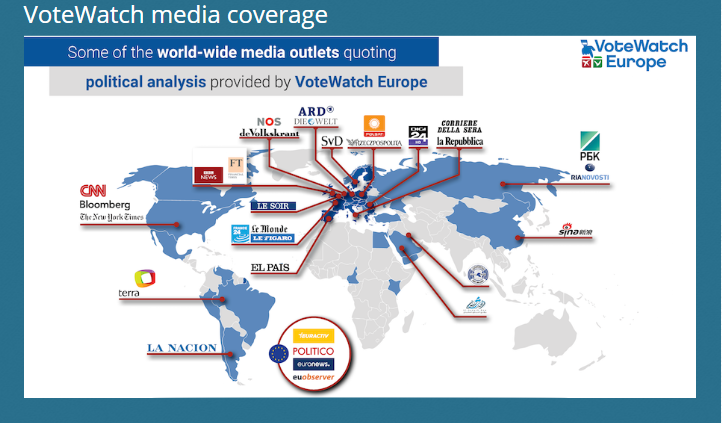
12. votewatch.eu
VoteWatch Europe is shaping the EU policy debate with cutting-edge analysis who stems from a unique combination of big data and political insight.
13. polimonitor.com
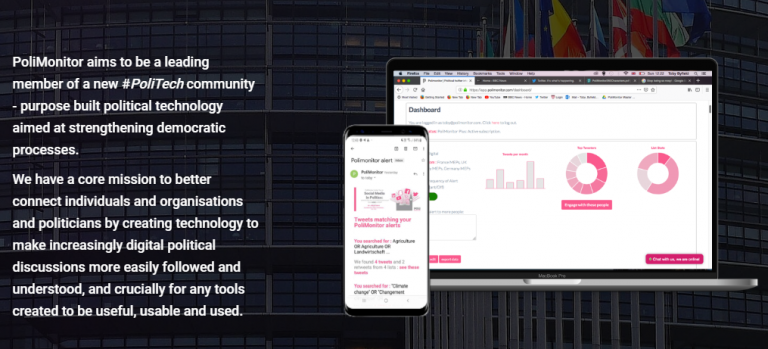
PoliMonitor is a free political research, engagement and monitoring tool which allows users to receive daily alerts when policy makers and politicians mention terms of interest.
14. Saper Vedere
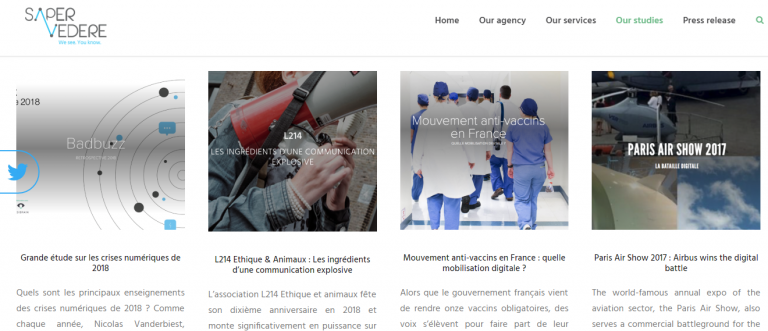
A unique EU public affairs & communications consultancy, offering the world’s most advanced social media tools w/ years of EU bubble, media & PA expertise.
15. politik.ch
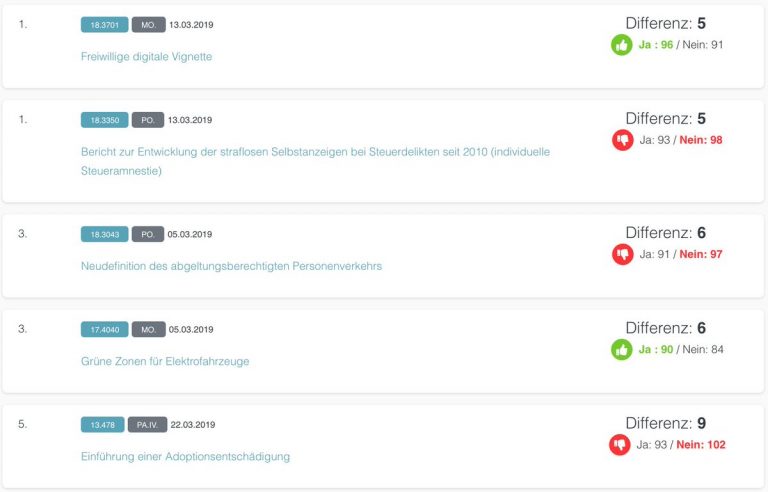
Politik.ch is the comprehensive, reliable, fast and independent platform on which all available open Swiss government data (Open Government Data, #ogd) and their interfaces (APIs) are collected and processed. We visualize ongoing and completed political business and elections.
16. MLex
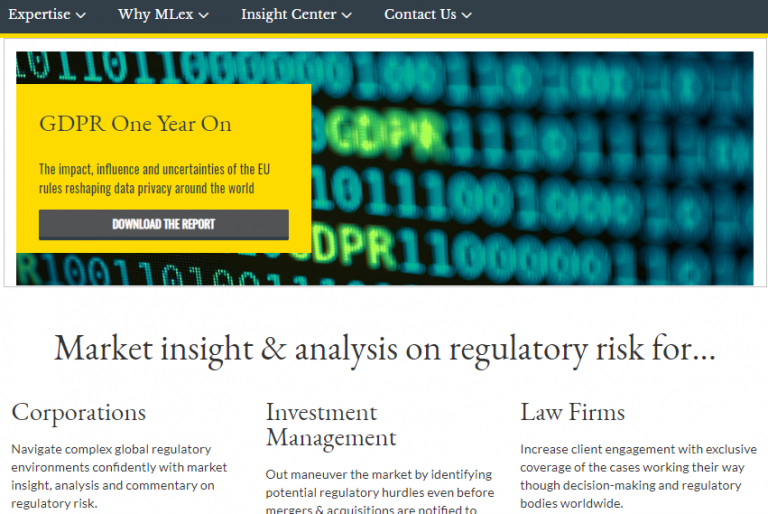
MLex is an independent media organization providing exclusive market insight, analysis and commentary on regulatory risk, and what it means for business.
17. POLITICO Pro
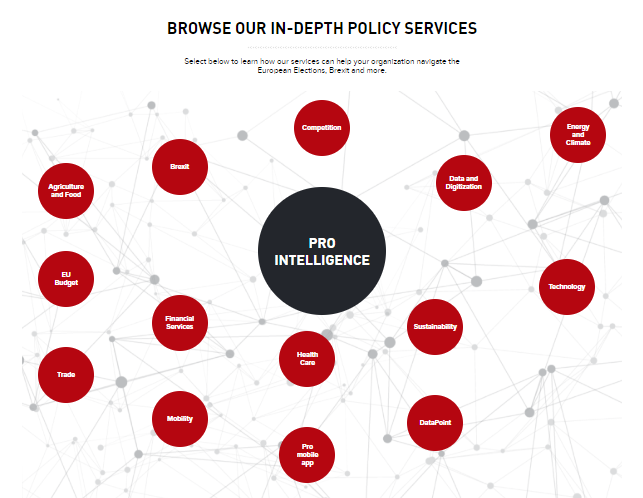
POLITICO Pro provides the most distinct and authoritative policy news coverage of Europe and beyond and because of that, Pros depend on us to do their jobs.
18. Sigwatch
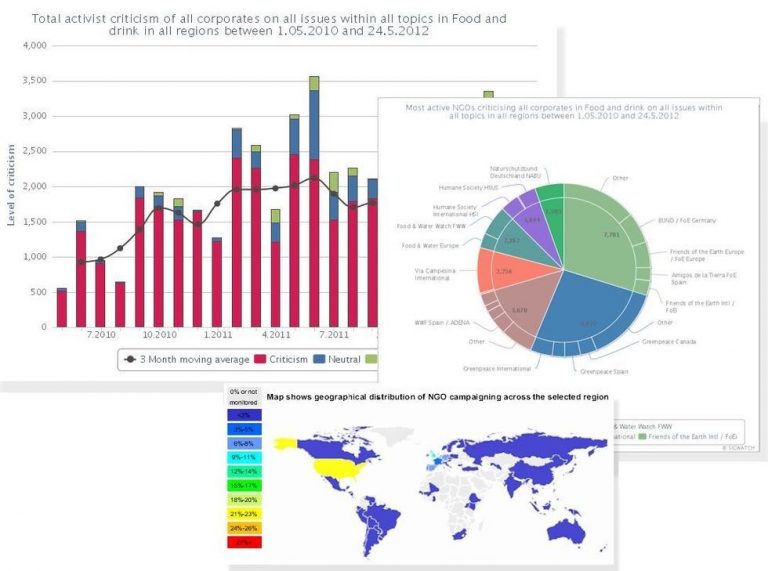
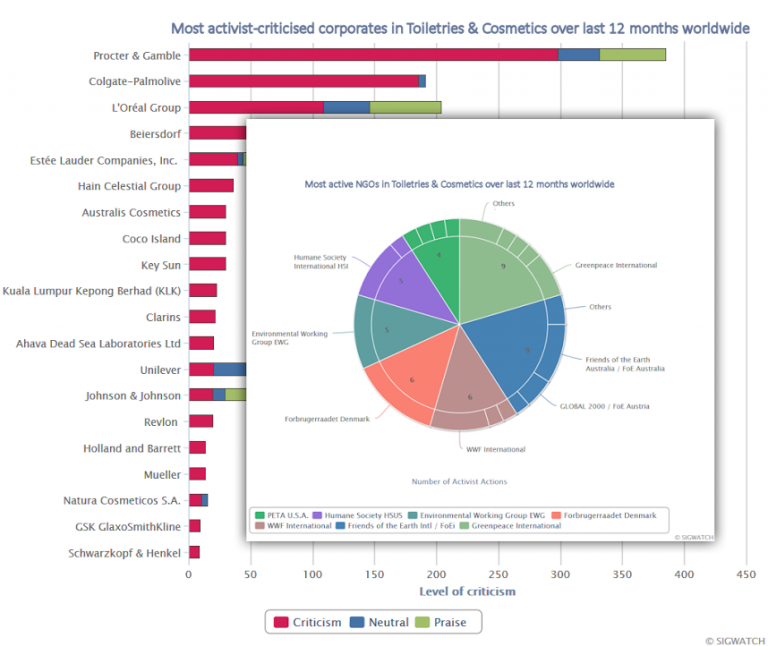
SIGWATCH carries out real-time tracking and analysis of activist campaigns to help companies manage activist risk and understand how NGOs are driving policy issues.
19. RAP Index
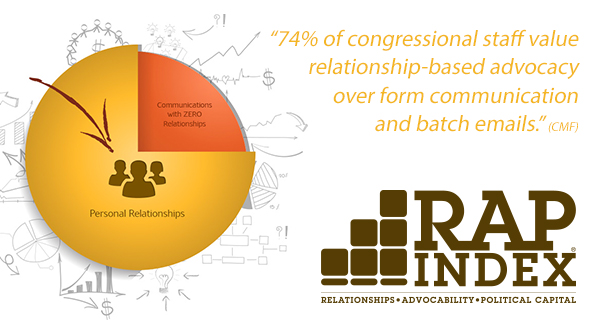
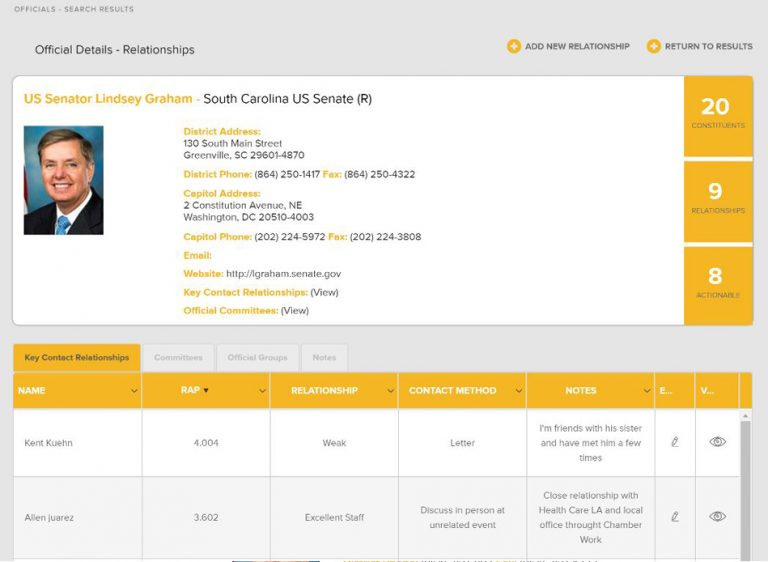
RAP Index is an Influencer Identification tool that uncovers your true advocates, the people who have the right relationships and, more importantly, have the attitude, ability & political capital to be effective advocates for you & your issues.
20. EU Monitor
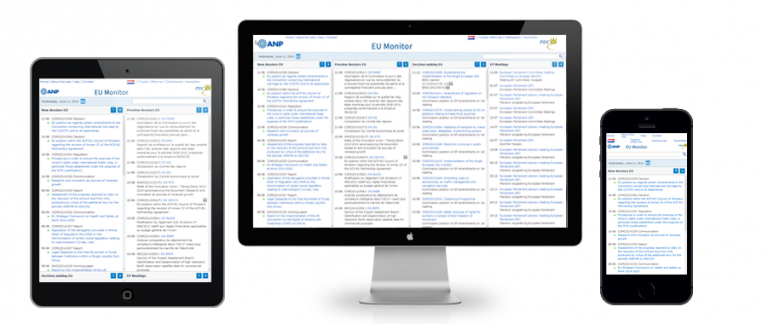
The EU monitor is available 24 hours a day, 7 days a week through www.eumonitor.eu and supports most mobile devices and tablets. You can also opt to disseminate information to your organisations and stakeholders through a digital newsletter or your own intranet. The newsletter can be tailored to your brand.
21. Statehill
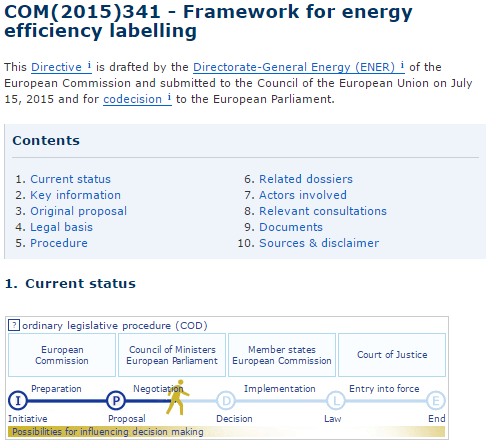
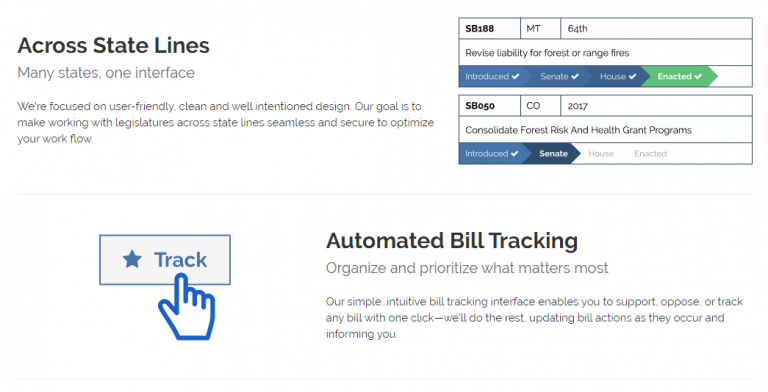
Statehill is a political intelligence software platform fusing together the worlds of technology and politics to enable improved access and navigation to legislative data. Our ever expanding reach currently includes the European Parliament (and other EU institutions), UK, Germany, France, and Spain, as well as US Congress and all 50 US states.
Requiem for a European dream
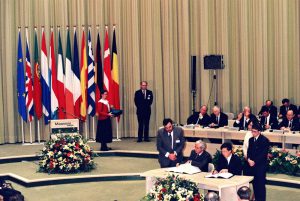
The founding document of European integration, the Treaty of Rome is celebrating its 60th anniversary next year. Sadly, it may be its last one.

The founding document of European integration, the Treaty of Rome is celebrating its 60th anniversary next year. Sadly, it may be its last one.
Like many others in Central and Eastern Europe, I spent my formative years studying European politics and policies in the hope that my country, Hungary will one day become an EU member. When this happened in 2004, an overwhelming sense of “arrival” at the ‘better’ part of Europe took hold. Just like Fukuyama many years earlier, we thought that history has ended, and liberal democracies have won the war of ideas.
Little did we realize that the edifice
constructed in the same year as his book was
published, may go tumbling down: half-baked
solutions and hubris will end it.
Europeans, and EU institutions, tend to see themselves as champions of values: human rights above commercial interests, high ethical standards that staff and politicians should respect, appreciating science above popular pressure. But ask any citizen, or passer-by on Rond-Point Schuman, and realize that few think these ideals are still upheld today as the EU has lost its narrative.
Despite what most Eurocrats think, the EU’s grave-diggers are not the Orbans, Kaczinskys and Farages.
It’s a general disillusionment, including on the
political left, as they, too, can hardly support
the EU in its current form.
The British Labour’s half-hearted Remain stance, Renzi’s removal of the EU flag from his public appearances, Hungarians and Poles disappointment at the Commission’s and Parliament’s impotence to tackle the corruption and dismantling of democracy in their country have sapped many Europhiles’ support.
Self-deception by labelling critics as racists, forcing them into the binary category of pro- or anti-Europeans, having a disgraced president run the European Commission, refusing to hear voters’ frustrations when they veto a new Treaty, vote for Brexit or point out how pathetic the refugee relocation scheme was, does little to demonstrate their acknowledgment of the problem, let alone their willingness or ability to fix it.
The real problem, however, is how shaky our European institutions are. While their popularity is even higher than that of the US Congress, their legitimacy is constantly challenged. If a French or Dutch election can call into question the sheer existence of these vanguards of European integration, we should start to doubt how strong the foundation of our system really is.
And the pressure is mounting. We don’t need
to have Marine le Pen elected for the Euro to crumble.
Italian banks, the European Commission’s leniency about deficits, and the half-baked structure of the Eurozone are enough of a deadly mix to explode as early as 15 years after the bridge-decorated banknotes were released.
In 1997, Steve Jobs became Apple’s CEO again. Being given the opportunity to revive an ailing company, the first thing he did was to clean up the clutter that accumulated since his dismissal: he cut out 70% of the products to focus on what Apple did best. It was painful but necessary: the alternative was bankruptcy.
In the EU, we are facing a similar moment. We may need to go back to the pre-Maastricht (1992) situation where the single market was the European Communities’ objective as that is where the European consensus is today.
Legendary European Commission President
Jacques Delors also agreed how flawed
the Euro’s creation was.
Even pro-Brexiters were in favor of staying in the single market (though the free movement admittedly remains contentious). The Eurozone, Schengen, Dublin rules, foreign policy are all increasingly divisive, to the extent that meaningful policies are the exception, not the rule. They are untenable.
Running ahead by creating an inner circle of European integration is unworkable. Institutional and political paralysis, also partly linked to the messy decision-making arrangements in the post-Maastricht years, prevents such ideas from gaining momentum.
The same populist forces and lack of honest discussion that got Donald Trump elected are present, and gaining traction, in Europe. Dismissing them, as most American newspapers did, is a grave mistake. It will not only get populists elected, it can bring Europe to its knees. Unless we look into the mirror, admit our hubris, and refocus European integration, the EU as we know it is soon over.
(A slightly edited version of this article appeared in EUobserver today, 23 Nov 2016)
Featured articles
and Insights
This compilation takes us through the history of the first #EPSO candidates, showcasing their journey and achievements from the very beginning to the present day—and even looking ahead.
A compilation of the first #EPSO candidates throughout history, until today and beyond.
(Have you played with ChatGPT-4o's new image capabilities? Pretty impressive.)
*This was originally posted on Andras Baneth's LinkedIn account.
Discover the inspiring story behind The Ultimate EU Handbook, a book born from the unexpected connection of a chance pitch and years of creative collaboration.
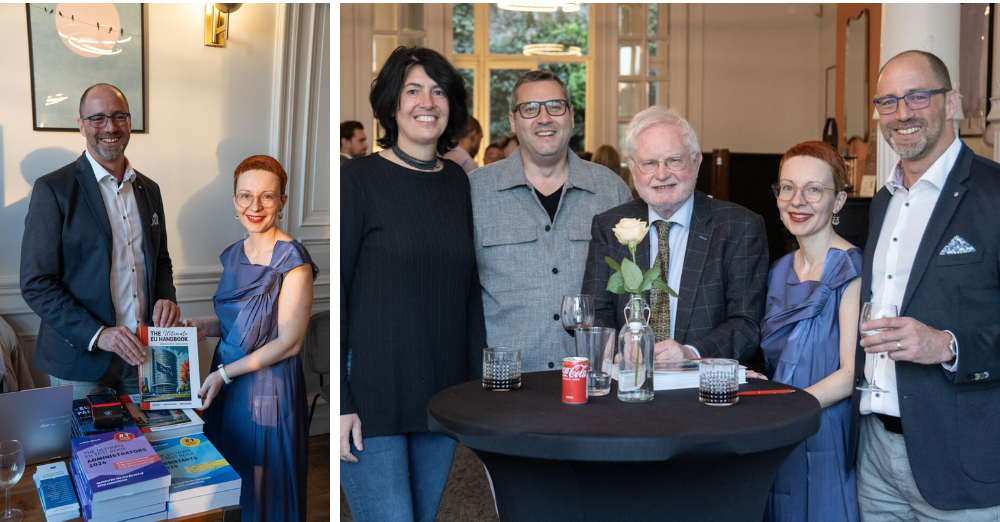
20 years ago, John Harper said 'yes' to an unknown person's unsolicited book pitch, which set of a chain of positive events. Yesterday, another book came to be as a result of two years' intense work and creativity of Sonia Gongu, Martin Tomov, Ljiljana Pavkov... and 'The Ultimate EU Handbook' was born.
Special thanks to Maryana Panyevina, Klym Ahrykov and David Meszaros for your support to make the launch event at Ambiorix Center & Podcast Studio special.
🇪🇺🙏📚
*This was originally posted on Andras Baneth's LinkedIn account.
What began as a discussion about burnout quickly turned into an exploration of something deeper. In my conversation with Dr. Vasadi Anna, a psychiatrist with decades of experience, it became clear that burnout isn’t just about long hours or stress—it’s rooted in expectations, upbringing, and the invisible pressures we internalize from an early age.
English summary of the latest episode of András' Hungarian podcast, 'Lélek Algoritmus – Ilyen az ember (avagy beszélgetések egy pszichiáterrel)' – 'The Soul’s Algorithm: The Human Condition (Conversations with a Psychiatrist).
What began as a discussion about burnout quickly turned into an exploration of something deeper. In my conversation with Dr. Vasadi Anna, a psychiatrist with decades of experience, it became clear that burnout isn’t just about long hours or stress—it’s rooted in expectations, upbringing, and the invisible pressures we internalize from an early age.
Burnout: More Than Just Exhaustion
Burnout gets thrown around a lot, but what does it actually mean? Many assume it’s just extreme fatigue, but as Anna pointed out, it’s something deeper. Burnout drains you emotionally, mentally, and even physically. It’s not the kind of tiredness that a weekend off can fix.
A key distinction Anna made: while depression can affect every part of life, burnout is usually tied to work. But it doesn’t stay there. It spreads—first to colleagues, then to family, then to an overall sense of disillusionment.
The Perfectionist’s Trap
Burnout isn’t just about overworking—it’s about overworking with the wrong mindset. People who push themselves too hard, who never feel their efforts are enough, who equate self-worth with productivity—these are the most at risk.
A common misconception: If I love my work, I can’t burn out. But passion doesn’t shield you. In fact, it often makes things worse. Overcommitting, ignoring personal limits, and relying on caffeine or alcohol to keep up are all red flags.
The Long Shadow of Childhood Expectations
Why do some people burn out while others keep their balance? Often, it starts in childhood.
Many of us grow up believing that our worth is tied to achievement. If we didn’t excel, love and approval felt conditional. Some parents—often unknowingly—reinforce this by setting impossibly high standards or withholding affection when a child falls short. Over time, this creates a need for external validation, making burnout almost inevitable.
Take elite athletes. Their entire identity is wrapped up in performance. When they lose, it’s not just a setback—it feels like a loss of personal value. The same happens in workplaces. A high achiever who misses a promotion doesn’t just feel professional disappointment—they feel like they have failed as a person.
Midlife Crisis: Burnout of the Soul
This naturally led us to midlife crisis, which, in many ways, is burnout playing out on a larger scale.
Both stem from the same root: spending years chasing external markers of success without stopping to ask, Is this what I actually want?
The midlife crisis tends to hit in the 40s or early 50s, often when several pressures collide:
- Aging Parents: The growing responsibility of caring for elderly parents forces many to confront their own mortality.
- Teenage Children: At the same time, kids are becoming more independent, adding another layer of emotional complexity.
- Career Pressures: By midlife, most people have built careers, but many start questioning if they’re on the right path.
It’s a perfect storm of obligations, internal and external, that makes people reevaluate everything—from their job to their marriage to their purpose.
Finding a Way Forward
So, how do we deal with burnout and midlife crisis without making rash decisions?
- Rethink Success – Instead of measuring success by salary, job title, or external validation, define it in terms of fulfillment and balance. If your work is draining you, can it really be called success?
- Recognize the Warning Signs – Losing interest in work, feeling detached, and struggling to muster enthusiasm are all early signs of burnout.
- Set Boundaries – Work will always demand more. It’s up to you to decide what is enough.
- Address Deep-Seated Patterns – If your self-worth depends on achievement, it might be time to rethink where that belief came from. Therapy and self-reflection can help break the cycle.
- Embrace Change – A midlife crisis isn’t necessarily a crisis—it can be a wake-up call. Maybe it’s time for a career shift, a realignment of priorities, or simply a different perspective.
Final Thoughts
Burnout and midlife crisis aren’t just work problems or age-related phases. They’re signals—urgent ones—telling us that something needs to change. The real question isn’t How do I push through? but Am I living a life that actually fits me?
If the answer is no, maybe the crisis isn’t a disaster. Maybe it’s an opportunity.